
奈玛特韦/利托那韦的临床药代动力学、药效学和药物相互作用的全面综述。
A Comprehensive Review of the Clinical Pharmacokinetics, Pharmacodynamics, and Drug Interactions of Nirmatrelvir/Ritonavir.
机构信息
Pfizer Inc, Research and Development, 500 Arcola Road, Collegeville, PA, 19424, USA.
Pfizer Inc, Research and Development, Cambridge, MA, USA.
出版信息
Clin Pharmacokinet. 2024 Jan;63(1):27-42. doi: 10.1007/s40262-023-01339-y. Epub 2024 Jan 4.
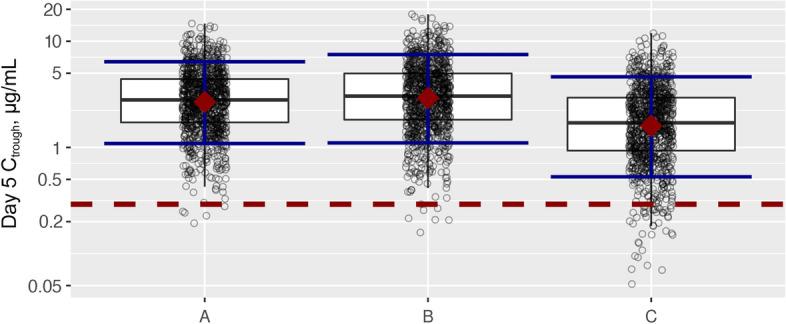
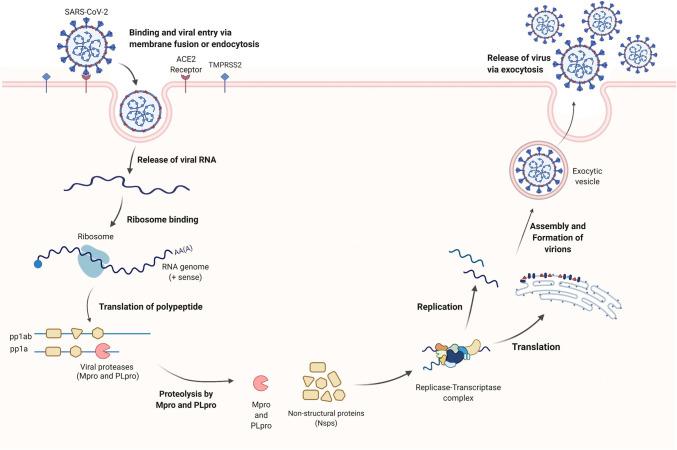
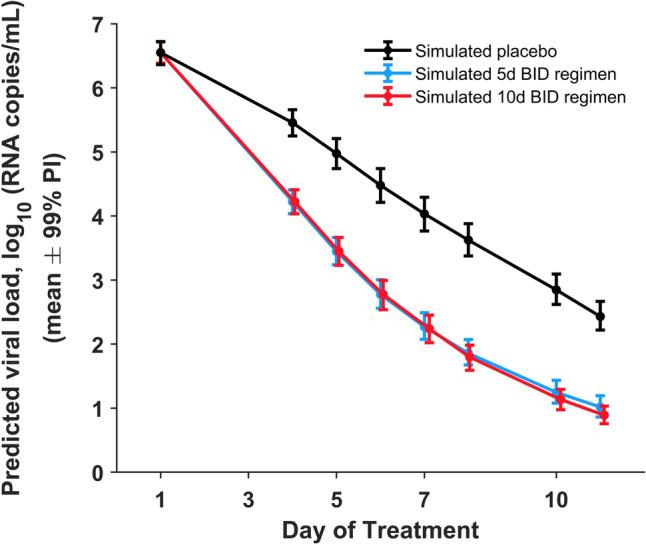
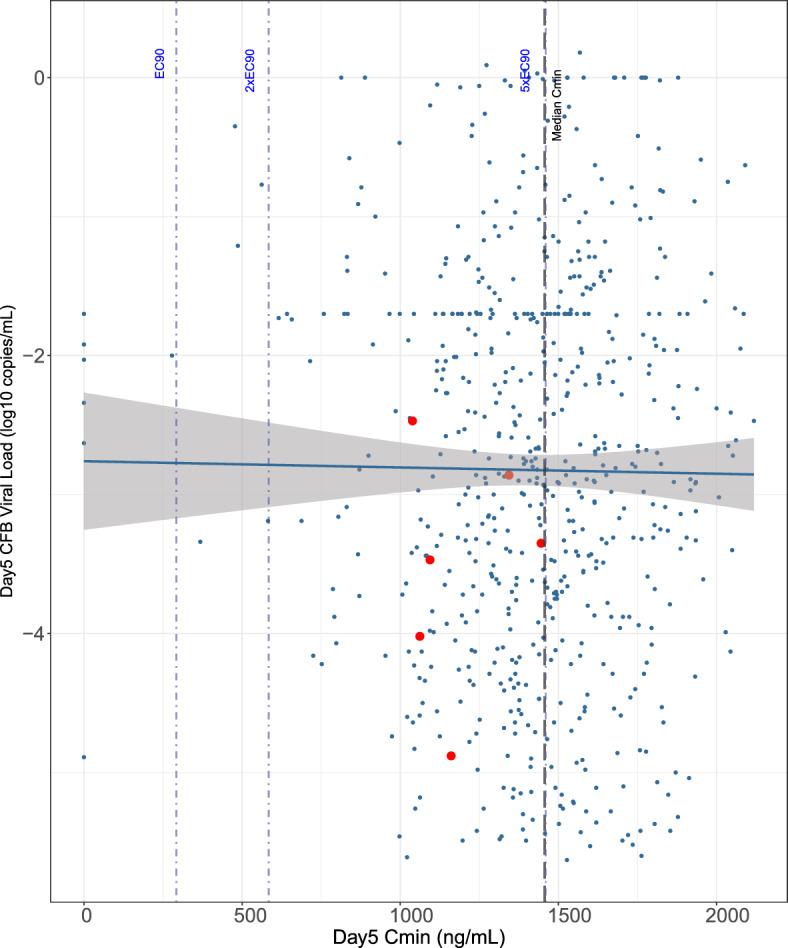
Nirmatrelvir is a potent and selective inhibitor of the severe acute respiratory syndrome coronavirus 2 (SARS-CoV-2) main protease that is used as an oral antiviral coronavirus disease 2019 (COVID-19) treatment. To sustain unbound systemic trough concentrations above the antiviral in vitro 90% effective concentration value (EC), nirmatrelvir is coadministered with 100 mg of ritonavir, a pharmacokinetic enhancer. Ritonavir inhibits nirmatrelvir's cytochrome P450 (CYP) 3A4-mediated metabolism which results in renal elimination becoming the primary route of nirmatrelvir elimination when dosed concomitantly. Nirmatrelvir exhibits absorption-limited nonlinear pharmacokinetics. When coadministered with ritonavir in patients with mild-to-moderate COVID-19, nirmatrelvir reaches a maximum concentration of 3.43 µg/mL (11.7× EC) in approximately 3 h on day 5 of dosing, with a geometric mean day 5 trough concentration of 1.57 µg/mL (5.4× EC). Drug interactions with nirmatrelvir/ritonavir (PAXLOVID) are primarily attributed to ritonavir-mediated CYP3A4 inhibition, and to a lesser extent CYP2D6 and P-glycoprotein inhibition. Population pharmacokinetics and quantitative systems pharmacology modeling support twice daily dosing of 300 mg/100 mg nirmatrelvir/ritonavir for 5 days, with a reduced 150 mg/100 mg dose for patients with moderate renal impairment. Rapid clinical development of nirmatrelvir/ritonavir in response to the emerging COVID-19 pandemic was enabled by innovations in clinical pharmacology research, including an adaptive phase 1 trial design allowing direct to pivotal phase 3 development, fluorine nuclear magnetic resonance spectroscopy to delineate absorption, distribution, metabolism, and excretion profiles, and innovative applications of model-informed drug development to accelerate development.
奈玛特韦是一种强效、选择性的严重急性呼吸综合征冠状病毒 2(SARS-CoV-2)主蛋白酶抑制剂,用于治疗新型冠状病毒肺炎(COVID-19)。为了维持无结合的系统谷浓度高于抗病毒体外 90%有效浓度值(EC),奈玛特韦与 100 毫克利托那韦联合使用,利托那韦是一种药代动力学增强剂。利托那韦抑制奈玛特韦的细胞色素 P450(CYP)3A4 介导的代谢,导致奈玛特韦在同时给药时主要通过肾脏消除。奈玛特韦表现出吸收受限的非线性药代动力学。当在轻度至中度 COVID-19 患者中与利托那韦联合使用时,奈玛特韦在第 5 天的给药中约 3 小时达到 3.43μg/mL(11.7×EC)的最大浓度,第 5 天的几何平均谷浓度为 1.57μg/mL(5.4×EC)。与奈玛特韦/利托那韦(PAXLOVID)的药物相互作用主要归因于利托那韦介导的 CYP3A4 抑制,在较小程度上归因于 CYP2D6 和 P-糖蛋白抑制。群体药代动力学和定量系统药理学模型支持奈玛特韦/利托那韦每天两次给药,每次 300mg/100mg,连用 5 天,对于中度肾功能损害的患者,剂量减少至 150mg/100mg。奈玛特韦/利托那韦在应对新兴 COVID-19 大流行时的快速临床开发得益于临床药理学研究的创新,包括允许直接进行关键性 3 期开发的适应性 1 期试验设计、氟核磁共振波谱法来描绘吸收、分布、代谢和排泄曲线,以及创新应用模型指导药物开发来加速开发。

 Zotero 插件