
利用表观遗传调控因子和激酶信号网络之间的相互作用,针对高级别神经胶质瘤的当前和未来治疗策略。
Current and future therapeutic strategies for high-grade gliomas leveraging the interplay between epigenetic regulators and kinase signaling networks.
机构信息
Department of Pediatrics Research, The MD Anderson Cancer Center, University of Texas, Box 853, 1515 Holcombe Blvd, Houston, TX, 77030, USA.
The University of Texas MD Anderson Cancer Center UTHealth Graduate School of Biomedical Sciences, Houston, TX, USA.
出版信息
J Exp Clin Cancer Res. 2024 Jan 5;43(1):12. doi: 10.1186/s13046-023-02923-7.
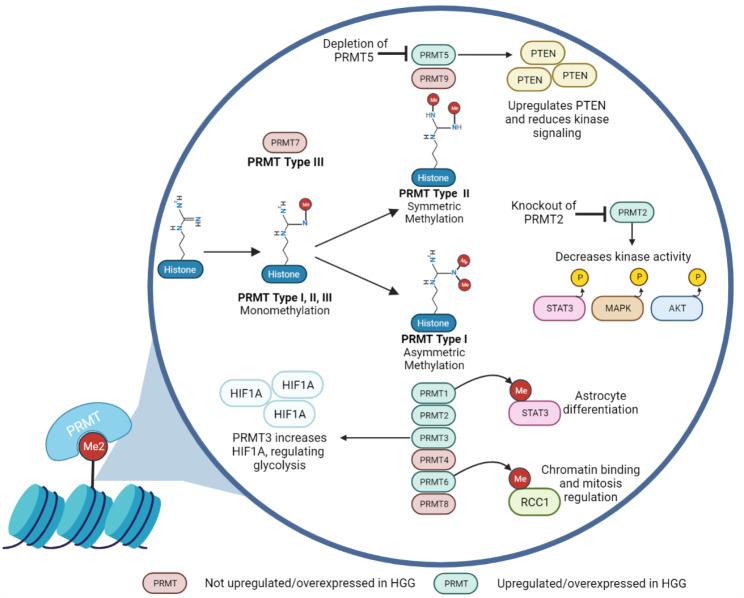
Targeted therapies, including small molecule inhibitors directed against aberrant kinase signaling and chromatin regulators, are emerging treatment options for high-grade gliomas (HGG). However, when translating these inhibitors into the clinic, their efficacy is generally limited to partial and transient responses. Recent studies in models of high-grade gliomas reveal a convergence of epigenetic regulators and kinase signaling networks that often cooperate to promote malignant properties and drug resistance. This review examines the interplay between five well-characterized groups of chromatin regulators, including the histone deacetylase (HDAC) family, bromodomain and extraterminal (BET)-containing proteins, protein arginine methyltransferase (PRMT) family, Enhancer of zeste homolog 2 (EZH2), and lysine-specific demethylase 1 (LSD1), and various signaling pathways essential for cancer cell growth and progression. These specific epigenetic regulators were chosen for review due to their targetability via pharmacological intervention and clinical relevance. Several studies have demonstrated improved efficacy from the dual inhibition of the epigenetic regulators and signaling kinases. Overall, the interactions between epigenetic regulators and kinase signaling pathways are likely influenced by several factors, including individual glioma subtypes, preexisting mutations, and overlapping/interdependent functions of the chromatin regulators. The insights gained by understanding how the genome and epigenome cooperate in high-grade gliomas will guide the design of future therapeutic strategies that utilize dual inhibition with improved efficacy and overall survival.
靶向治疗,包括针对异常激酶信号和染色质调节因子的小分子抑制剂,是高级别神经胶质瘤(HGG)的新兴治疗选择。然而,当将这些抑制剂转化为临床应用时,它们的疗效通常仅限于部分和短暂的反应。最近在高级别神经胶质瘤模型中的研究揭示了表观遗传调节剂和激酶信号网络的融合,这些网络通常合作促进恶性特性和耐药性。这篇综述探讨了包括组蛋白去乙酰化酶(HDAC)家族、溴结构域和末端(BET)蛋白、蛋白精氨酸甲基转移酶(PRMT)家族、增强子结合锌指蛋白 2(EZH2)和赖氨酸特异性去甲基化酶 1(LSD1)在内的五个特征明确的染色质调节剂组与各种信号通路之间的相互作用,这些信号通路对于癌细胞的生长和进展至关重要。选择这些特定的表观遗传调节剂进行综述是因为它们可以通过药理学干预和临床相关性进行靶向治疗。有几项研究表明,联合抑制表观遗传调节剂和信号激酶可提高疗效。总体而言,表观遗传调节剂和激酶信号通路之间的相互作用可能受到多种因素的影响,包括个体神经胶质瘤亚型、预先存在的突变以及染色质调节剂的重叠/相互依存功能。通过了解高级别神经胶质瘤中基因组和表观基因组如何合作,可以指导设计未来的治疗策略,这些策略将通过双重抑制来提高疗效和总体生存率。



 Zotero 插件