
建立一种能够使用胃癌类器官进行免疫反应评估的新型覆盖培养方法。
Establishment of a novel overlay culture method that enables immune response assessment using gastric cancer organoids.
作者信息
Ota Hiroshi, Tanabe Kazuaki, Saeki Yoshihiro, Takemoto Yuki, Chikuie Emi, Sakamoto Naoya, Ohdan Hideki
机构信息
Department of Gastroenterological and Transplant Surgery, Applied Life Sciences, Institute of Biomedical & Health Science, Hiroshima University, 1-2-3 Kasumi Minami-ku, Hiroshima, 734-8551, Japan.
Department of Perioperative and Critical Care Management, Graduate School of Biomedical and Health Sciences, Hiroshima University, 1-2-3 Kasumi Minami-ku, Hiroshima, 734-8551, Japan.
出版信息
Heliyon. 2023 Dec 9;10(1):e23520. doi: 10.1016/j.heliyon.2023.e23520. eCollection 2024 Jan 15.
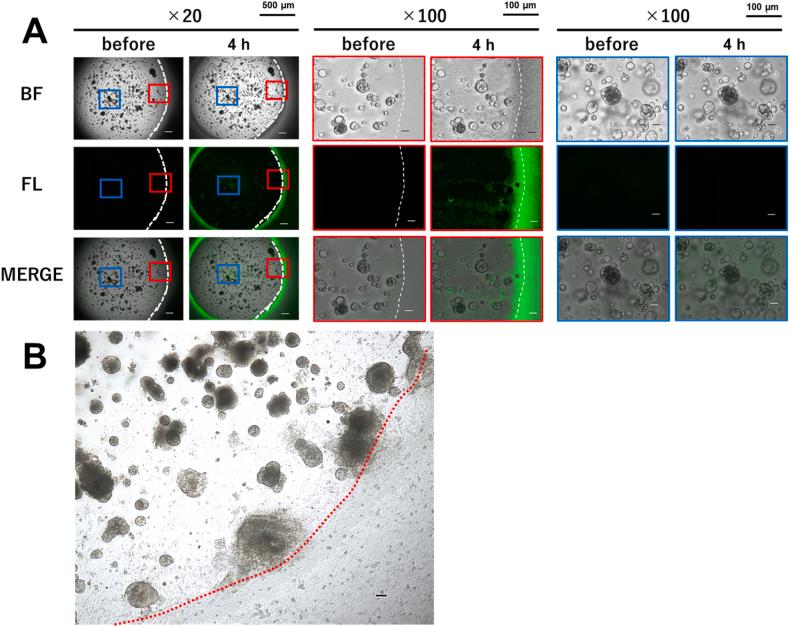
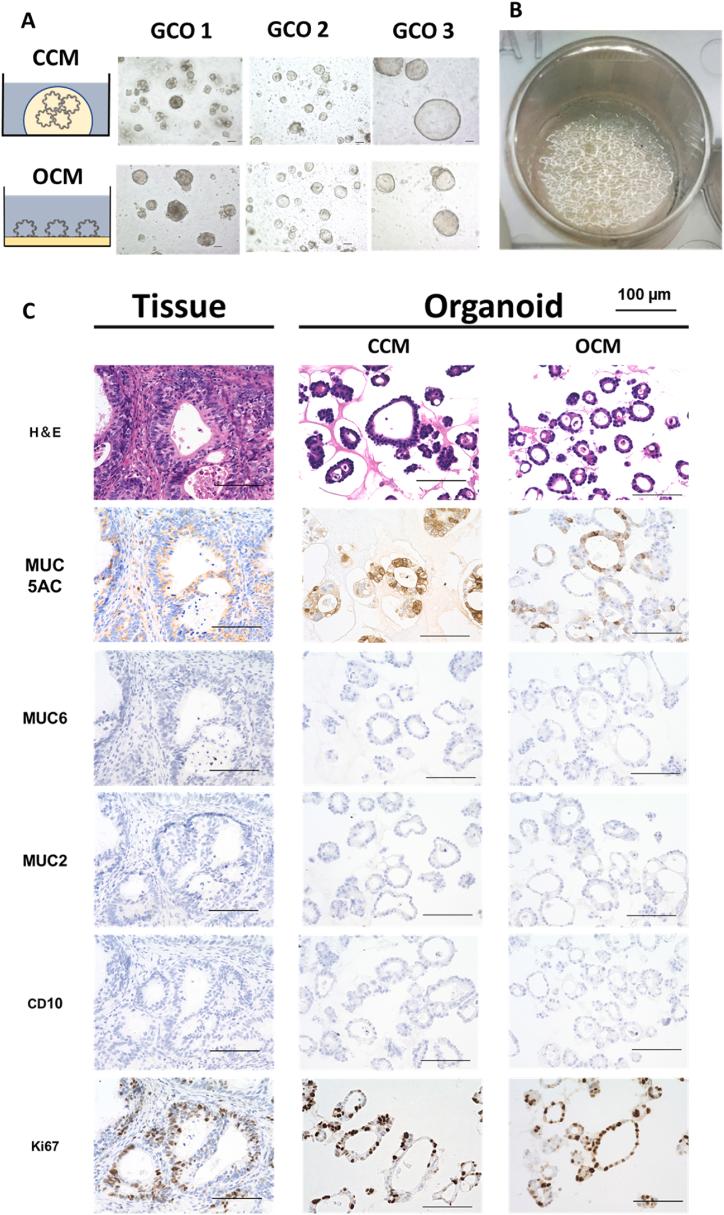
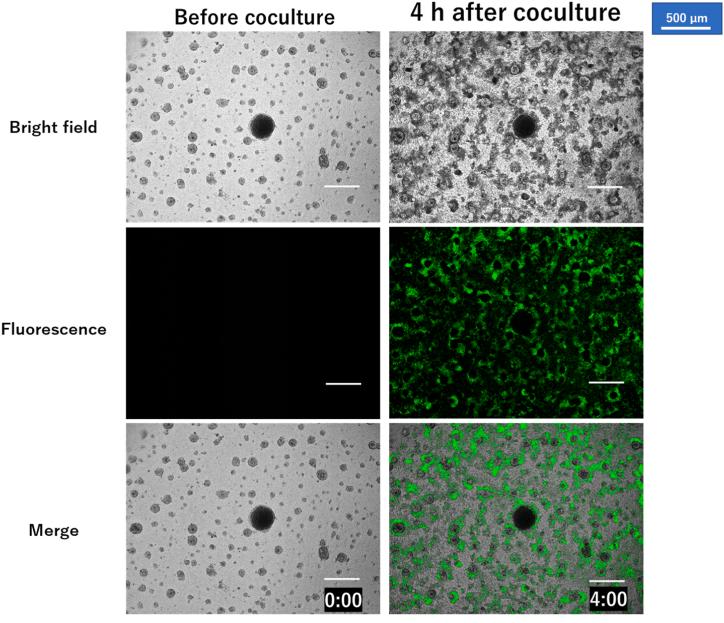
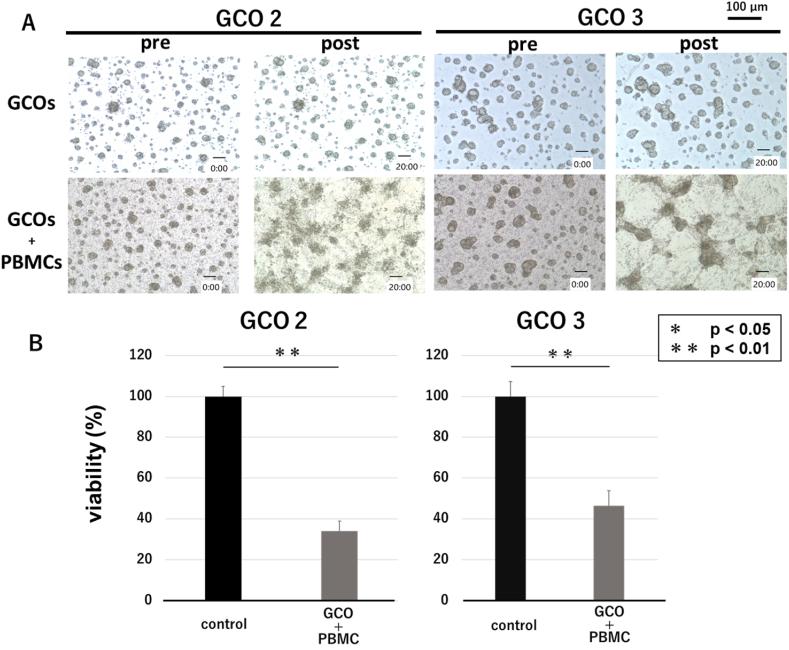
Organoid technology, a novel 3D cell culture system, can reproduce a patient's cancer and may be a novel immunotherapy experimental model. However, currently no gastric cancer organoid (GCO) models in which the organoid and immune cells are in free contact and sufficiently react with each other exist. In this study, we aimed to create a coculture model in which immune cells can move freely and stay in contact with GCOs. We coated the bottom surface of the plate with Matrigel and adhered stem cells to the Matrigel surface, instead of completely embedding them in Matrigel to culture organoids. This method allowed GCOs to grow on the Matrigel surface while maintaining a three-dimensional structure and reproducing the characteristics of the patient's cancer. We cocultured GCOs and immune cells. Using this model, immune cells could freely move and were in sufficient contact with the cultured GCOs. Our model allowed real-time observation of the immune response and tumor destruction with time. In addition, the GCO killing assay was assessed with natural killer cells from the same patient. This organoid culture model enabled repeated evaluation of the GCO killing assay with various immune cells . We established a new experimental model that allowed free movement of immune cells and sufficient contact with GCOs. Using this model, it may be possible to predict the effects of immune checkpoint inhibitors (using GCOs) before administering them to patients.
类器官技术是一种新型的三维细胞培养系统,能够重现患者的癌症情况,可能成为一种新型的免疫治疗实验模型。然而,目前尚不存在类器官与免疫细胞能够自由接触并充分相互作用的胃癌类器官(GCO)模型。在本研究中,我们旨在创建一种共培养模型,使免疫细胞能够自由移动并与GCO保持接触。我们用基质胶包被培养板底面,并将干细胞黏附于基质胶表面,而非将它们完全包埋于基质胶中来培养类器官。这种方法使GCO在基质胶表面生长,同时保持三维结构并重现患者癌症的特征。我们将GCO与免疫细胞进行共培养。利用该模型,免疫细胞能够自由移动并与培养的GCO充分接触。我们的模型能够实时观察免疫反应以及随着时间推移肿瘤的破坏情况。此外,使用来自同一患者的自然杀伤细胞评估了GCO杀伤试验。这种类器官培养模型能够对使用各种免疫细胞的GCO杀伤试验进行重复评估。我们建立了一种新的实验模型,该模型允许免疫细胞自由移动并与GCO充分接触。利用这个模型,在将免疫检查点抑制剂应用于患者之前(使用GCO)有可能预测其效果。




 Zotero 插件