
优化用于完整透明带水牛受精卵中CRISPR/Cas介导基因敲除的电穿孔条件
Optimising Electroporation Condition for CRISPR/Cas-Mediated Knockout in Zona-Intact Buffalo Zygotes.
作者信息
Punetha Meeti, Kumar Dharmendra, Saini Sheetal, Chaudhary Suman, Bajwa Kamlesh Kumari, Sharma Surabhi, Mangal Manu, Yadav Prem S, Green Jonathan A, Whitworth Kristin, Datta Tirtha K
机构信息
Animal Physiology and Reproduction Division, ICAR-Central Institute for Research on Buffaloes, Hisar 125001, Haryana, India.
Division of Animal Sciences, University of Missouri, Columbia, MO 65211, USA.
出版信息
Animals (Basel). 2023 Dec 30;14(1):134. doi: 10.3390/ani14010134.
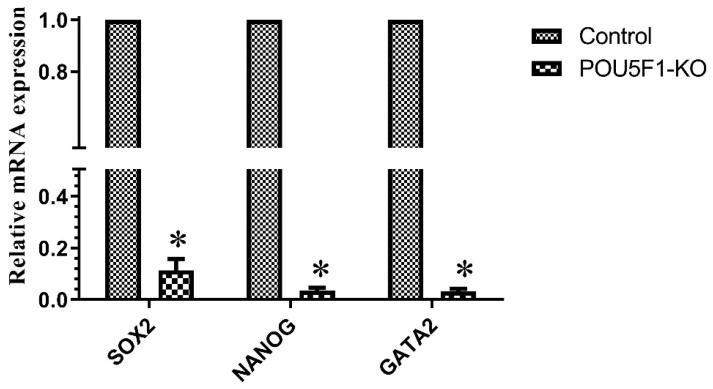
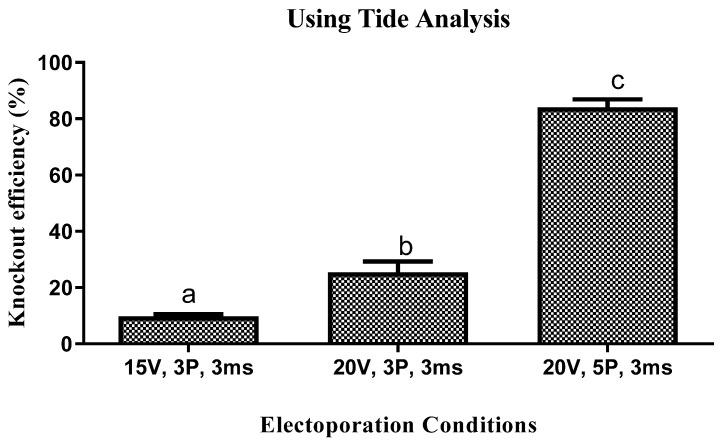
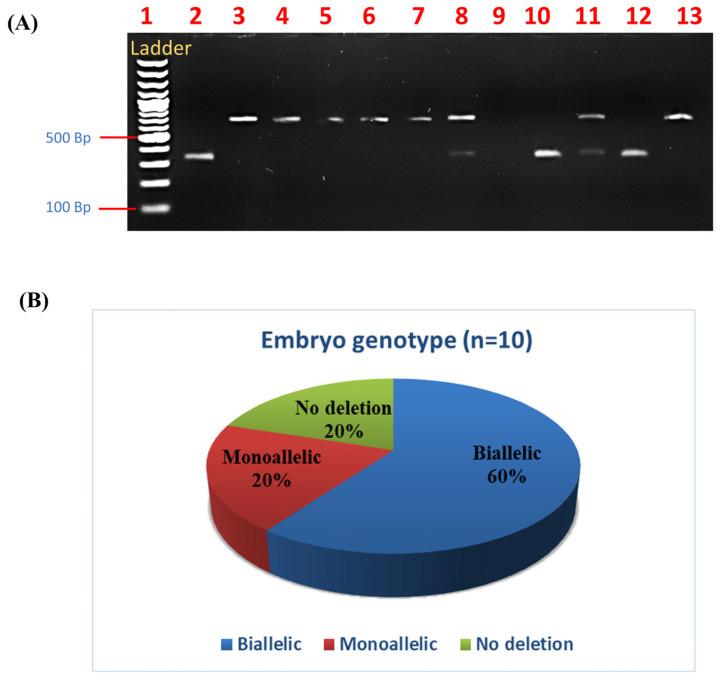
Somatic cell nuclear transfer or cytoplasm microinjection has widely been used to produce genome-edited farm animals; however, these methods have several drawbacks which reduce their efficiency. In the present study, we describe an easy adaptable approach for the introduction of mutations using CRISPR-Cas9 electroporation of zygote (CRISPR-EP) in buffalo. The goal of the study was to determine the optimal conditions for an experimental method in which the CRISPR/Cas9 system is introduced into in vitro-produced buffalo zygotes by electroporation. Electroporation was performed using different combinations of voltage, pulse and time, and we observed that the electroporation in buffalo zygote at 20 V/mm, 5 pulses, 3 msec at 10 h post insemination (hpi) resulted in increased membrane permeability and higher knockout efficiency without altering embryonic developmental potential. Using the above parameters, we targeted buffalo POU5F1 gene as a proof of concept and found no variations in embryonic developmental competence at cleavage or blastocyst formation rate between control, POU5F1-KO, and electroporated control (EC) embryos. To elucidate the effect of POU5F1-KO on other pluripotent genes, we determined the relative expression of SOX2, NANOG, and GATA2 in the control (POU5F1 intact) and POU5F1-KO-confirmed blastocyst. POU5F1-KO significantly ( ≤ 0.05) altered the expression of SOX2, NANOG, and GATA2 in blastocyst stage embryos. In conclusion, we standardized an easy and straightforward protocol CRISPR-EP method that could be served as a useful method for studying the functional genomics of buffalo embryos.
体细胞核移植或细胞质显微注射已被广泛用于生产基因组编辑的农场动物;然而,这些方法存在几个缺点,降低了它们的效率。在本研究中,我们描述了一种易于应用的方法,即利用水牛受精卵的CRISPR-Cas9电穿孔(CRISPR-EP)引入突变。本研究的目的是确定一种实验方法的最佳条件,在该方法中,CRISPR/Cas9系统通过电穿孔引入体外生产的水牛受精卵中。使用不同的电压、脉冲和时间组合进行电穿孔,我们观察到在授精后10小时(hpi)以20 V/mm、5个脉冲、3毫秒对水牛受精卵进行电穿孔,可提高膜通透性并提高敲除效率,同时不改变胚胎发育潜能。使用上述参数,我们以水牛POU5F1基因为概念验证靶点,发现对照、POU5F1-KO和电穿孔对照(EC)胚胎在卵裂或囊胚形成率方面的胚胎发育能力没有差异。为了阐明POU5F1-KO对其他多能基因的影响,我们测定了对照(POU5F1完整)和POU5F1-KO确认的囊胚中SOX2、NANOG和GATA2的相对表达。POU5F1-KO显著(≤0.05)改变了囊胚期胚胎中SOX2、NANOG和GATA2的表达。总之,我们标准化了一种简单直接的CRISPR-EP方法,该方法可作为研究水牛胚胎功能基因组学的有用方法。



 Zotero 插件