
利用镓 [68Ga] DOTATATE PET/CT 上的半自动肿瘤勾画预测神经内分泌肿瘤患者的镥 [177Lu] DOTATATE 治疗结果
Prediction of Lu-DOTATATE Therapy Outcomes in Neuroendocrine Tumor Patients Using Semi-Automatic Tumor Delineation on Ga-DOTATATE PET/CT.
作者信息
Lee Hwan, Kipnis Sarit T, Niman Remy, O'Brien Sophia R, Eads Jennifer R, Katona Bryson W, Pryma Daniel A
机构信息
Department of Radiology, University of Pennsylvania Perelman School of Medicine, Philadelphia, PA 19104, USA.
Department of Medicine, University of Pennsylvania Perelman School of Medicine, Philadelphia, PA 19104, USA.
出版信息
Cancers (Basel). 2023 Dec 31;16(1):200. doi: 10.3390/cancers16010200.
BACKGROUND
Treatment of metastatic neuroendocrine tumors (NET) with Lu-DOTATATE peptide receptor radionuclide therapy (PRRT) results in favorable response only in a subset of patients. We investigated the prognostic value of quantitative pre-treatment semi-automatic Ga-DOTATATE PET/CT analysis in NET patients treated with PRRT.
METHODS
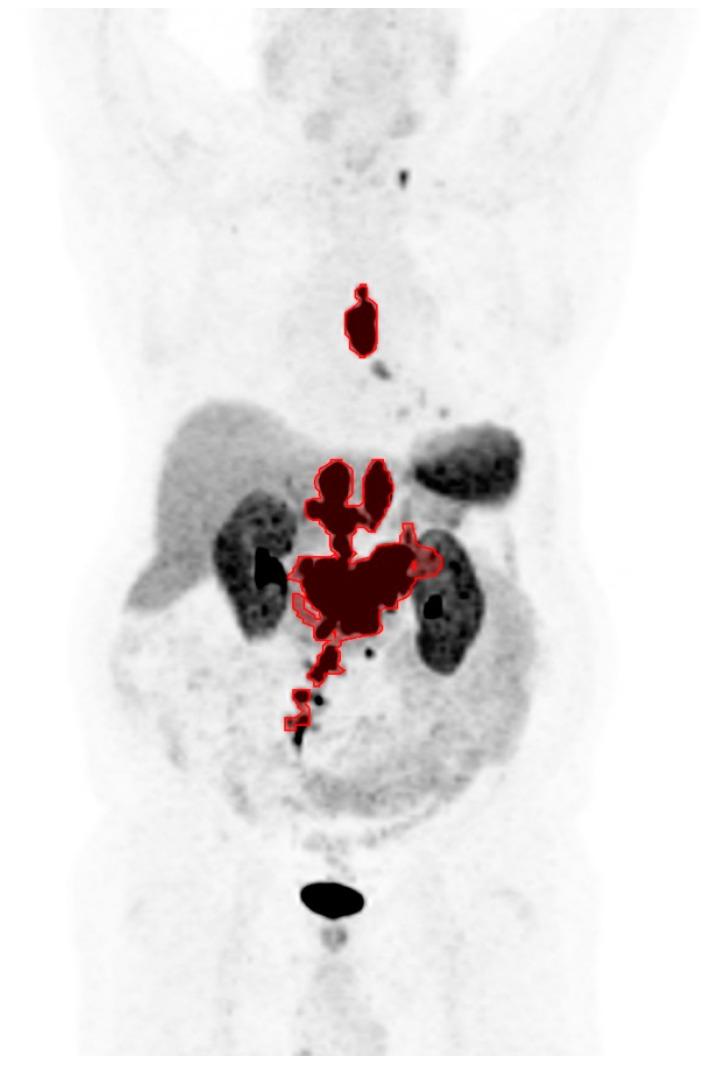
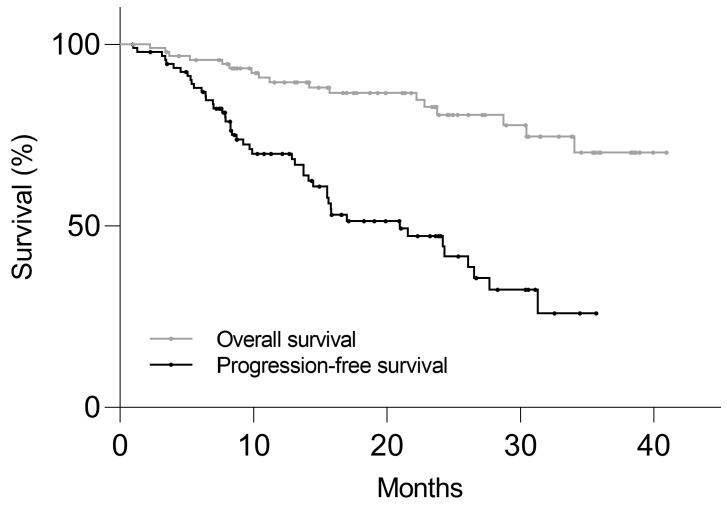
The medical records of 94 NET patients who received at least one cycle of PRRT at a single institution were retrospectively reviewed. On each pre-treatment Ga-DOTATATE PET/CT, the total tumor volume (TTV), maximum tumor standardized uptake value for the patient (SUVmax), and average uptake in the lesion with the lowest radiotracer uptake (SUVmin) were determined with a semi-automatic tumor delineation method. Progression-free survival (PFS) and overall survival (OS) among the patients were compared based on optimal cutoff values for the imaging parameters.
RESULTS
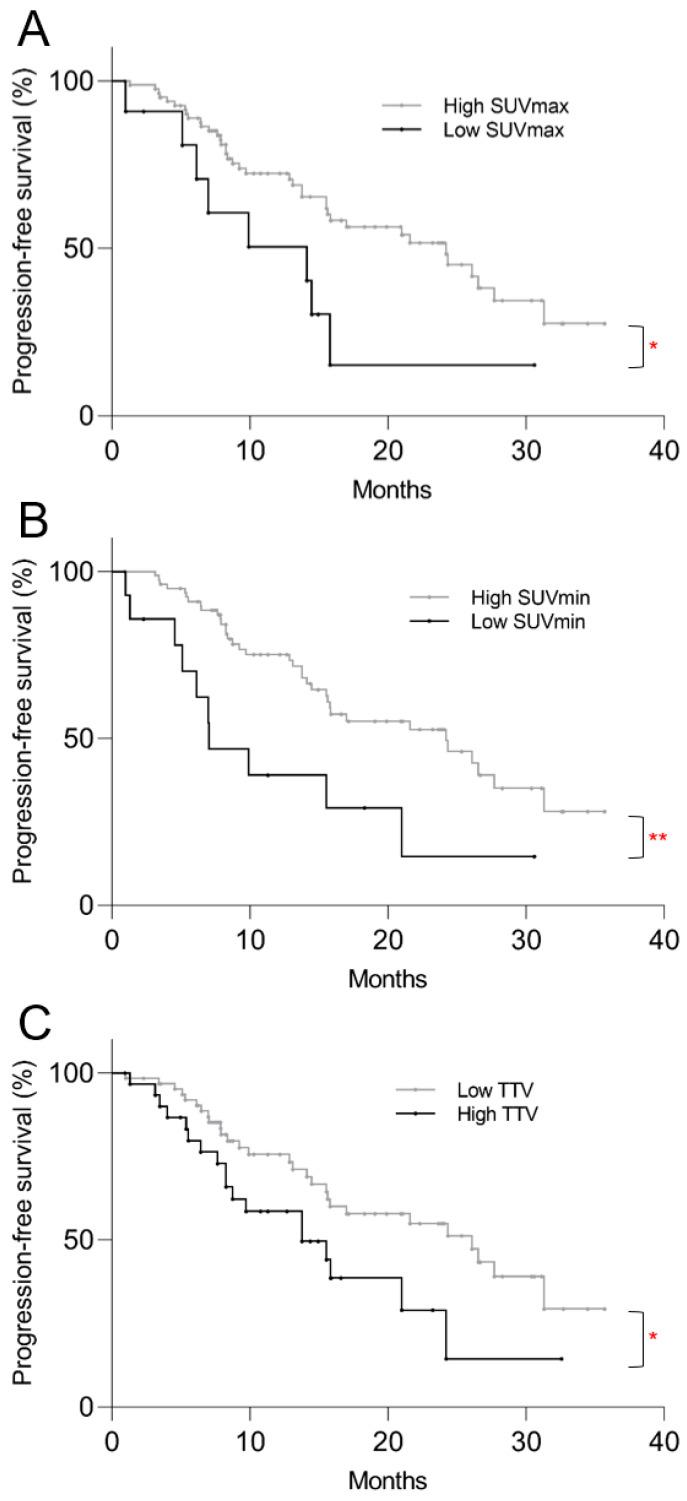
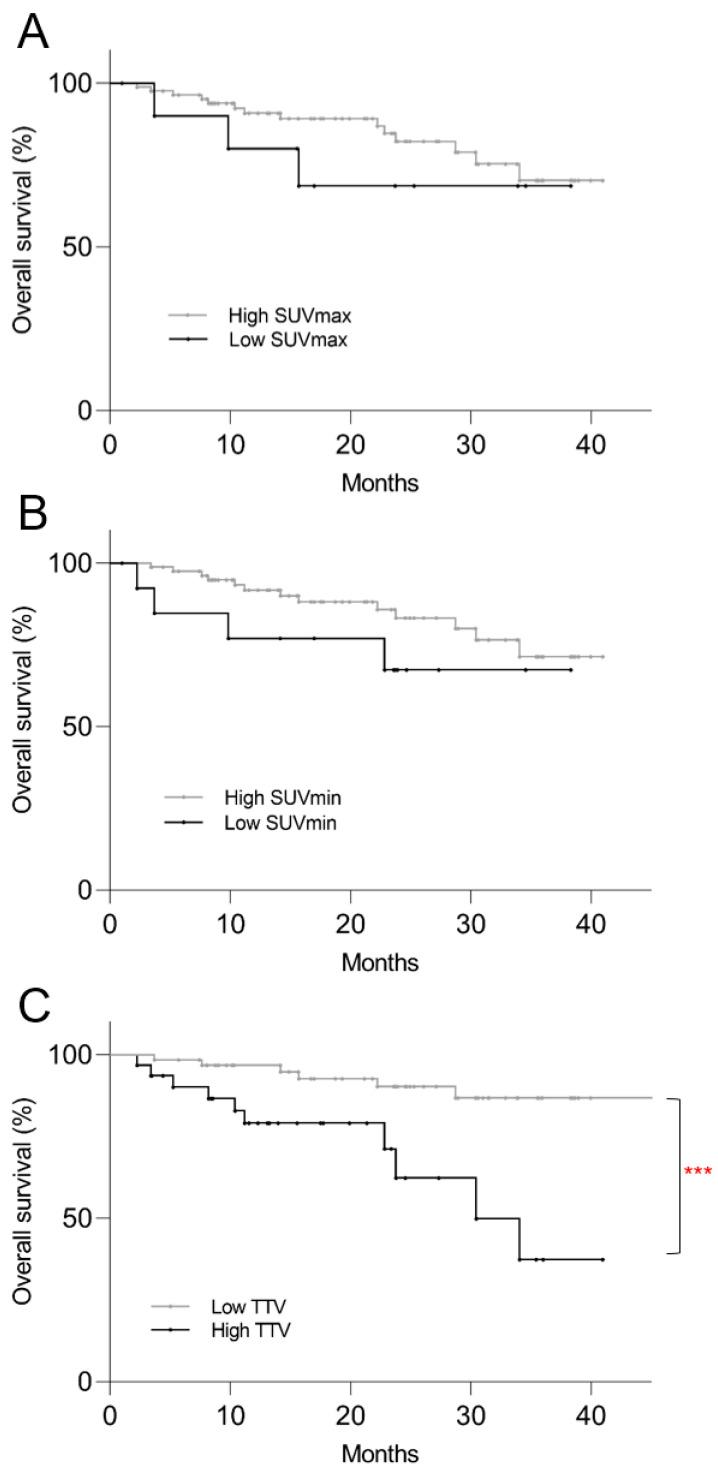
On Kaplan-Meier analysis and univariate Cox regression, significantly shorter PFS was observed in patients with lower SUVmax, lower SUVmin, and higher TTV. On multivariate Cox regression, lower SUVmin and higher TTV remained predictive of shorter PFS. Only higher TTV was found to be predictive of shorter OS on Kaplan-Meier and Cox regression analyses. In a post hoc Kaplan-Meier analysis, patients with at least one high-risk feature (low SUVmin or high TTV) showed shorter PFS and OS, which may be the most convenient parameter to measure in clinical practice.
CONCLUSIONS
The tumor volume and lowest lesion uptake on Ga-DOTATATE PET/CT can predict disease progression following PRRT in NET patients, with the former also predictive of overall survival. NET patients at risk for poor outcomes following PRRT can be identified with semi-automated quantitative analysis of Ga-DOTATATE PET/CT.
背景
用镥-多柔比星肽受体放射性核素治疗(PRRT)治疗转移性神经内分泌肿瘤(NET)仅在部分患者中产生良好反应。我们研究了PRRT治疗的NET患者治疗前定量半自动镓-多柔比星PET/CT分析的预后价值。
方法
回顾性分析了在单一机构接受至少一个周期PRRT的94例NET患者的病历。在每次治疗前的镓-多柔比星PET/CT上,采用半自动肿瘤勾画方法确定总肿瘤体积(TTV)、患者的最大肿瘤标准化摄取值(SUVmax)以及放射性示踪剂摄取最低的病变中的平均摄取量(SUVmin)。根据成像参数的最佳临界值比较患者的无进展生存期(PFS)和总生存期(OS)。
结果
在Kaplan-Meier分析和单变量Cox回归中,SUVmax较低、SUVmin较低和TTV较高的患者观察到明显较短的PFS。在多变量Cox回归中,较低的SUVmin和较高的TTV仍然是较短PFS的预测因素。在Kaplan-Meier和Cox回归分析中,仅发现较高的TTV是较短OS的预测因素。在事后Kaplan-Meier分析中,具有至少一个高危特征(低SUVmin或高TTV)的患者显示出较短的PFS和OS,这可能是临床实践中最方便测量的参数。
结论
镓-多柔比星PET/CT上的肿瘤体积和最低病变摄取可预测NET患者PRRT后的疾病进展,前者也可预测总生存期。通过镓-多柔比星PET/CT的半自动定量分析可以识别PRRT后预后不良风险的NET患者。

 Zotero 插件