
妊娠和哺乳期营养过剩会导致后代出现性别依赖性代谢异常,并伴有更高的应激和焦虑。
Overnutrition during Pregnancy and Lactation Induces Gender-Dependent Dysmetabolism in the Offspring Accompanied by Heightened Stress and Anxiety.
机构信息
iNOVA4Health, NOVA Medical School, Faculdade de Ciências Médicas, Universidade NOVA de Lisboa, Rua Camara Pestana, 6, Edificio 2, 1150-082 Lisboa, Portugal.
出版信息
Nutrients. 2023 Dec 25;16(1):67. doi: 10.3390/nu16010067.
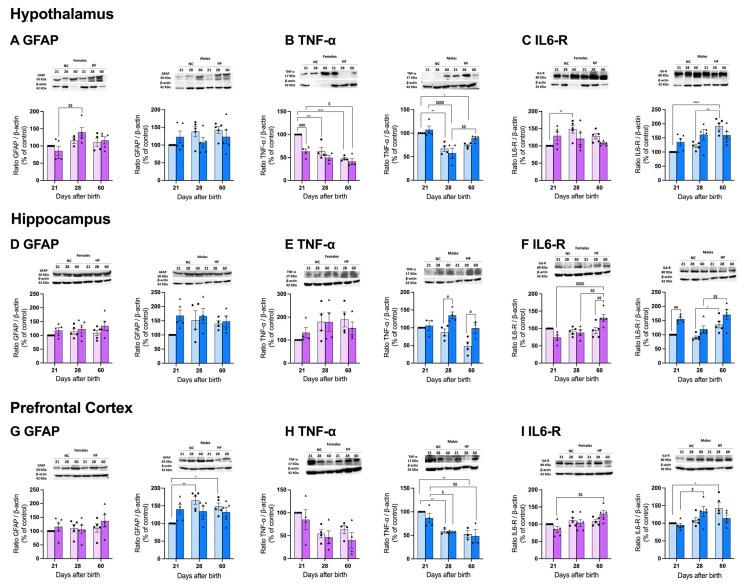
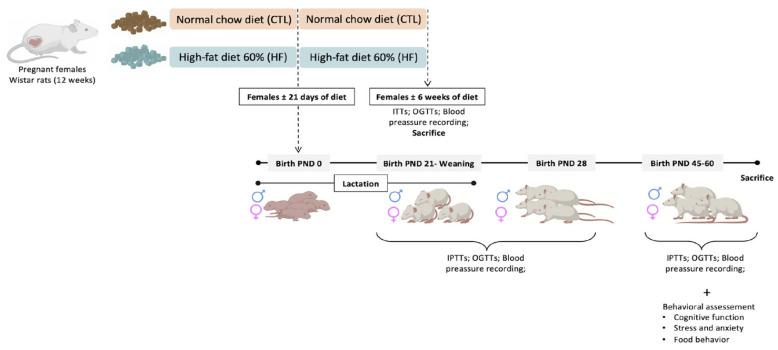
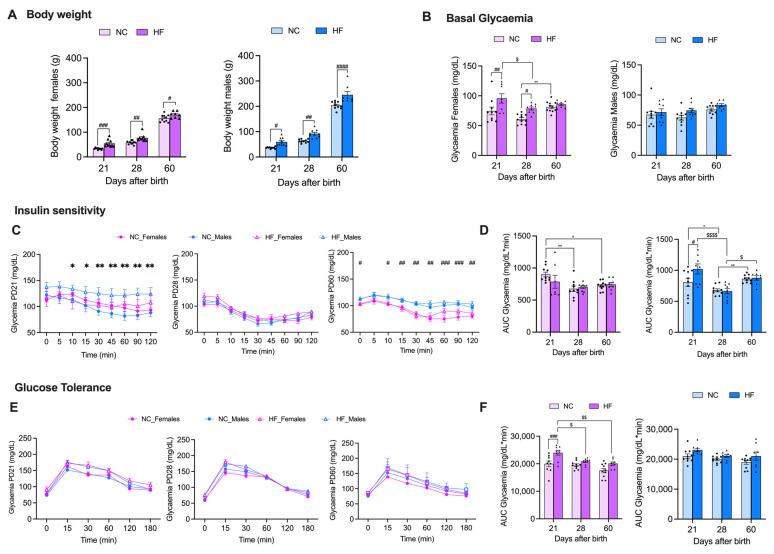
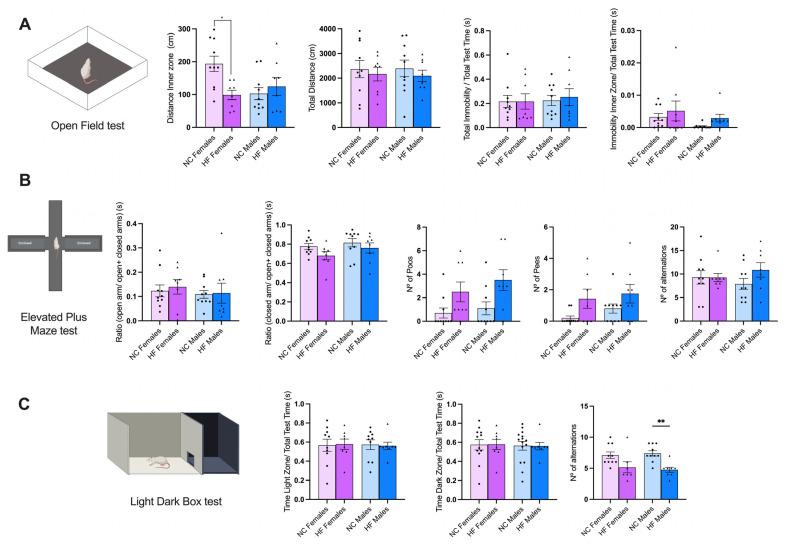
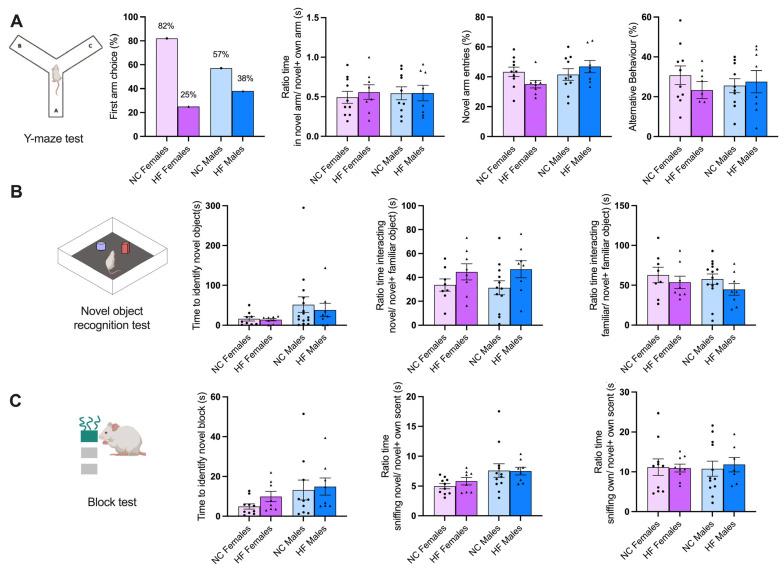
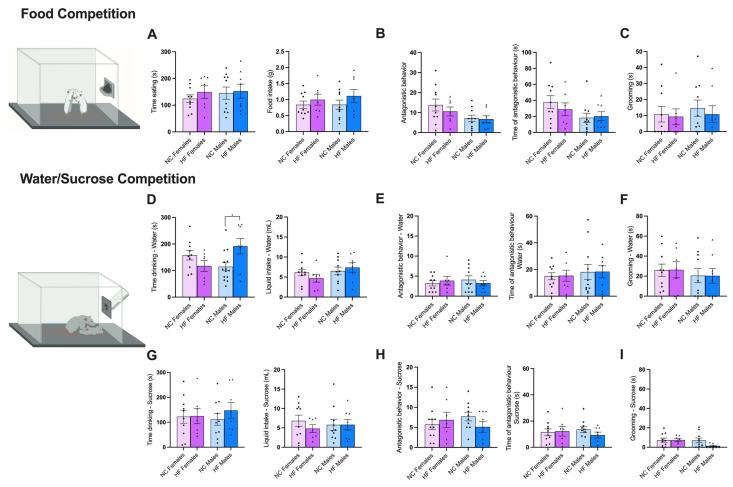
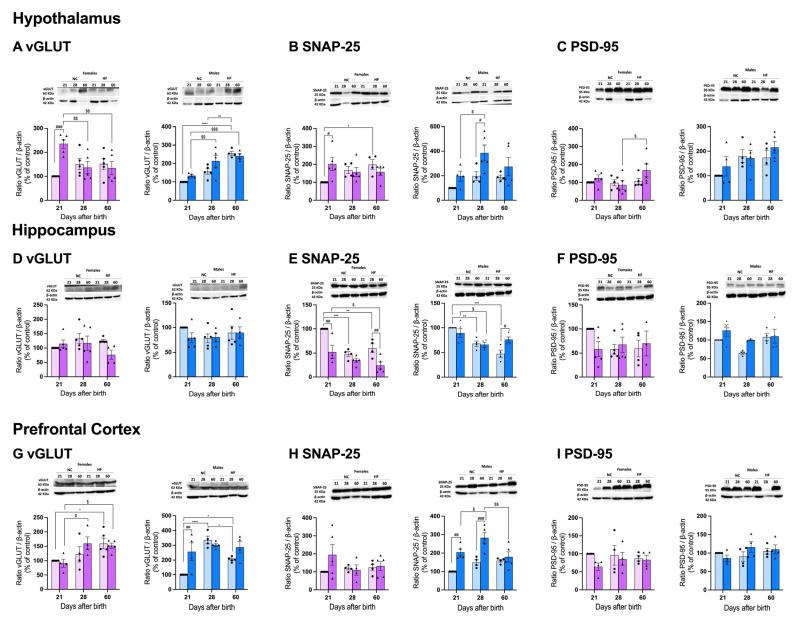
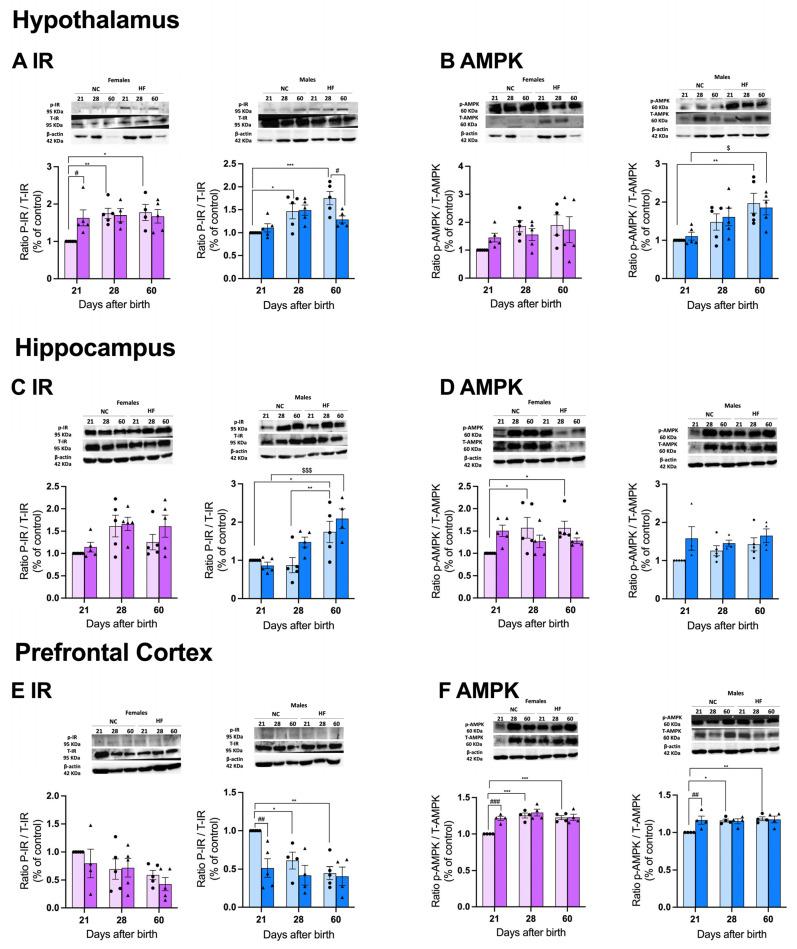
Maternal obesity and gestational diabetes predispose the next generation to metabolic disturbances. Moreover, the lactation phase also stands as a critical phase for metabolic programming. Nevertheless, the precise mechanisms originating these changes remain unclear. Here, we investigate the consequences of a maternal lipid-rich diet during gestation and lactation and its impact on metabolism and behavior in the offspring. Two experimental groups of Wistar female rats were used: a control group (NC) that was fed a standard diet during the gestation and lactation periods and an overnutrition group that was fed a high-fat diet (HF, 60% lipid-rich) during the same phases. The offspring were analyzed at postnatal days 21 and 28 and at 2 months old (PD21, PD28, and PD60) for their metabolic profiles (weight, fasting glycemia insulin sensitivity, and glucose tolerance) and euthanized for brain collection to evaluate metabolism and inflammation in the hypothalamus, hippocampus, and prefrontal cortex using Western blot markers of synaptic dynamics. At 2 months old, behavioral tests for anxiety, stress, cognition, and food habits were conducted. We observed that the female offspring born from HF mothers exhibited increased weight gain and decreased glucose tolerance that attenuated with age. In the offspring males, weight gain increased at P21 and worsened with age, while glucose tolerance remained unchanged. The offspring of the HF mothers exhibited elevated levels of anxiety and stress during behavioral tests, displaying decreased predisposition for curiosity compared to the NC group. In addition, the offspring from mothers with HF showed increased food consumption and a lower tendency towards food-related aggression. We conclude that exposure to an HF diet during pregnancy and lactation induces dysmetabolism in the offspring and is accompanied by heightened stress and anxiety. There was sexual dimorphism in the metabolic traits but not behavioral phenotypes.
母体肥胖和妊娠期糖尿病使下一代容易出现代谢紊乱。此外,哺乳期也是代谢编程的关键阶段。然而,导致这些变化的确切机制尚不清楚。在这里,我们研究了母体高脂饮食在妊娠和哺乳期的后果及其对后代代谢和行为的影响。我们使用了两组 Wistar 雌性大鼠进行实验:一组是对照组(NC),在妊娠和哺乳期喂食标准饮食;另一组是高脂肪饮食组(HF,60%高脂)。在产后 21 天(PD21)、28 天(PD28)和 60 天(PD60),对后代的代谢特征(体重、空腹血糖、胰岛素敏感性和葡萄糖耐量)进行分析,并对大脑进行安乐死,以评估下丘脑、海马体和前额叶皮层的代谢和炎症,使用突触动态的 Western blot 标志物。在 2 个月大时,对焦虑、压力、认知和饮食习惯进行行为测试。我们观察到,来自 HF 母亲的雌性后代体重增加,葡萄糖耐量降低,随着年龄的增长而减弱。在 HF 母亲的雄性后代中,体重增加在 P21 时增加,并随着年龄的增长而恶化,而葡萄糖耐量保持不变。HF 母亲的后代在行为测试中表现出更高的焦虑和压力水平,与 NC 组相比,好奇心降低。此外,HF 母亲的后代表现出更高的食物摄入量和较低的食物相关攻击性倾向。我们得出结论,在妊娠和哺乳期暴露于 HF 饮食会导致后代代谢紊乱,并伴有更高的压力和焦虑。代谢特征存在性别二态性,但行为表型没有。
 Zotero 插件