
计算机模拟和体外鉴定 1,8-二羟基-4,5-二硝基蒽醌作为一种新型抗菌剂,用于对抗 和 。
In Silico and In Vitro Identification of 1,8-Dihydroxy-4,5-dinitroanthraquinone as a New Antibacterial Agent against and .
机构信息
Unidad de Salud y Bienestar, Facultad de Bioquímica y Farmacia, Universidad Católica de Cuenca, Av. Las Américas, Cuenca 010105, Ecuador.
出版信息
Molecules. 2023 Dec 29;29(1):203. doi: 10.3390/molecules29010203.
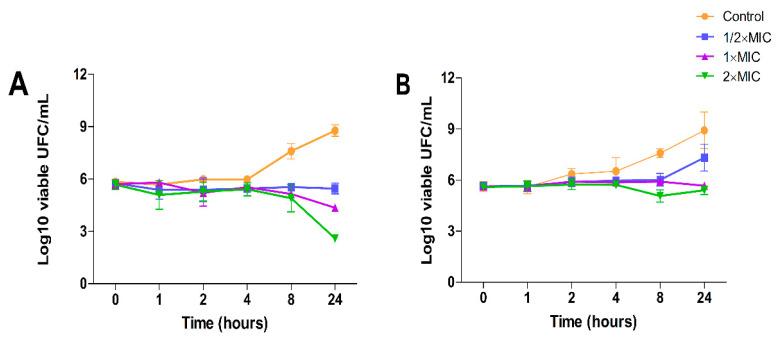
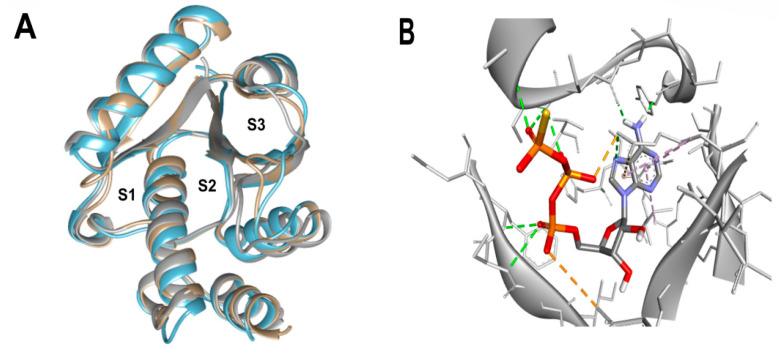
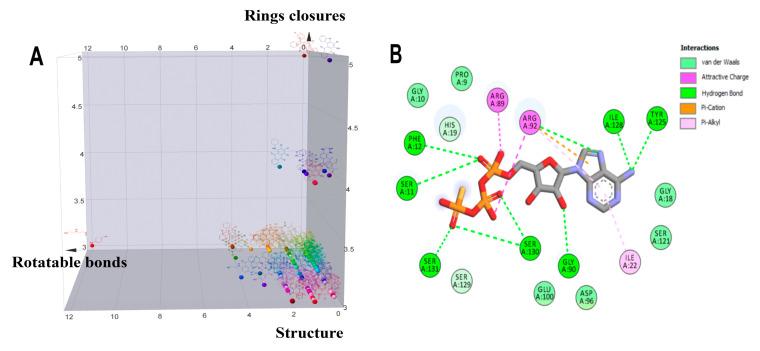
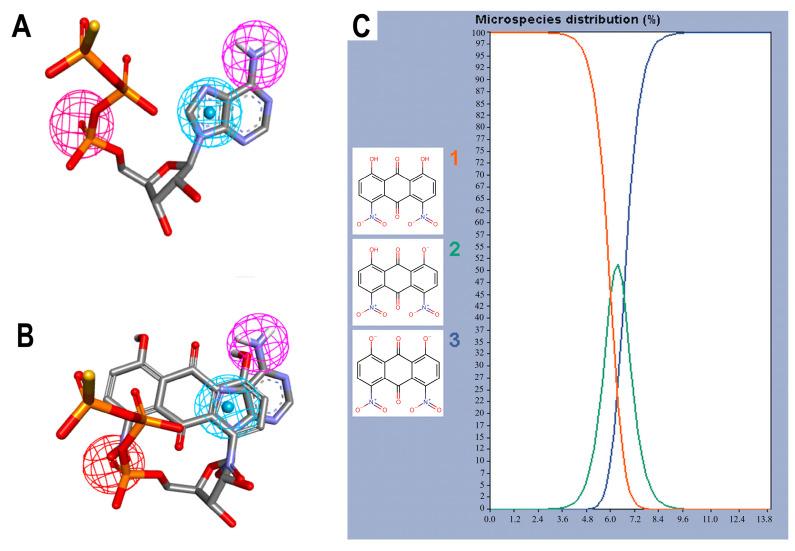
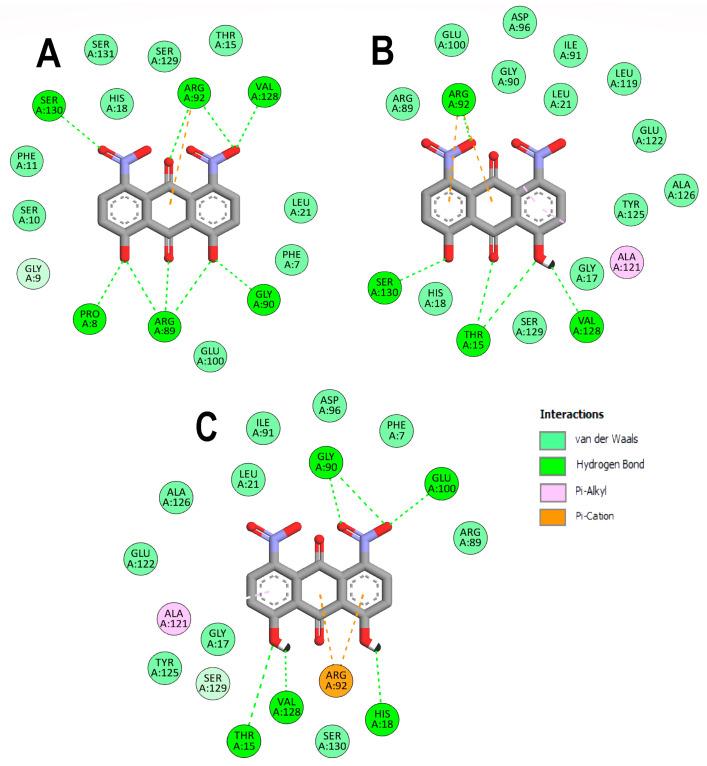
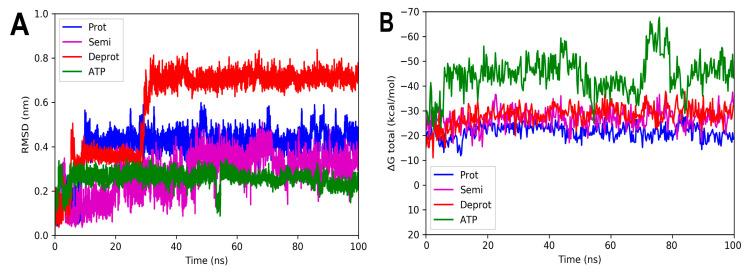
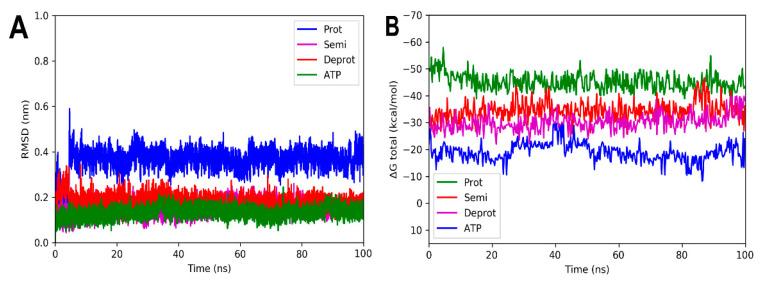
Increasing rates of bacterial resistance to antibiotics are a growing concern worldwide. The search for potential new antibiotics has included several natural products such as anthraquinones. However, comparatively less attention has been given to anthraquinones that exhibit functional groups that are uncommon in nature. In this work, 114 anthraquinones were evaluated using in silico methods to identify inhibitors of the enzyme phosphopantetheine adenylyltransferase (PPAT) of , , and . Virtual screenings based on molecular docking and the pharmacophore model, molecular dynamics simulations, and free energy calculations pointed to 1,8-dihydroxy-4,5-dinitroanthraquinone (DHDNA) as the most promising inhibitor. In addition, these analyses highlighted the contribution of the nitro group to the affinity of this anthraquinone for the nucleotide-binding site of PPAT. Furthermore, DHDNA was active in vitro towards Gram-positive bacteria with minimum inhibitory concentration (MIC) values of 31.25 µg/mL for and 62.5 µg/mL for against both antibiotic-resistant isolates and reference strains but was ineffective against . Experiments on kill-time kinetics indicated that, at the tested concentrations, DHDNA produced bacteriostatic effects on both Gram-positive bacteria. Overall, our results present DHDNA as a potential PPAT inhibitor, showing antibacterial activity against antibiotic-resistant isolates of and , findings that point to nitro groups as key to explaining these results.
细菌对抗生素的耐药率不断上升,这是全球日益关注的问题。寻找潜在的新抗生素包括几种天然产物,如蒽醌。然而,相对较少关注具有自然界中不常见官能团的蒽醌。在这项工作中,使用计算方法评估了 114 种蒽醌,以鉴定 、 、 和 的酶磷酸泛酰巯基乙胺腺苷转移酶(PPAT)的抑制剂。基于分子对接和药效团模型、分子动力学模拟和自由能计算的虚拟筛选,指向 1,8-二羟基-4,5-二硝基蒽醌(DHDNA)作为最有前途的抑制剂。此外,这些分析突出了硝基基团对这种蒽醌与 PPAT 的核苷酸结合位点亲和力的贡献。此外,DHDNA 对革兰氏阳性菌具有体外活性,对 和 的最小抑菌浓度(MIC)值分别为 31.25 µg/mL 和 62.5 µg/mL,对两种抗生素耐药株和参考株均有效,但对 无效。杀菌动力学实验表明,在测试浓度下,DHDNA 对两种革兰氏阳性菌均产生抑菌作用。总的来说,我们的结果表明 DHDNA 是一种潜在的 PPAT 抑制剂,对 和 的抗生素耐药株具有抗菌活性,这些结果表明硝基基团是解释这些结果的关键。




 Zotero 插件