
跨文化调整育儿方式和家庭干预措施作为青少年物质使用的有效预防策略:一项范围综述
Tailoring parenting styles and family-based interventions cross-culturally as an effective prevention strategy for youth substance use: a scoping review.
作者信息
Williams Ozge C, Prasad Sakshi, Khan Ahmed Ali, Ayisire Oghenetega Esther, Naseer Hafsa, Abdullah Muhammad, Nadeem Mahrukh, Ashraf Nauman, Zeeshan Muhammad
机构信息
Department of Psychiatry, Ozark Center Joplin, MO.
Department of Psychiatry National Pirogov Memorial Medical University, Vinnytsya, Ukraine.
出版信息
Ann Med Surg (Lond). 2023 Nov 1;86(1):257-270. doi: 10.1097/MS9.0000000000001387. eCollection 2024 Jan.
BACKGROUND
The challenge of substance use among youth continues to be a highly concerning public health issue across the globe. The notion that parenting lifestyles and family-based intervention can help in the prevention of adolescent substance use have received robust attention from policy makers, researchers' clinicians and general public, nonetheless, there is scarcity of high quality evidence to support these concepts.
OBJECTIVE
To review available literature which assessed the effects of parenting styles and family-based interventions on the prevention of adolescent substance use.
METHODS
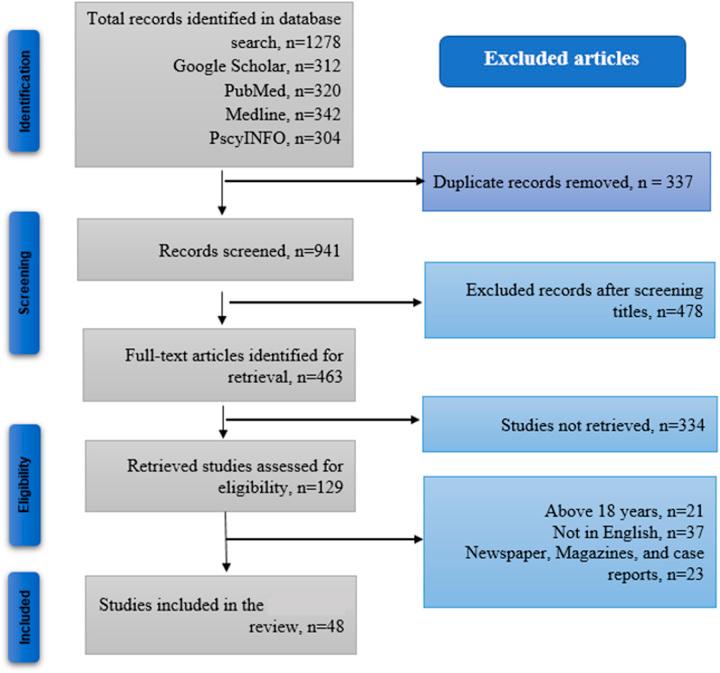
A scoping review of literature to identify studies published in English between 2012 and 2022 was conducted searching Scopus, MEDLINE, PsychInfo, and CINAHL databases focused on effects of parenting styles and family-based interventions in the prevention of adolescent substance use.Keywords of family-based intervention strategies and possible outcomes of parenting styles on youth substance use were coded from the results, discussion, or conclusion. Strategies were inductively categorized into themes according to the focus of the strategy.
RESULTS
A total of 47 studies, published between 2012 and 2022 in English language included. Narrative synthesis illustrated that parental involvement, restriction of mature-rated content, parental monitoring, authoritative parenting styles, and parental support and knowledge can help in the prevention of adolescent substance use. On the contrary, poor parent-child bonding, overprotection, permissive parenting, parental frustrations, authoritarian and harsh parenting styles promoted adolescent substance use disorders. Proximal risk factors like peer influence, previous use of other substances, and risky behaviours had more effect than just parenting styles. Culturally tailored family-based intervention strategies such as "Preventive Parenting", "Parent Training", and "Parent Involvement", with focus on "Technology Assisted Intervention", particularly "SMART "(Substance Misuse among Adolescents in Residential Treatment) are found as effective family-based intervention strategies to mitigate substance use in youth.
CONCLUSION
Culturally tailored family-based behavioural strategies psychosocial intervention strategies can be considered of the most effective strategies to prevent substance use disorders in youth.
背景
青少年物质使用问题仍然是全球高度关注的公共卫生问题。养育方式和基于家庭的干预措施有助于预防青少年物质使用这一观点,受到了政策制定者、研究人员、临床医生和公众的广泛关注,然而,缺乏高质量的证据来支持这些观念。
目的
回顾评估养育方式和基于家庭的干预措施对预防青少年物质使用效果的现有文献。
方法
对文献进行范围综述,以识别2012年至2022年间发表的英文研究,检索了Scopus、MEDLINE、PsychInfo和CINAHL数据库,重点关注养育方式和基于家庭的干预措施在预防青少年物质使用方面的效果。从结果、讨论或结论中提取基于家庭的干预策略关键词以及养育方式对青少年物质使用可能产生的结果。根据策略重点,将策略归纳为不同主题。
结果
共纳入2012年至2022年间发表的47项英文研究。叙述性综合分析表明,父母参与、限制成人级内容、父母监督、权威型养育方式、父母支持和知识有助于预防青少年物质使用。相反,亲子关系差、过度保护、放任型养育、父母挫折感、专制和严厉的养育方式会促使青少年出现物质使用障碍。同伴影响、先前使用其他物质和危险行为等近端风险因素的影响比养育方式更大。发现“预防性养育”“父母培训”和“父母参与”等针对文化定制的基于家庭的干预策略,特别是侧重于“技术辅助干预”,尤其是“SMART”(住院治疗青少年中的药物滥用),是减轻青少年物质使用的有效基于家庭的干预策略。
结论
针对文化定制的基于家庭的行为策略和心理社会干预策略可被视为预防青少年物质使用障碍最有效的策略。
 Zotero 插件