
改善重症监护病房实验室检测适宜性的干预措施:一项叙述性综述。
Interventions to improve appropriateness of laboratory testing in the intensive care unit: a narrative review.
作者信息
Devis Luigi, Catry Emilie, Honore Patrick M, Mansour Alexandre, Lippi Giuseppe, Mullier François, Closset Mélanie
机构信息
Department of Laboratory Medicine, Biochemistry, CHU UCL Namur, Université catholique de Louvain, Yvoir, Belgium.
Institute for Experimental and Clinical Research (IREC), Pôle Mont Godinne (MONT), UCLouvain, Yvoir, Belgium.
出版信息
Ann Intensive Care. 2024 Jan 15;14(1):9. doi: 10.1186/s13613-024-01244-y.
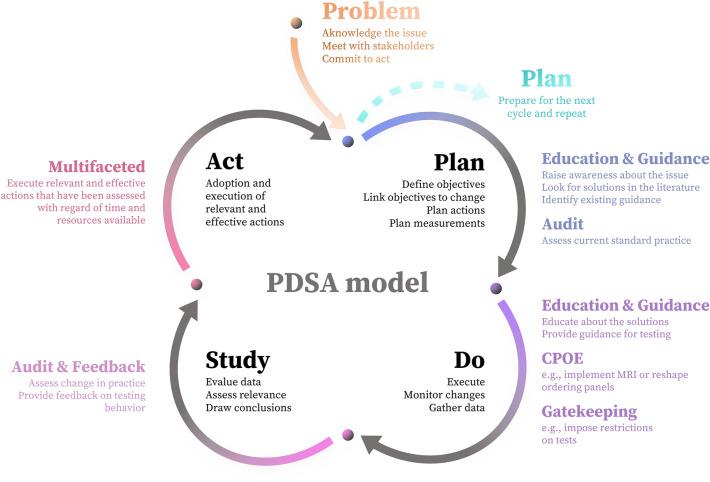
Healthcare expenses are increasing, as is the utilization of laboratory resources. Despite this, between 20% and 40% of requested tests are deemed inappropriate. Improper use of laboratory resources leads to unwanted consequences such as hospital-acquired anemia, infections, increased costs, staff workload and patient stress and discomfort. The most unfavorable consequences result from unnecessary follow-up tests and treatments (overuse) and missed or delayed diagnoses (underuse). In this context, several interventions have been carried out to improve the appropriateness of laboratory testing. To date, there have been few published assessments of interventions specific to the intensive care unit. We reviewed the literature for interventions implemented in the ICU to improve the appropriateness of laboratory testing. We searched literature from 2008 to 2023 in PubMed, Embase, Scopus, and Google Scholar databases between April and June 2023. Five intervention categories were identified: education and guidance (E&G), audit and feedback, gatekeeping, computerized physician order entry (including reshaping of ordering panels), and multifaceted interventions (MFI). We included a sixth category exploring the potential role of artificial intelligence and machine learning (AI/ML)-based assisting tools in such interventions. E&G-based interventions and MFI are the most frequently used approaches. MFI is the most effective type of intervention, and shows the strongest persistence of effect over time. AI/ML-based tools may offer valuable assistance to the improvement of appropriate laboratory testing in the near future. Patient safety outcomes are not impaired by interventions to reduce inappropriate testing. The literature focuses mainly on reducing overuse of laboratory tests, with only one intervention mentioning underuse. We highlight an overall poor quality of methodological design and reporting and argue for standardization of intervention methods. Collaboration between clinicians and laboratory staff is key to improve appropriate laboratory utilization. This article offers practical guidance for optimizing the effectiveness of an intervention protocol designed to limit inappropriate use of laboratory resources.
医疗费用在不断增加,实验室资源的使用情况亦是如此。尽管如此,仍有20%至40%的申请检测被认为是不恰当的。实验室资源的不当使用会导致不良后果,如医院获得性贫血、感染、成本增加、工作人员工作量加大以及患者压力和不适。最不利的后果来自不必要的后续检测和治疗(过度使用)以及漏诊或诊断延迟(使用不足)。在这种背景下,已经开展了多项干预措施来提高实验室检测的恰当性。迄今为止,针对重症监护病房的特定干预措施的已发表评估很少。我们回顾了在重症监护病房实施的旨在提高实验室检测恰当性的干预措施的文献。我们于2023年4月至6月在PubMed、Embase、Scopus和谷歌学术数据库中搜索了2008年至2023年的文献。确定了五类干预措施:教育与指导(E&G)、审核与反馈、把关、计算机化医嘱录入(包括重新设计医嘱面板)以及多方面干预(MFI)。我们纳入了第六类,探讨基于人工智能和机器学习(AI/ML)的辅助工具在此类干预措施中的潜在作用。基于E&G的干预措施和MFI是最常用的方法。MFI是最有效的干预类型,并且随着时间推移显示出最强的效果持续性。基于AI/ML的工具可能在不久的将来为改善恰当的实验室检测提供有价值的帮助。减少不恰当检测的干预措施不会损害患者安全结果。文献主要关注减少实验室检测的过度使用,只有一项干预措施提到了使用不足。我们强调方法设计和报告的整体质量较差,并主张干预方法的标准化。临床医生和实验室工作人员之间的合作是提高实验室合理利用的关键。本文为优化旨在限制实验室资源不当使用的干预方案的有效性提供了实用指导。

 Zotero 插件