
虚拟现实呼吸干预对心理健康的影响:随机对照试验的系统评价和荟萃分析。
Virtual Reality Breathing Interventions for Mental Health: A Systematic Review and Meta-Analysis of Randomized Controlled Trials.
机构信息
Department of Health Sciences, Vrije Universiteit Amsterdam, Amsterdam, The Netherlands.
Amsterdam Public Health Research Institute, Amsterdam, The Netherlands.
出版信息
Appl Psychophysiol Biofeedback. 2024 Mar;49(1):1-21. doi: 10.1007/s10484-023-09611-4. Epub 2024 Jan 18.
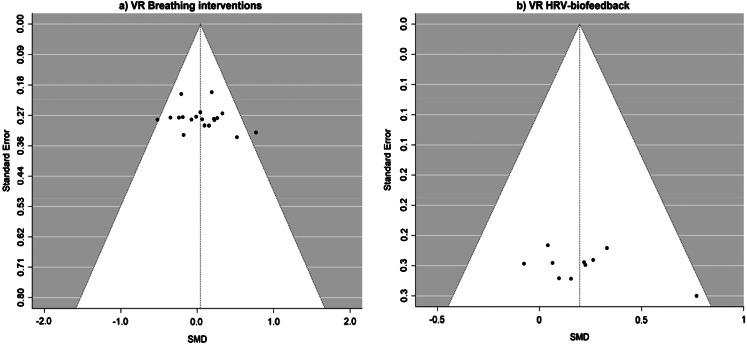
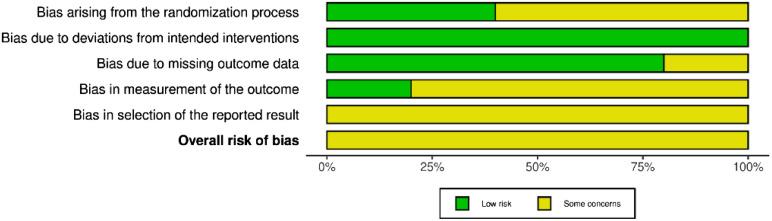
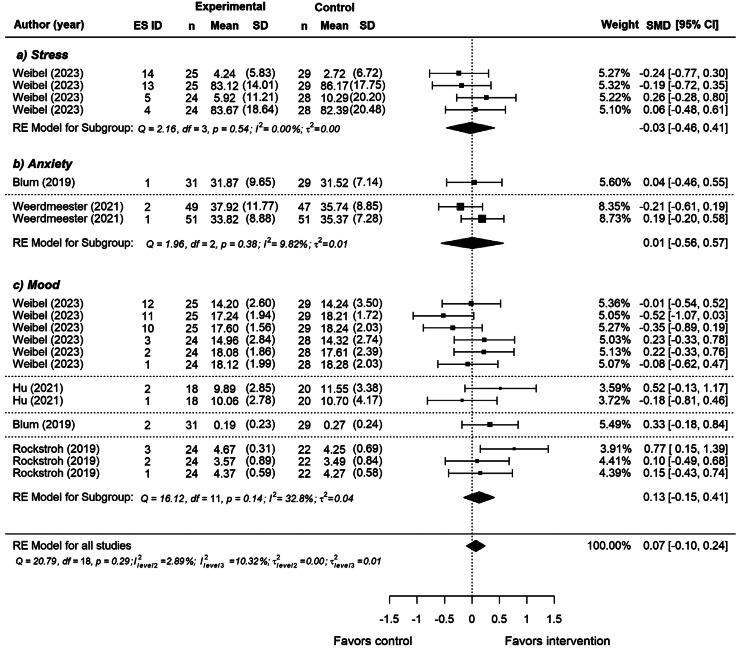
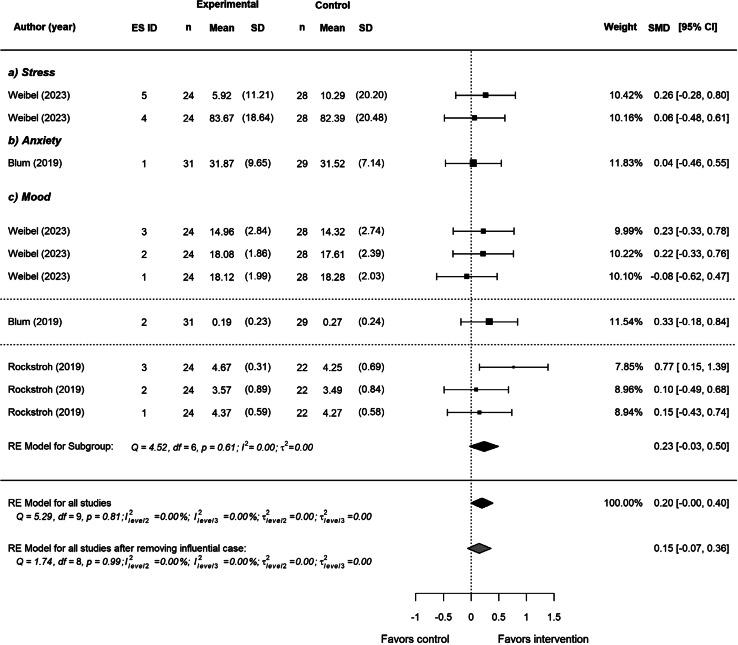
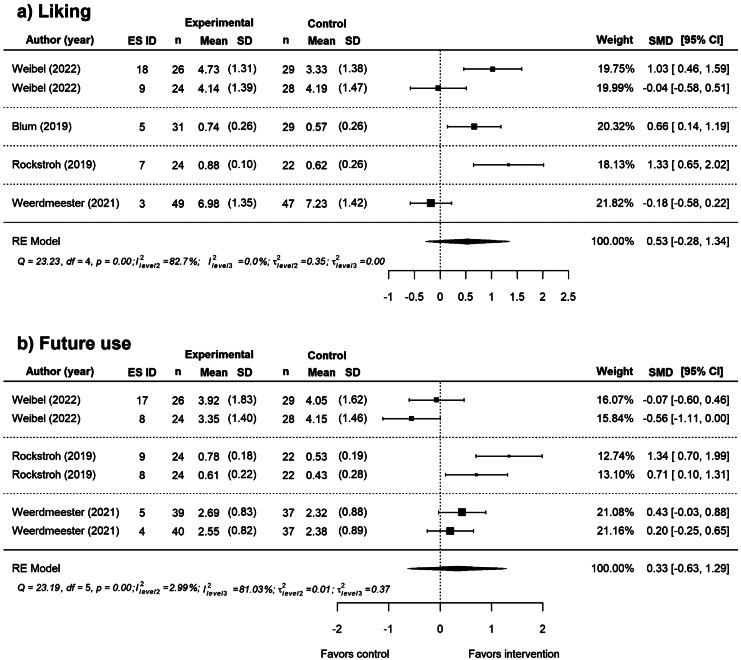
Breathing exercises have been shown to reduce mental health problems among clinical and non-clinical populations. Although virtual reality (VR) breathing interventions are assumed to have potential benefits, it remains unclear whether VR breathing interventions are more effective at improving mental health than non-VR breathing interventions. We conducted a systematic literature search in six electronic databases (Web of Science, PsycINFO, Embase, Cochrane Central Register of Controlled Trials, Scopus, and PubMed) from inception to 30th September, 2022. We included randomized controlled trials in adults evaluating effects of VR compared to non-VR breathing interventions on primary outcomes of mental health (stress, anxiety and mood), and secondary outcomes of physiological stress measures (e.g., heart rate (HR), heart rate variability (HRV)). Within these selected studies, we explored differences in likeability and future use between VR and non-VR breathing interventions. 2.848 records were identified of which 65 full-text articles were assessed. Six RCTs were included, of which five were suitable for meta-analyses. Comparing VR to non-VR breathing interventions, there were no significant differences in overall mental health, stress, anxiety or mood, nor in HR or HRV. There was no evidence that participants liked VR breathing interventions more than non-VR, nor would use them more in the future. These results suggest that there is no evidence that VR breathing interventions are more effective than non-VR in improving mental health outcomes, HR, HRV. Further research is required to determine whether there may be advantages to longer-term VR-implementation and practice, and explore possible mechanisms.
呼吸练习已被证明可以减少临床和非临床人群的心理健康问题。虽然虚拟现实 (VR) 呼吸干预被认为具有潜在的益处,但尚不清楚 VR 呼吸干预在改善心理健康方面是否比非 VR 呼吸干预更有效。我们在六个电子数据库(Web of Science、PsycINFO、Embase、Cochrane 对照试验中心注册库、Scopus 和 PubMed)中进行了系统的文献检索,检索时间从开始到 2022 年 9 月 30 日。我们纳入了评估 VR 与非 VR 呼吸干预对心理健康(压力、焦虑和情绪)主要结局以及生理应激指标(如心率 (HR)、心率变异性 (HRV))的次要结局的成年人随机对照试验。在这些选定的研究中,我们探讨了 VR 和非 VR 呼吸干预之间的喜好度和未来使用的差异。共确定了 2848 条记录,其中有 65 篇全文文章进行了评估。纳入了 6 项 RCT,其中 5 项适合进行荟萃分析。与非 VR 呼吸干预相比,VR 呼吸干预在总体心理健康、压力、焦虑或情绪方面,以及在 HR 或 HRV 方面均无显著差异。没有证据表明参与者更喜欢 VR 呼吸干预,也没有证据表明他们将来会更多地使用它们。这些结果表明,没有证据表明 VR 呼吸干预在改善心理健康结果、HR、HRV 方面比非 VR 更有效。需要进一步的研究来确定长期实施和实践 VR 是否有优势,并探索可能的机制。


 Zotero 插件