
NHE3 抑制剂替那普仑可维持肠道屏障功能,降低内脏敏感性,并减弱结肠感觉神经元中 TRPV1 信号传导。
NHE3 inhibitor tenapanor maintains intestinal barrier function, decreases visceral hypersensitivity, and attenuates TRPV1 signaling in colonic sensory neurons.
机构信息
Ardelyx, Inc., Waltham, Massachusetts, United States.
Geffen School of Medicine, University of California Los Angeles, Los Angeles, California, United States.
出版信息
Am J Physiol Gastrointest Liver Physiol. 2024 May 1;326(5):G543-G554. doi: 10.1152/ajpgi.00233.2023. Epub 2024 Jan 22.
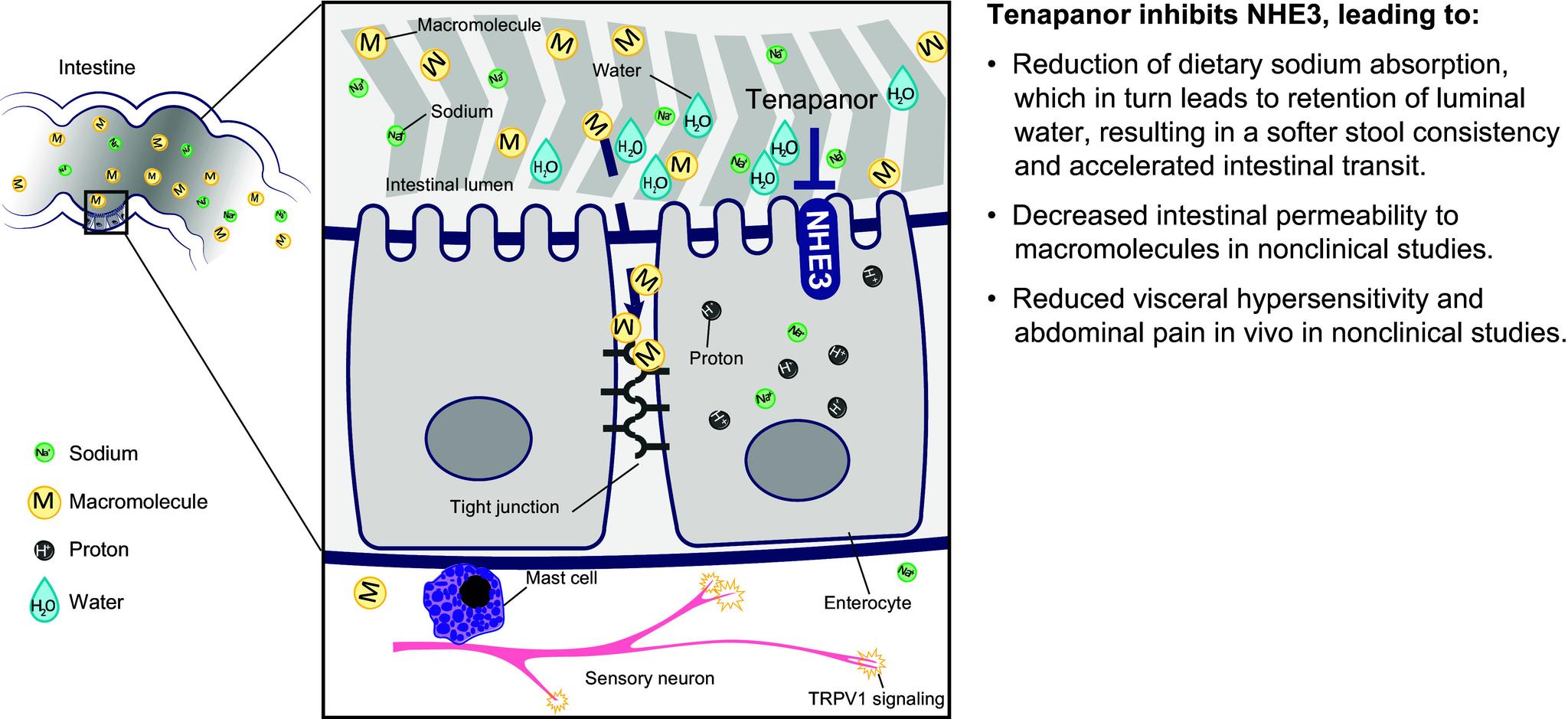
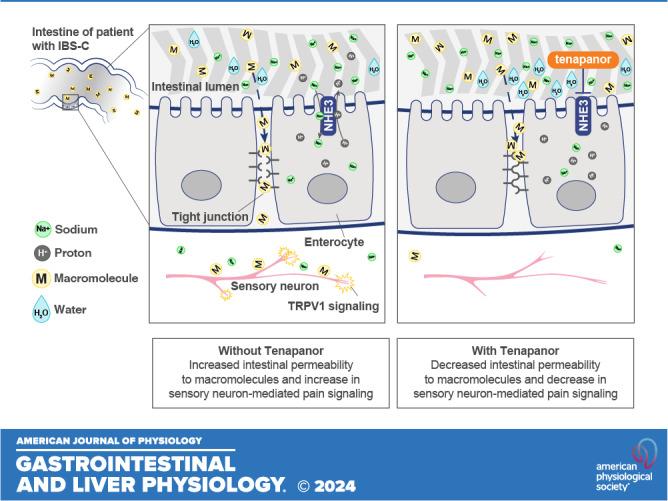
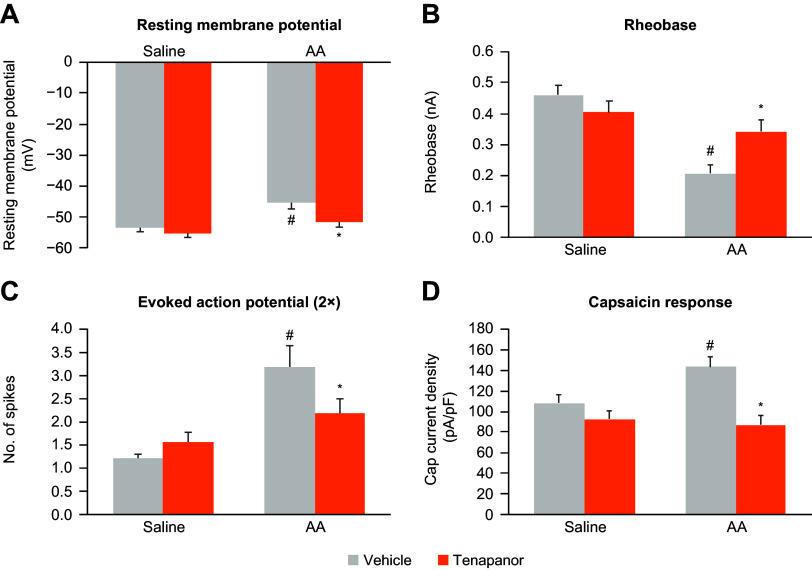
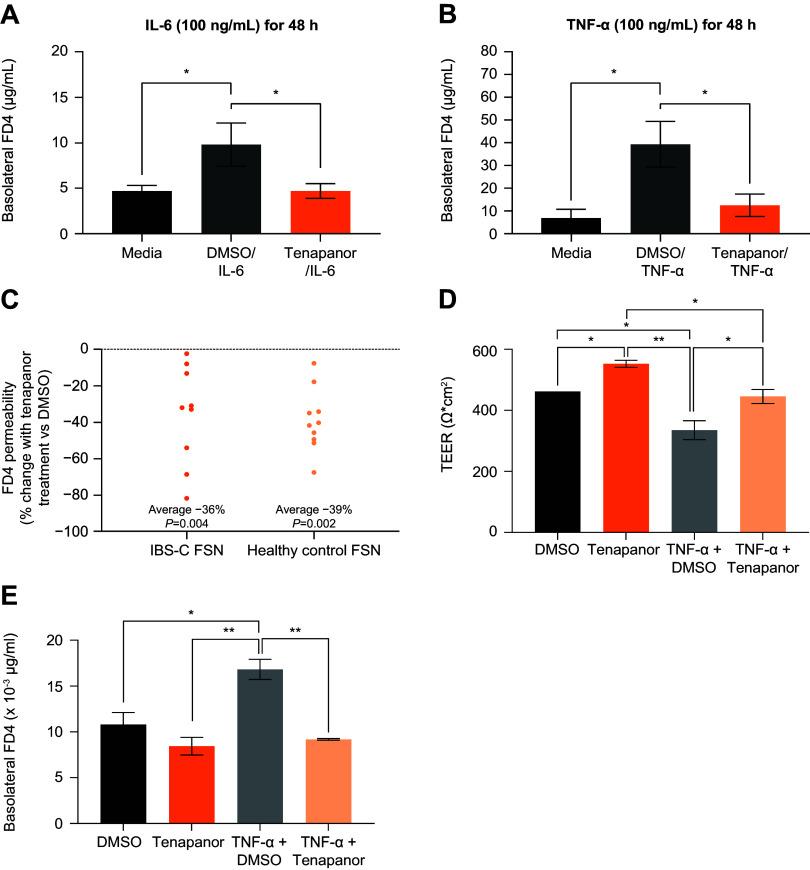
The pathogenesis of irritable bowel syndrome (IBS) is multifactorial, characterized in part by increased intestinal permeability, and visceral hypersensitivity. Increased permeability is associated with IBS severity and abdominal pain. Tenapanor is FDA-approved for the treatment of IBS with constipation (IBS-C) and has demonstrated improvements in bowel motility and a reduction in IBS-related pain; however, the mechanism by which tenapanor mediates these functions remains unclear. Here, the effects of tenapanor on colonic pain signaling and intestinal permeability were assessed through behavioral, electrophysiological, and cell culture experiments. Intestinal motility studies in rats and humans demonstrated that tenapanor increased luminal sodium and water retention and gastrointestinal transit versus placebo. A significantly reduced visceral motor reflex (VMR) to colonic distension was observed with tenapanor treatment versus vehicle in two rat models of visceral hypersensitivity (neonatal acetic acid sensitization and partial restraint stress; both < 0.05), returning VMR responses to that of nonsensitized controls. Whole cell voltage patch-clamp recordings of retrogradely labeled colonic dorsal root ganglia (DRG) neurons from sensitized rats found that tenapanor significantly reduced DRG neuron hyperexcitability to capsaicin versus vehicle ( < 0.05), an effect not mediated by epithelial cell secretions. Tenapanor also attenuated increases in intestinal permeability in human colon monolayer cultures caused by incubation with proinflammatory cytokines ( < 0.001) or fecal supernatants from patients with IBS-C ( < 0.005). These results support a model in which tenapanor reduces IBS-related pain by strengthening the intestinal barrier, thereby decreasing permeability to macromolecules and antigens and reducing DRG-mediated pain signaling. A series of nonclinical experiments support the theory that tenapanor inhibits IBS-C-related pain by strengthening the intestinal barrier. Tenapanor treatment reduced visceral motor responses to nonsensitized levels in two rat models of hypersensitivity and reduced responses to capsaicin in sensitized colonic nociceptive dorsal root ganglia neurons. Intestinal permeability experiments in human colon monolayer cultures found that tenapanor attenuates increases in permeability induced by either inflammatory cytokines or fecal supernatants from patients with IBS-C.
肠易激综合征(IBS)的发病机制是多因素的,其特征部分为肠道通透性增加和内脏敏感性增加。通透性增加与 IBS 的严重程度和腹痛有关。Tenapanor 已获得美国食品药品监督管理局(FDA)批准,用于治疗便秘型肠易激综合征(IBS-C),并已证明可改善肠道蠕动并减轻与 IBS 相关的疼痛;然而,Tenapanor 介导这些功能的机制尚不清楚。在这里,通过行为、电生理和细胞培养实验评估了 Tenapanor 对结肠疼痛信号和肠道通透性的影响。在大鼠和人类的肠道运动研究中,与安慰剂相比,Tenapanor 增加了腔内钠和水的保留以及胃肠道转运。与载体相比,在两种内脏高敏感模型(新生乙酸敏化和部分束缚应激;均 < 0.05)中,观察到 Tenapanor 治疗后内脏运动反射(VMR)对结肠扩张的显著降低,VMR 反应恢复到非敏化对照。对敏化大鼠逆行标记的结肠背根神经节(DRG)神经元进行全细胞膜片钳记录发现,与载体相比,Tenapanor 显著降低了 DRG 神经元对辣椒素的过度兴奋(< 0.05),这种作用不是由上皮细胞分泌物介导的。Tenapanor 还减弱了培养物中促炎细胞因子(< 0.001)或 IBS-C 患者粪便上清液引起的人结肠单层培养物中肠道通透性的增加(< 0.005)。这些结果支持这样一种模型,即 Tenapanor 通过增强肠道屏障来减轻与 IBS 相关的疼痛,从而减少对大分子和抗原的通透性,并减少 DRG 介导的疼痛信号。一系列非临床实验支持 Tenapanor 通过增强肠道屏障来抑制与 IBS-C 相关的疼痛的理论。Tenapanor 治疗使两种过敏大鼠模型中的内脏运动反应降低至非敏化水平,并降低了致敏结肠伤害性背根神经节神经元对辣椒素的反应。在人结肠单层培养物的肠道通透性实验中,发现 Tenapanor 可减轻促炎细胞因子或 IBS-C 患者粪便上清液引起的通透性增加。




 Zotero 插件