
SCAP/SREBP 在肝脂肪变性中的脂质代谢中的中心调控作用。
The Role of SCAP/SREBP as Central Regulators of Lipid Metabolism in Hepatic Steatosis.
机构信息
UT Southwestern Medical Center Dallas, 5323 Harry Hines Blvd., Dallas, TX 75390, USA.
Institute of Molecular Pathobiochemistry, Experimental Gene Therapy and Clinical Chemistry (IFMPEGKC), Rheinisch-Westfälische Technische Hochschule (RWTH) University Hospital Aachen, D-52074 Aachen, Germany.
出版信息
Int J Mol Sci. 2024 Jan 16;25(2):1109. doi: 10.3390/ijms25021109.
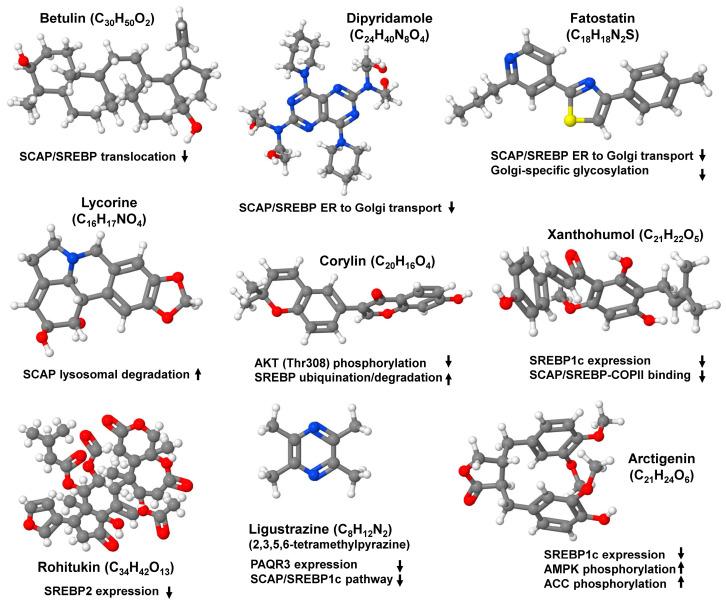
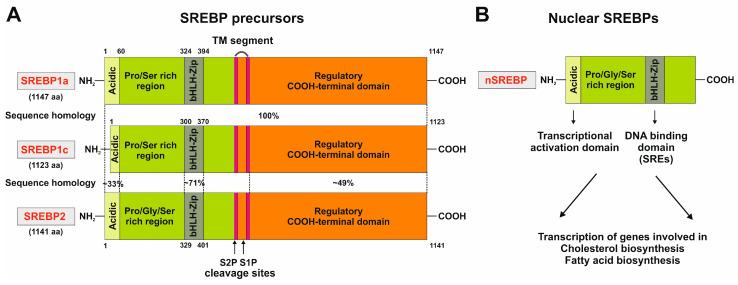
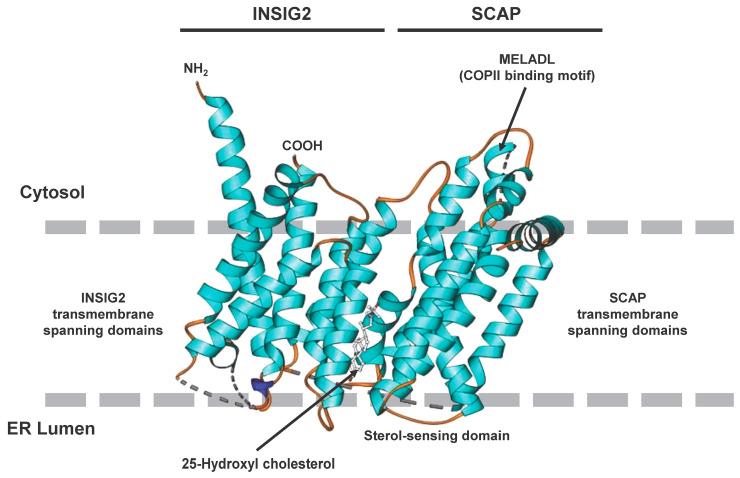
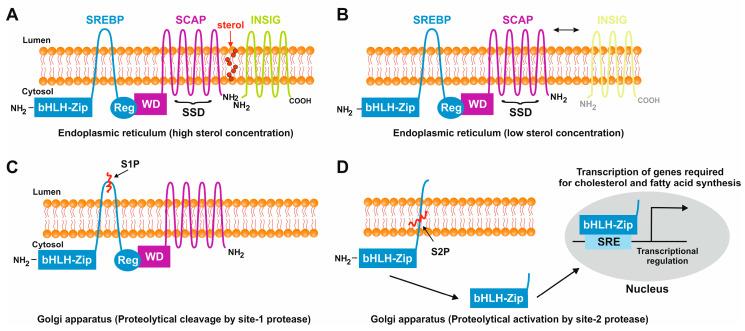
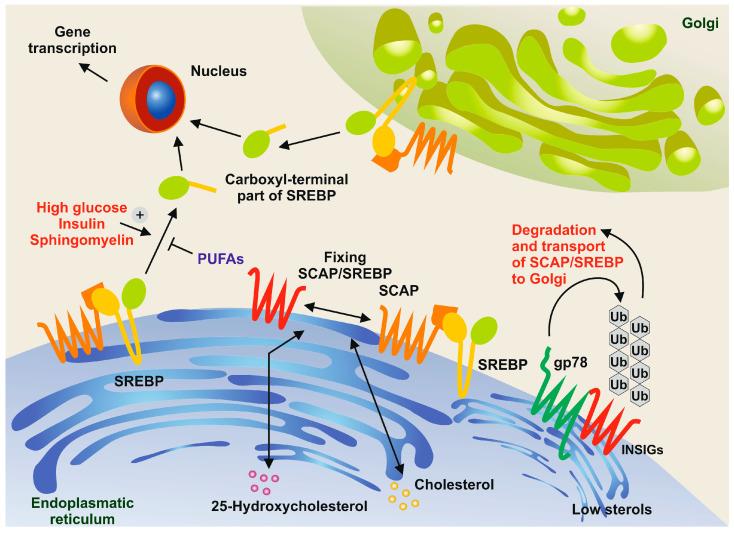
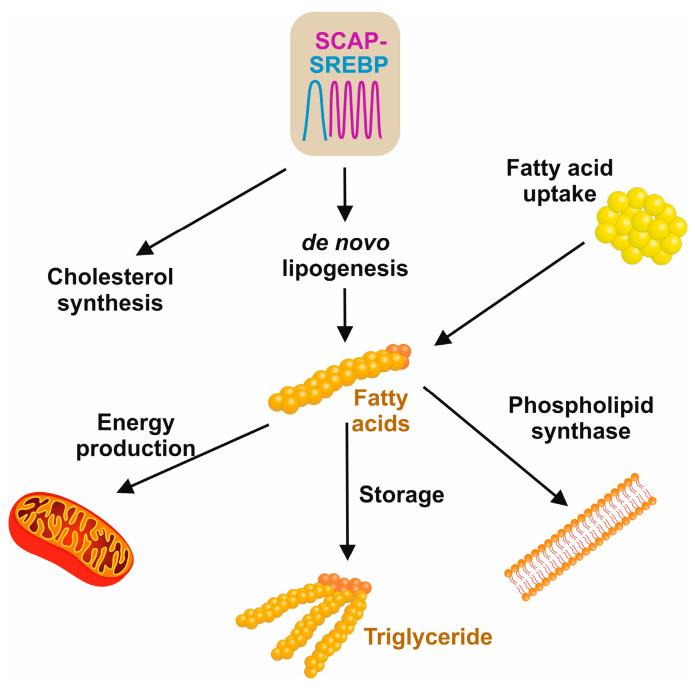
The prevalence of metabolic dysfunction-associated steatotic liver disease (MASLD) is rapidly increasing worldwide at an alarming pace, due to an increase in obesity, sedentary and unhealthy lifestyles, and unbalanced dietary habits. MASLD is a unique, multi-factorial condition with several phases of progression including steatosis, steatohepatitis, fibrosis, cirrhosis, and hepatocellular carcinoma. Sterol element binding protein 1c (SREBP1c) is the main transcription factor involved in regulating hepatic de novo lipogenesis. This transcription factor is synthesized as an inactive precursor, and its proteolytic maturation is initiated in the membrane of the endoplasmic reticulum upon stimulation by insulin. SREBP cleavage activating protein (SCAP) is required as a chaperon protein to escort SREBP from the endoplasmic reticulum and to facilitate the proteolytic release of the N-terminal domain of SREBP into the Golgi. SCAP inhibition prevents activation of SREBP and inhibits the expression of genes involved in triglyceride and fatty acid synthesis, resulting in the inhibition of de novo lipogenesis. In line, previous studies have shown that SCAP inhibition can resolve hepatic steatosis in animal models and intensive research is going on to understand the effects of SCAP in the pathogenesis of human disease. This review focuses on the versatile roles of SCAP/SREBP regulation in de novo lipogenesis and the structure and molecular features of SCAP/SREBP in the progression of hepatic steatosis. In addition, recent studies that attempt to target the SCAP/SREBP axis as a therapeutic option to interfere with MASLD are discussed.
代谢相关脂肪性肝病(MASLD)的患病率在全球范围内以惊人的速度迅速增加,这主要是由于肥胖、久坐不动的生活方式和不健康的生活方式以及饮食不均衡所致。MASLD 是一种独特的、多因素的疾病,其进展包括脂肪肝、脂肪性肝炎、纤维化、肝硬化和肝细胞癌等多个阶段。固醇元件结合蛋白 1c(SREBP1c)是调节肝脏从头合成脂肪的主要转录因子。这种转录因子作为无活性的前体合成,其蛋白水解成熟是在胰岛素刺激下在内质网膜上启动的。SREBP 切割激活蛋白(SCAP)作为伴侣蛋白,需要将 SREBP 从内质网护送出来,并促进 SREBP 的 N 端结构域在高尔基体内的蛋白水解释放。SCAP 抑制可防止 SREBP 的激活,并抑制甘油三酯和脂肪酸合成相关基因的表达,从而抑制从头合成脂肪。先前的研究表明,SCAP 抑制可在动物模型中消除肝脂肪变性,并且正在进行深入研究以了解 SCAP 在人类疾病发病机制中的作用。这篇综述重点介绍了 SCAP/SREBP 调节在从头合成脂肪以及 SCAP/SREBP 在肝脂肪变性进展中的结构和分子特征方面的多效性作用。此外,还讨论了最近试图将 SCAP/SREBP 轴作为一种治疗选择来干扰 MASLD 的靶向研究。

 Zotero 插件