
用于阿尔茨海默病的唾液生物标志物:系统评价与荟萃分析。
Salivary Biomarkers for Alzheimer's Disease: A Systematic Review with Meta-Analysis.
机构信息
Department of Conservative Dentistry and Endodontics, Poznan University of Medical Sciences, 60-812 Poznan, Poland.
Student's Scientific Group in Department of Conservative Dentistry and Endodontics, Poznan University of Medical Sciences, 60-812 Poznan, Poland.
出版信息
Int J Mol Sci. 2024 Jan 18;25(2):1168. doi: 10.3390/ijms25021168.
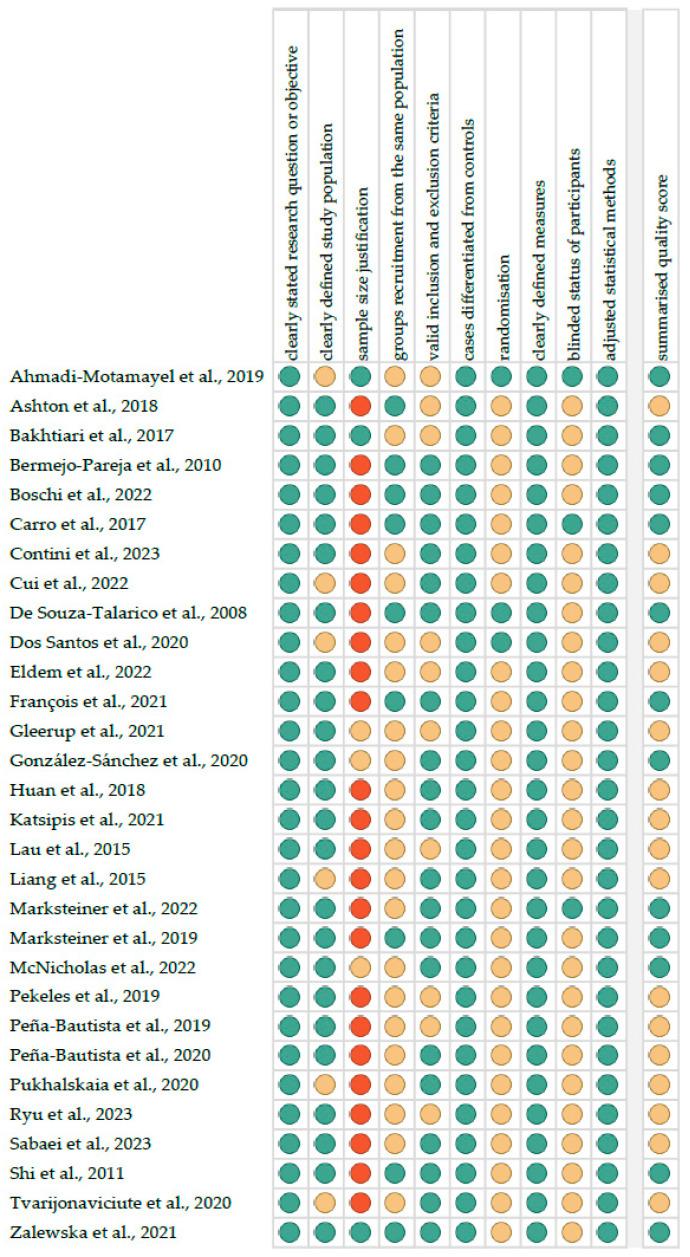
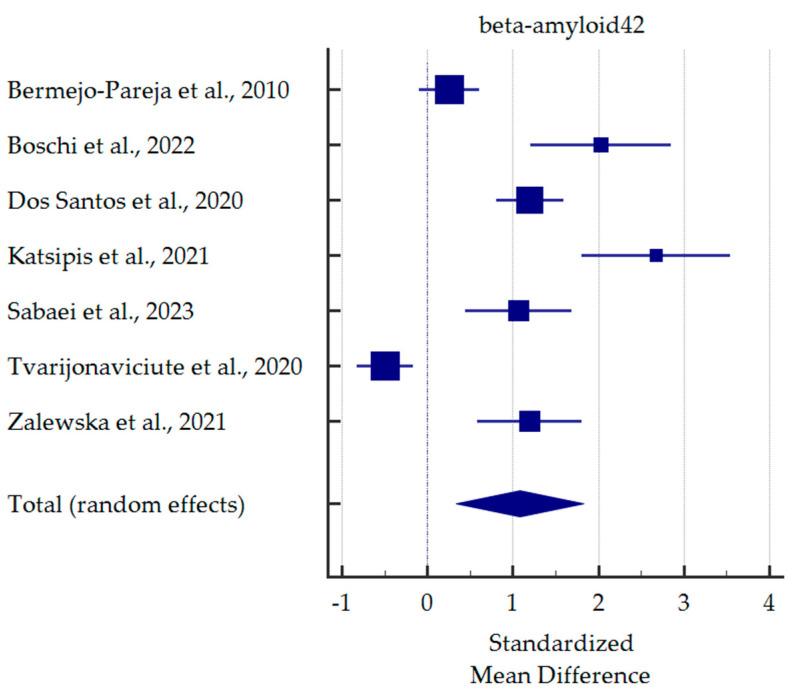
Alzheimer's Disease (AD) is the most common neurodegenerative disease which manifests with progressive cognitive impairment, leading to dementia. Considering the noninvasive collection of saliva, we designed the systematic review to answer the question "Are salivary biomarkers reliable for the diagnosis of Alzheimer's Disease?" Following the inclusion and exclusion criteria, 30 studies were included in this systematic review (according to the PRISMA statement guidelines). Potential biomarkers include mainly proteins, metabolites and even miRNAs. Based on meta-analysis, in AD patients, salivary levels of beta-amyloid42 and p-tau levels were significantly increased, and t-tau and lactoferrin were decreased at borderline statistical significance. However, according to pooled AUC, lactoferrin and beta-amyloid42 showed a significant predictive value for salivary-based AD diagnosis. In conclusion, potential markers such as beta-amyloid42, tau and lactoferrin can be detected in the saliva of AD patients, which could reliably support the early diagnosis of this neurodegenerative disease.
阿尔茨海默病(AD)是最常见的神经退行性疾病,其表现为进行性认知障碍,导致痴呆。考虑到唾液的非侵入性采集,我们设计了这项系统综述来回答“唾液生物标志物是否可用于诊断阿尔茨海默病?”的问题。根据纳入和排除标准,本系统综述纳入了 30 项研究(根据 PRISMA 声明指南)。潜在的生物标志物主要包括蛋白质、代谢物,甚至 microRNA。基于荟萃分析,在 AD 患者中,β-淀粉样蛋白 42 和 p-tau 水平显著升高,而 t-tau 和乳铁蛋白在边缘统计学上降低。然而,根据汇总 AUC,乳铁蛋白和β-淀粉样蛋白 42 对基于唾液的 AD 诊断具有显著的预测价值。总之,AD 患者的唾液中可以检测到潜在的标志物,如β-淀粉样蛋白 42、tau 和乳铁蛋白,这可以可靠地支持这种神经退行性疾病的早期诊断。




 Zotero 插件