
教育对成年人死亡率的影响:全球系统评价和荟萃分析。
Effects of education on adult mortality: a global systematic review and meta-analysis.
出版信息
Lancet Public Health. 2024 Mar;9(3):e155-e165. doi: 10.1016/S2468-2667(23)00306-7. Epub 2024 Jan 23.
BACKGROUND
The positive effect of education on reducing all-cause adult mortality is known; however, the relative magnitude of this effect has not been systematically quantified. The aim of our study was to estimate the reduction in all-cause adult mortality associated with each year of schooling at a global level.
METHODS
In this systematic review and meta-analysis, we assessed the effect of education on all-cause adult mortality. We searched PubMed, Web of Science, Scopus, Embase, Global Health (CAB), EconLit, and Sociology Source Ultimate databases from Jan 1, 1980, to May 31, 2023. Reviewers (LD, TM, HDV, CW, IG, AG, CD, DS, KB, KE, and AA) assessed each record for individual-level data on educational attainment and mortality. Data were extracted by a single reviewer into a standard template from the Global Burden of Diseases, Injuries, and Risk Factors Study. We excluded studies that relied on case-crossover or ecological study designs to reduce the risk of bias from unlinked data and studies that did not report key measures of interest (all-cause adult mortality). Mixed-effects meta-regression models were implemented to address heterogeneity in referent and exposure measures among studies and to adjust for study-level covariates. This study was registered with PROSPERO (CRD42020183923).
FINDINGS
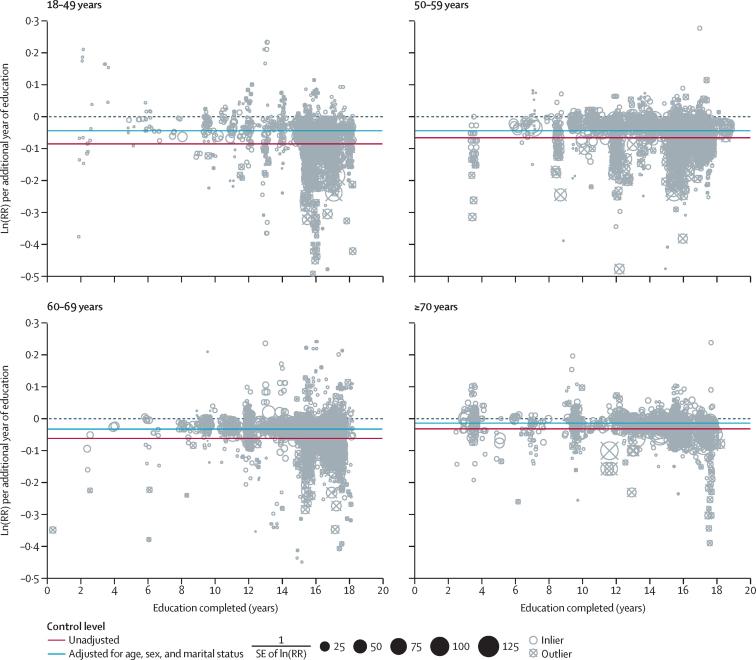
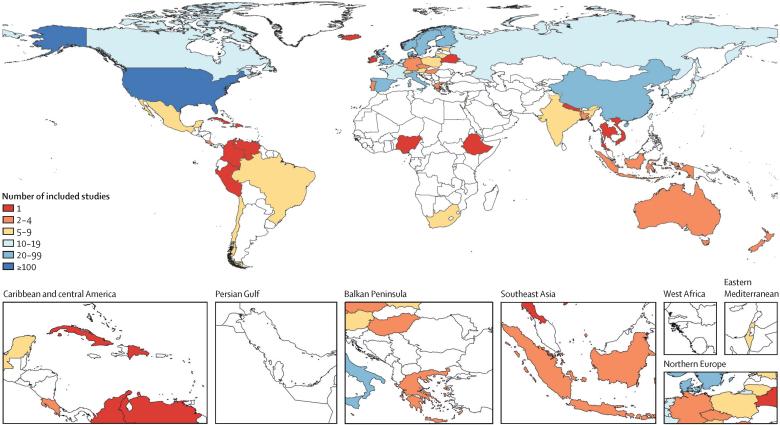
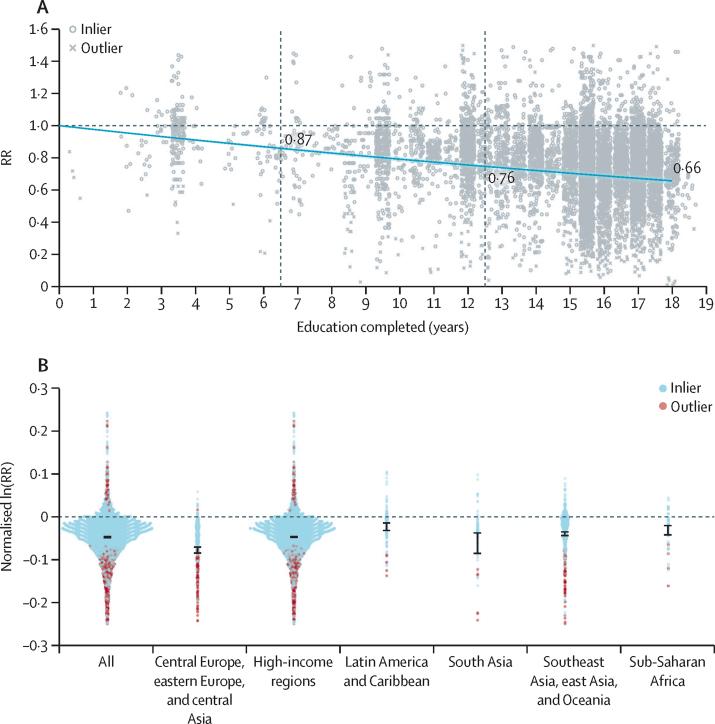
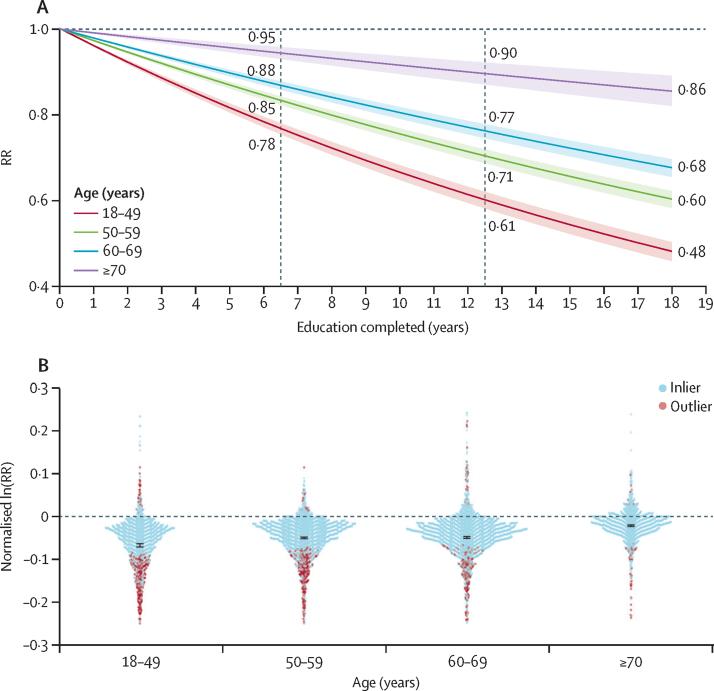
17 094 unique records were identified, 603 of which were eligible for analysis and included data from 70 locations in 59 countries, producing a final dataset of 10 355 observations. Education showed a dose-response relationship with all-cause adult mortality, with an average reduction in mortality risk of 1·9% (95% uncertainty interval 1·8-2·0) per additional year of education. The effect was greater in younger age groups than in older age groups, with an average reduction in mortality risk of 2·9% (2·8-3·0) associated with each additional year of education for adults aged 18-49 years, compared with a 0·8% (0·6-1·0) reduction for adults older than 70 years. We found no differential effect of education on all-cause mortality by sex or Socio-demographic Index level. We identified publication bias (p<0·0001) and identified and reported estimates of between-study heterogeneity.
INTERPRETATION
To our knowledge, this is the first systematic review and meta-analysis to quantify the importance of years of schooling in reducing adult mortality, the benefits of which extend into older age and are substantial across sexes and economic contexts. This work provides compelling evidence of the importance of education in improving life expectancy and supports calls for increased investment in education as a crucial pathway for reducing global inequities in mortality.
FUNDING
Research Council of Norway and the Bill & Melinda Gates Foundation.
背景
教育对降低全因成人死亡率的积极影响是已知的;然而,这种影响的相对大小尚未被系统地量化。我们研究的目的是估计在全球范围内,每增加一年教育所带来的全因成人死亡率的降低。
方法
在这项系统评价和荟萃分析中,我们评估了教育对全因成人死亡率的影响。我们从 1980 年 1 月 1 日至 2023 年 5 月 31 日,在 PubMed、Web of Science、Scopus、Embase、全球健康(CAB)、EconLit 和社会学资源终极数据库中进行了检索。审查员(LD、TM、HDV、CW、IG、AG、CD、DS、KB、KE 和 AA)评估了每一条记录中关于教育程度和死亡率的个体数据。数据由一名审查员从全球疾病、伤害和危险因素研究中提取到一个标准模板中。我们排除了依赖病例交叉或生态研究设计的研究,以减少无关联数据的偏倚风险,以及未报告关键感兴趣指标(全因成人死亡率)的研究。实施混合效应荟萃回归模型来解决研究之间参照和暴露措施的异质性,并调整研究水平的协变量。这项研究在 PROSPERO(CRD42020183923)上进行了注册。
发现
17094 条独特的记录被确定,其中 603 条符合分析条件,包括来自 59 个国家 70 个地点的数据,最终数据集包含 10355 个观察结果。教育与全因成人死亡率呈剂量反应关系,每增加一年教育,死亡率风险平均降低 1.9%(95%不确定区间 1.8-2.0)。在年龄较小的人群中,这种效果大于年龄较大的人群,与 18-49 岁成年人每增加一年教育相关的死亡率风险平均降低 2.9%(2.8-3.0),而 70 岁以上成年人的死亡率风险降低 0.8%(0.6-1.0)。我们没有发现教育对全因死亡率的性别或社会人口指数水平有差异影响。我们发现了发表偏倚(p<0.0001),并报告了研究间异质性的估计值。
解释
据我们所知,这是第一项系统评价和荟萃分析,旨在量化受教育年限在降低成人死亡率方面的重要性,其益处可延伸至老年,并且在性别和经济背景方面都非常显著。这项工作提供了教育对提高预期寿命的重要性的令人信服的证据,并支持呼吁增加对教育的投资,将其作为减少全球死亡率不平等的关键途径。
资助
挪威研究理事会和比尔及梅琳达·盖茨基金会。

 Zotero 插件