
雷帕霉素抑制慢性阻塞性肺疾病中香烟烟雾诱导的巨噬细胞炎症反应和 MMP12 的表达。
MTOR Suppresses Cigarette Smoke-Induced Airway Inflammation and MMP12 Expression in Macrophage in Chronic Obstructive Pulmonary Disease.
机构信息
Key Laboratory of Respiratory Disease of Zhejiang Province, Department of Respiratory and Critical Care Medicine, Second Affiliated Hospital, Zhejiang University School of Medicine, Hangzhou, People's Republic of China.
State Key Laboratory of Respiratory Disease, National Clinical Research Center for Respiratory Disease, Guangzhou, People's Republic of China.
出版信息
Int J Chron Obstruct Pulmon Dis. 2024 Jan 23;19:269-279. doi: 10.2147/COPD.S426333. eCollection 2024.
BACKGROUND
Macrophage-derived matrix metalloproteinase 12 (MMP12) can cause destruction of lung tissue structure and plays a significant role in the development and progression of chronic obstructive pulmonary disease (COPD). MTOR is a serine/threonine kinase that plays a crucial role in cell growth and metabolism. The activity of MTOR in the lung tissues of COPD patients also shows significant changes. However, it is unclear whether MTOR can regulate the development and progression of COPD by controlling MMP12. This study primarily investigates whether MTOR in macrophages can affect the expression of MMP12 and participate in the progression of COPD.
METHODS
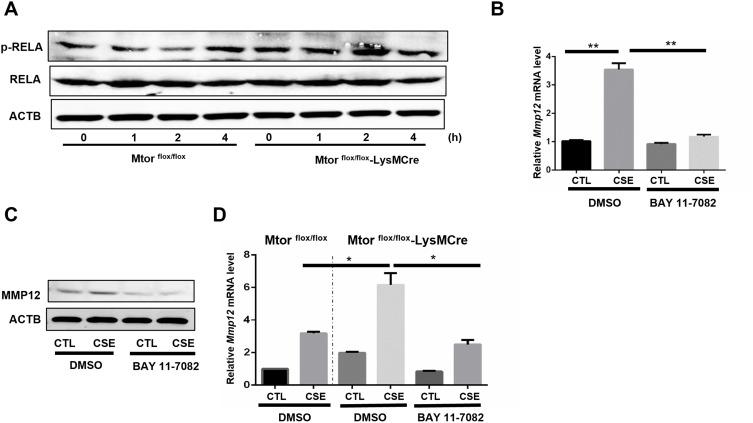
We tested the changes in MTOR activity in macrophages exposed to cigarette smoke (CS) both in vivo and in vitro. Additionally, we observed the effect of MTOR on the expression of MMP12 in macrophages and on lung tissue inflammation and structural damage in mice, both in vivo and in vitro, using MTOR inhibitors or gene knockout mice. Finally, we combined inhibitor treatment with gene knockout to demonstrate that MTOR primarily mediates the expression of MMP12 through the NF-κB signaling pathway.
RESULTS
Exposure to CS can enhance MTOR activity in mouse alveolar macrophages. Inhibiting the activity of MTOR or suppressing its expression leads to increased expression of MMP12. Myeloid-specific knockout of MTOR expression can promote the occurrence of CS-induced pulmonary inflammation and emphysema in mice. Inhibiting the activity of NF-κB can eliminate the effect of MTOR on MMP12.
CONCLUSION
Macrophage MTOR can reduce the expression of MMP12 by inhibiting NF-κB, thereby inhibiting the occurrence of COPD inflammation and destruction of lung tissue structure. Activating the activity of macrophage MTOR may be beneficial for the treatment of COPD.
背景
巨噬细胞衍生的基质金属蛋白酶 12(MMP12)可导致肺组织结构破坏,并在慢性阻塞性肺疾病(COPD)的发展和进展中起重要作用。MTOR 是一种丝氨酸/苏氨酸激酶,在细胞生长和代谢中起着关键作用。COPD 患者肺组织中 MTOR 的活性也显示出明显的变化。然而,尚不清楚 MTOR 是否可以通过控制 MMP12 来调节 COPD 的发生和发展。本研究主要探讨巨噬细胞中的 MTOR 是否可以影响 MMP12 的表达并参与 COPD 的进展。
方法
我们检测了体内和体外暴露于香烟烟雾(CS)的巨噬细胞中 MTOR 活性的变化。此外,我们观察了 MTOR 对巨噬细胞中 MMP12 的表达以及体内和体外小鼠肺组织炎症和结构损伤的影响,使用 MTOR 抑制剂或基因敲除小鼠。最后,我们将抑制剂治疗与基因敲除相结合,证明 MTOR 主要通过 NF-κB 信号通路介导 MMP12 的表达。
结果
暴露于 CS 可增强小鼠肺泡巨噬细胞中 MTOR 的活性。抑制 MTOR 的活性或抑制其表达可导致 MMP12 的表达增加。髓样细胞特异性敲除 MTOR 表达可促进 CS 诱导的小鼠肺部炎症和肺气肿的发生。抑制 NF-κB 的活性可以消除 MTOR 对 MMP12 的作用。
结论
巨噬细胞 MTOR 通过抑制 NF-κB 降低 MMP12 的表达,从而抑制 COPD 炎症和肺组织结构破坏的发生。激活巨噬细胞 MTOR 的活性可能有益于 COPD 的治疗。


 Zotero 插件