
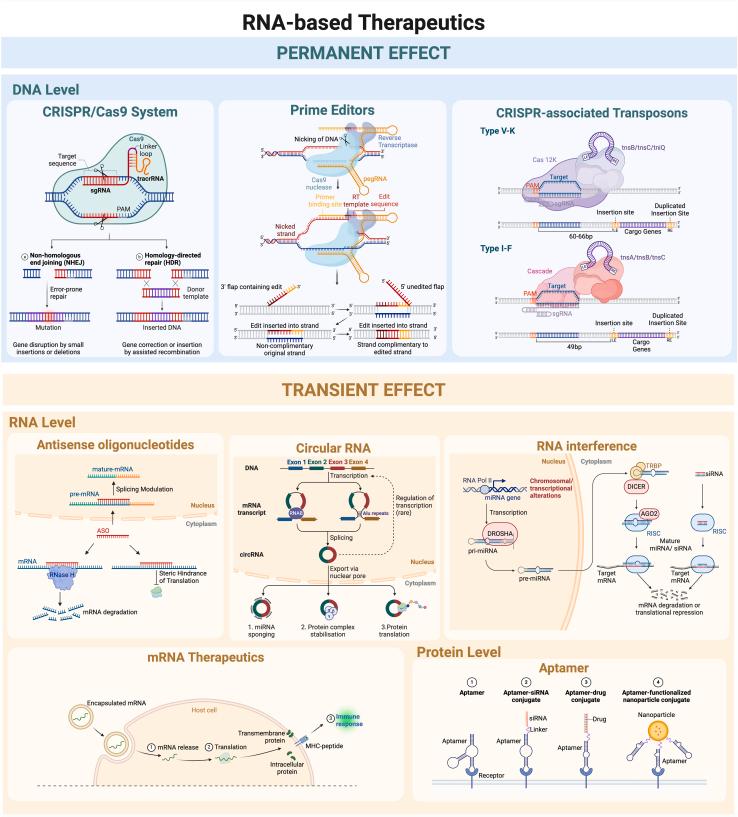
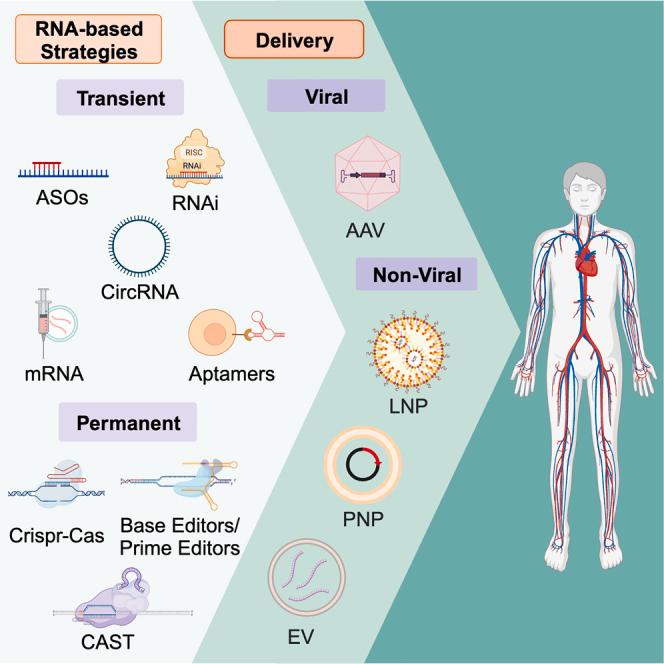
当前治疗心血管疾病的 RNA 策略。
Current RNA strategies in treating cardiovascular diseases.
机构信息
Institute of Molecular and Cell Biology (IMCB), Agency for Science, Technology and Research (A∗STAR), 61 Biopolis Drive, Proteos, Singapore 138673, Singapore; Department of Biological Sciences, National University of Singapore, 16 Science Drive 4, Singapore 117558, Singapore.
Institute of Molecular and Cell Biology (IMCB), Agency for Science, Technology and Research (A∗STAR), 61 Biopolis Drive, Proteos, Singapore 138673, Singapore.
出版信息
Mol Ther. 2024 Mar 6;32(3):580-608. doi: 10.1016/j.ymthe.2024.01.028. Epub 2024 Jan 29.
Cardiovascular disease (CVD) continues to impose a significant global health burden, necessitating the exploration of innovative treatment strategies. Ribonucleic acid (RNA)-based therapeutics have emerged as a promising avenue to address the complex molecular mechanisms underlying CVD pathogenesis. We present a comprehensive review of the current state of RNA therapeutics in the context of CVD, focusing on the diverse modalities that bring about transient or permanent modifications by targeting the different stages of the molecular biology central dogma. Considering the immense potential of RNA therapeutics, we have identified common gene targets that could serve as potential interventions for prevalent Mendelian CVD caused by single gene mutations, as well as acquired CVDs developed over time due to various factors. These gene targets offer opportunities to develop RNA-based treatments tailored to specific genetic and molecular pathways, presenting a novel and precise approach to address the complex pathogenesis of both types of cardiovascular conditions. Additionally, we discuss the challenges and opportunities associated with delivery strategies to achieve targeted delivery of RNA therapeutics to the cardiovascular system. This review highlights the immense potential of RNA-based interventions as a novel and precise approach to combat CVD, paving the way for future advancements in cardiovascular therapeutics.
心血管疾病(CVD)仍然对全球健康造成重大负担,因此需要探索创新的治疗策略。基于核糖核酸(RNA)的治疗方法已成为解决 CVD 发病机制中复杂分子机制的有前途的途径。我们全面回顾了 RNA 治疗在 CVD 背景下的现状,重点介绍了通过针对分子生物学中心法则的不同阶段来实现瞬时或永久修饰的各种方式。考虑到 RNA 治疗的巨大潜力,我们已经确定了常见的基因靶点,这些靶点可以作为由单基因突变引起的常见孟德尔 CVD 以及由于各种因素随时间发展的获得性 CVD 的潜在干预措施。这些基因靶点为针对特定遗传和分子途径开发基于 RNA 的治疗提供了机会,为解决这两种类型的心血管疾病的复杂发病机制提供了一种新颖而精确的方法。此外,我们还讨论了与输送策略相关的挑战和机遇,以实现 RNA 治疗在心血管系统中的靶向输送。本综述强调了基于 RNA 的干预作为一种新颖而精确的方法来对抗 CVD 的巨大潜力,为心血管治疗的未来发展铺平了道路。
 Zotero 插件