
使用[具体研究方法]对[植物名称]进行抗炎、镇痛和解热潜力的研究。 (你提供的原文中部分内容缺失,我按照格式要求进行了翻译,你可补充完整信息后再次让我翻译)
Anti-inflammatory, analgesic, and antipyretic potential of (L. f.) Sm. using , , and studies.
作者信息
Sherif Asmaa E, Sajid-Ur-Rehman Muhammad, Asif Muhammad, Qadeer Iram, Khan Kashif Ur Rehman
机构信息
Department of Pharmacognosy, College of Pharmacy, Prince Sattam Bin Abdulaziz University, Al-Kharj, Saudi Arabia.
Department of Pharmacognosy, Faculty of Pharmacy, Mansoura University, Mansoura, Egypt.
出版信息
Front Pharmacol. 2024 Jan 16;14:1326968. doi: 10.3389/fphar.2023.1326968. eCollection 2023.
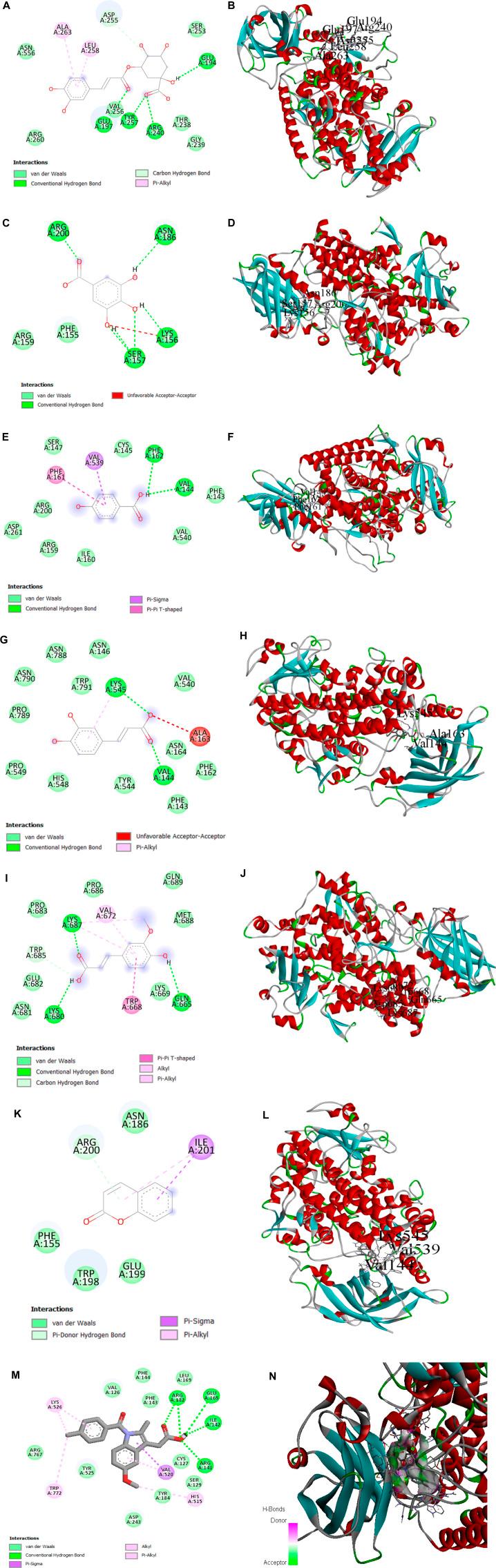
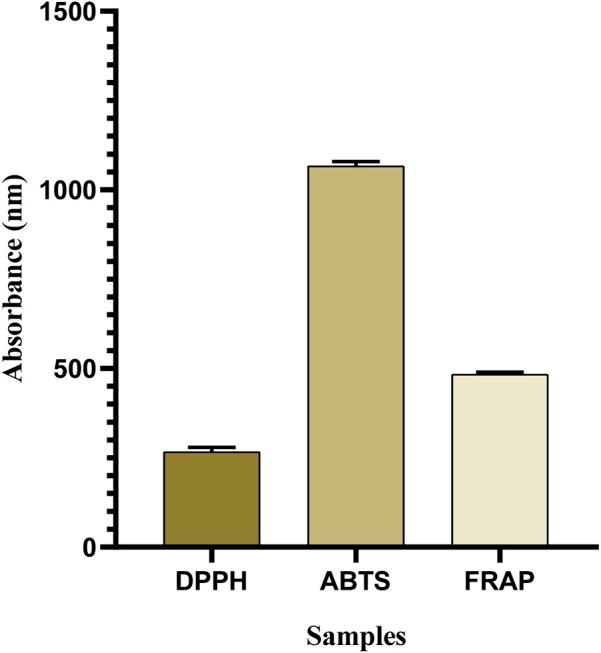
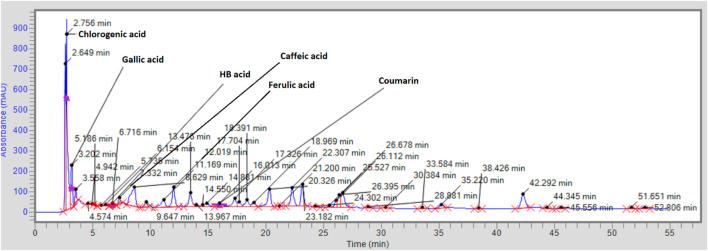
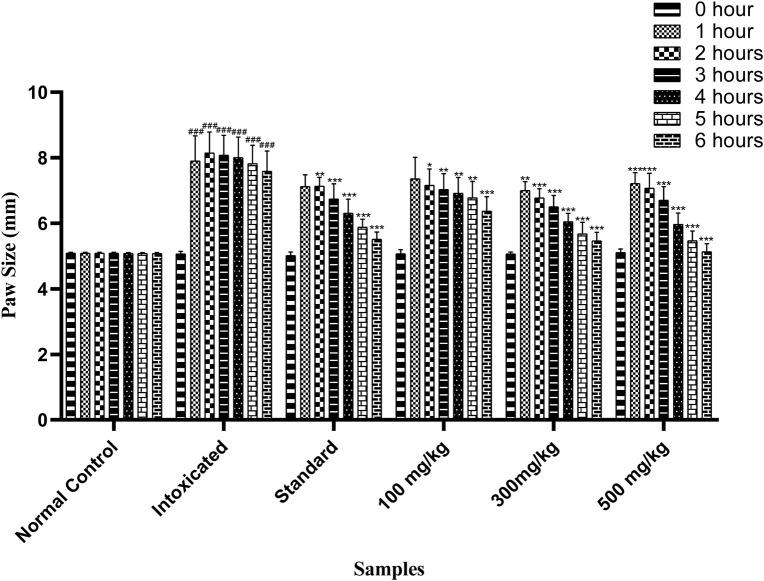
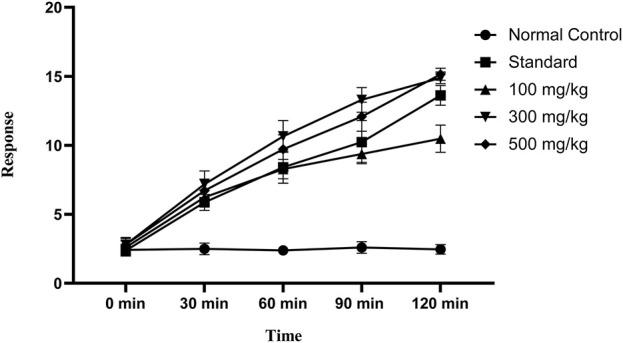
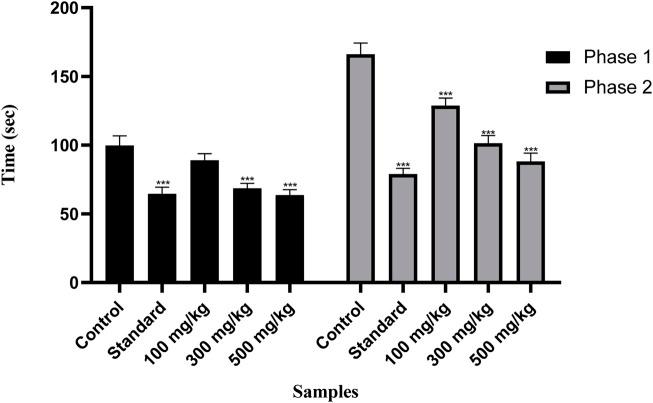
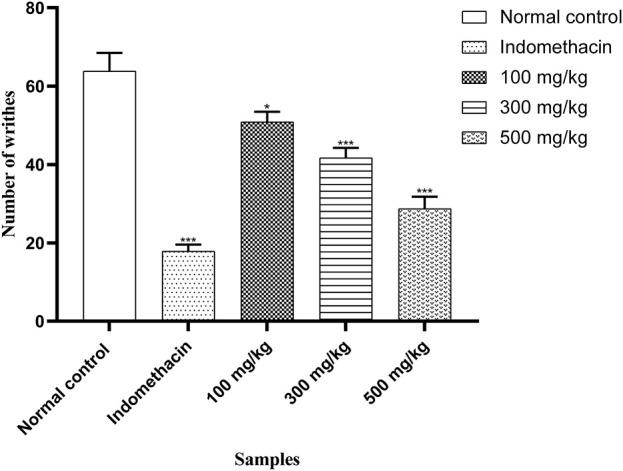
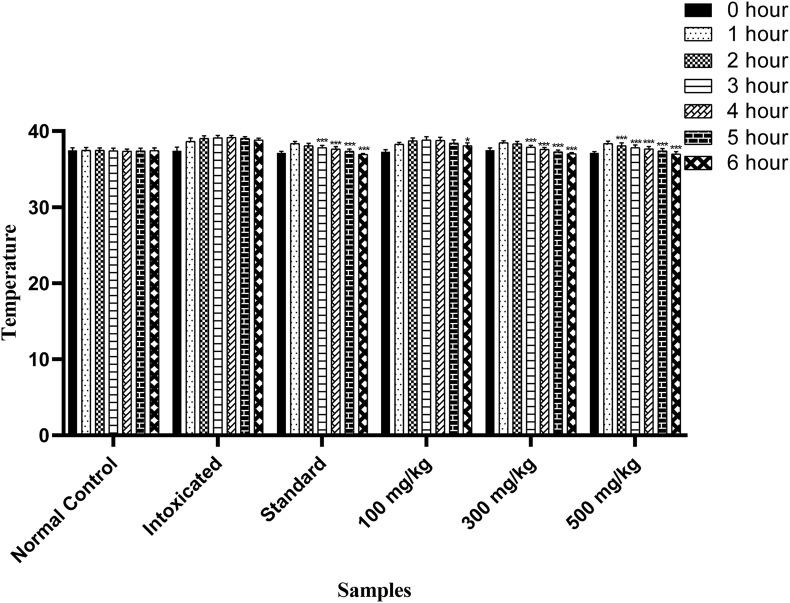
The objective of the current study was to evaluate the anti-inflammatory, analgesic, and antipyretic potential of using different animal models. The phytochemical profile was determined by assessing its total phenolic content (TPC) and total flavonoid content (TFC), followed by the high-performance liquid chromatography (HPLC) technique. The anti-inflammatory potential of ethanolic extract (OEE) was evaluated by lipoxygenase enzyme inhibition activity and a human red blood cell (HRBC) membrane stability assay. The anti-inflammatory potential of the plant was determined by the carrageenan-induced paw edema test, and the analgesic potential by the hot plate test, tail-flick test, formalin-induced analgesia, acetic acid-induced writhing activities, and yeast-induced elevation of body temperature. The values of total phenolic content (212.6 ± 3.18 µg GAE/g) and total flavonoid content (37.6 ± 1.76 µg QE/g) were observed. The results showed that OEE exhibited significant antioxidant capacity in DPPH (2,2-diphenyl-1-picrylhydrazyl) (266.3 ± 7.35 μmol TE/g), ABTS (2,2'-azino-bis(3-ethylbenzothiazoline-6-sulfonic acid) (1,066.3 ± 7.53 μmol TE/g), and FRAP (ferric reducing antioxidant power) (483.6 ± 3.84 μmol TE/g) assays. The HPLC analysis demonstrated phytocompounds with anti-inflammatory potential, such as chlorogenic acid, gallic acid, 4-hydroxybenzoic acid, caffeic acid, ferulic acid, and coumarin. The plant showed anti-inflammatory activity through the inhibition of lipoxygenase enzyme with a high percentage (56.66%) and HRBC membrane stability (67.29%). In studies, OEE exhibited significant ( < 0.05) anti-inflammatory (carrageenan-induced paw edema model), analgesic (hot plate test, tail-flick test, formalin-induced analgesia, and acetic acid-induced writhing), and antipyretic (rectal temperature reduction) responses at different doses (100, 300, and 500 mg/kg). Molecular docking studies showed significant binding affinities of phytocompounds compared to indomethacin and predicted various binding interactions for stable conformations. The results of , , and studies supported the anti-inflammatory, analgesic, and antipyretic potential of .
本研究的目的是使用不同的动物模型评估其抗炎、镇痛和解热潜力。通过评估其总酚含量(TPC)和总黄酮含量(TFC),随后采用高效液相色谱(HPLC)技术来确定植物化学特征。通过脂氧合酶抑制活性和人红细胞(HRBC)膜稳定性测定来评估乙醇提取物(OEE)的抗炎潜力。通过角叉菜胶诱导的爪肿胀试验确定该植物的抗炎潜力,通过热板试验、甩尾试验、福尔马林诱导的镇痛、醋酸诱导的扭体活动以及酵母诱导的体温升高来确定镇痛潜力。观察到总酚含量值为(212.6±3.18µg没食子酸当量/g),总黄酮含量值为(37.6±1.76µg槲皮素当量/g)。结果表明,OEE在2,2-二苯基-1-苦基肼(DPPH)(266.3±7.35μmol TE/g)、2,2'-联氮-双-(3-乙基苯并噻唑啉-6-磺酸)(ABTS)(1,066.3±7.53μmol TE/g)和铁离子还原抗氧化能力(FRAP)(483.6±3.84μmol TE/g)测定中表现出显著的抗氧化能力。HPLC分析表明存在具有抗炎潜力的植物化合物,如绿原酸、没食子酸、4-羟基苯甲酸、咖啡酸、阿魏酸和香豆素。该植物通过高百分比(56.66%)抑制脂氧合酶和HRBC膜稳定性(67.29%)显示出抗炎活性。在研究中,OEE在不同剂量(100、300和500mg/kg)下表现出显著的(P<0.05)抗炎(角叉菜胶诱导的爪肿胀模型)、镇痛(热板试验、甩尾试验、福尔马林诱导的镇痛和醋酸诱导的扭体)和解热(直肠温度降低)反应。分子对接研究表明,与吲哚美辛相比,植物化合物具有显著的结合亲和力,并预测了稳定构象的各种结合相互作用。体外、体内和分子对接研究的结果支持了OEE的抗炎、镇痛和解热潜力。



 Zotero 插件