
巨噬细胞极化在骨关节炎中的新作用:机制与治疗策略
Emerging Roles of Macrophage Polarization in Osteoarthritis: Mechanisms and Therapeutic Strategies.
作者信息
Yuan Zimu, Jiang Decheng, Yang Mengzhu, Tao Jie, Hu Xin, Yang Xiao, Zeng Yi
机构信息
West China Medical School, Sichuan University, Chengdu, China.
West China Hospital, Sichuan University, Chengdu, China.
出版信息
Orthop Surg. 2024 Mar;16(3):532-550. doi: 10.1111/os.13993. Epub 2024 Jan 31.
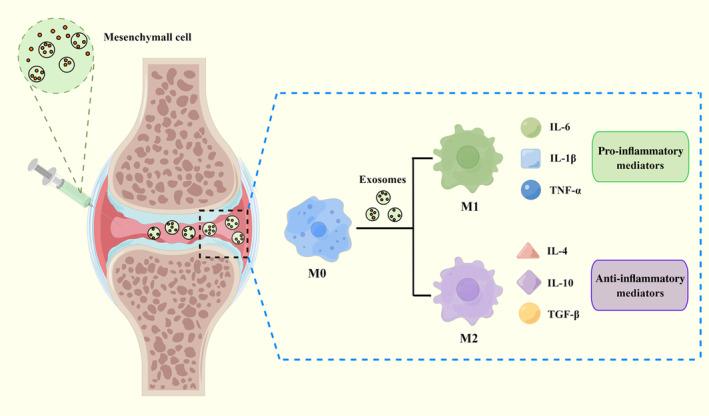
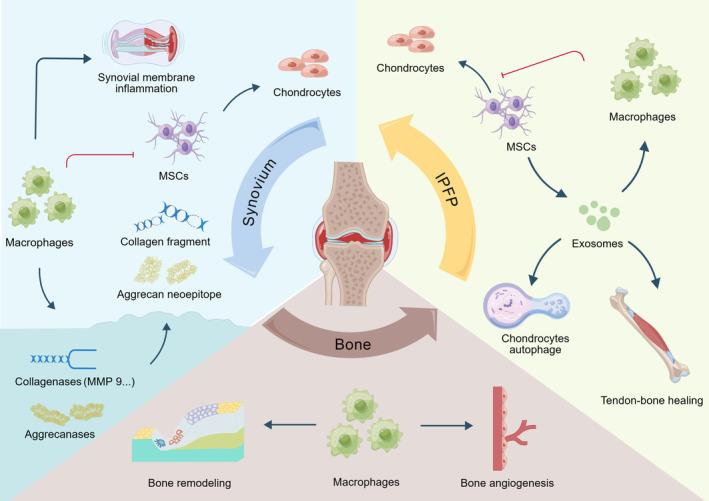
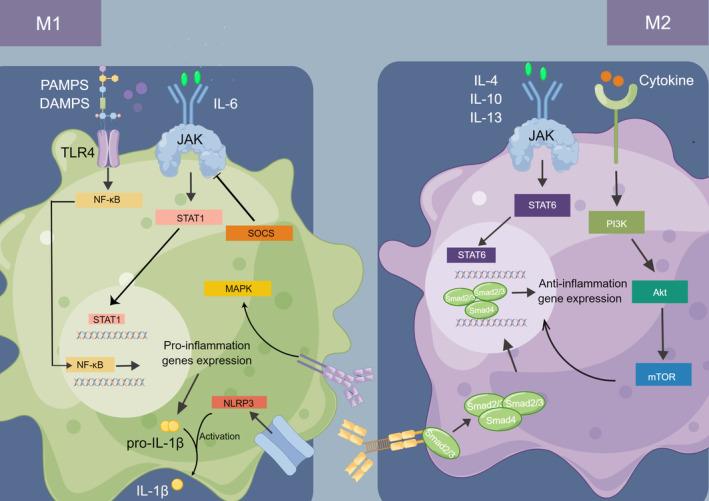
Osteoarthritis (OA) is the most common chronic degenerative joint disease in middle-aged and elderly people, characterized by joint pain and dysfunction. Macrophages are key players in OA pathology, and their activation state has been studied extensively. Various studies have suggested that macrophages might respond to stimuli in their microenvironment by changing their phenotypes to pro-inflammatory or anti-inflammatory phenotypes, which is called macrophage polarization. Macrophages accumulate and become polarized (M1 or M2) in many tissues, such as synovium, adipose tissue, bone marrow, and bone mesenchymal tissues in joints, while resident macrophages as well as other stromal cells, including fibroblasts, chondrocytes, and osteoblasts, form the joint and function as an integrated unit. In this study, we focus exclusively on synovial macrophages, adipose tissue macrophages, and osteoclasts, to investigate their roles in the development of OA. We review recent key findings related to macrophage polarization and OA, including pathogenesis, molecular pathways, and therapeutics. We summarize several signaling pathways in macrophage reprogramming related to OA, including NF-κB, MAPK, TGF-β, JAK/STAT, PI3K/Akt/mTOR, and NLRP3. Of note, despite the increasing availability of treatments for osteoarthritis, like intra-articular injections, surgery, and cellular therapy, the demand for more effective clinical therapies has remained steady. Therefore, we also describe the current prospective therapeutic methods that deem macrophage polarization to be a therapeutic target, including physical stimulus, chemical compounds, and biological molecules, to enhance cartilage repair and alleviate the progression of OA.
骨关节炎(OA)是中老年人群中最常见的慢性退行性关节疾病,其特征为关节疼痛和功能障碍。巨噬细胞是OA病理过程中的关键参与者,对其激活状态已进行了广泛研究。各种研究表明,巨噬细胞可能通过将其表型转变为促炎或抗炎表型来响应其微环境中的刺激,这一过程称为巨噬细胞极化。巨噬细胞在许多组织中积累并发生极化(M1或M2),如滑膜、脂肪组织、骨髓以及关节中的骨间充质组织,而驻留巨噬细胞以及其他基质细胞,包括成纤维细胞、软骨细胞和成骨细胞,构成关节并作为一个整体发挥功能。在本研究中,我们专门聚焦于滑膜巨噬细胞、脂肪组织巨噬细胞和破骨细胞,以研究它们在OA发展中的作用。我们回顾了与巨噬细胞极化和OA相关的近期关键发现,包括发病机制、分子途径和治疗方法。我们总结了与OA相关的巨噬细胞重编程中的几种信号通路,包括NF-κB、MAPK、TGF-β、JAK/STAT、PI3K/Akt/mTOR和NLRP3。值得注意的是,尽管骨关节炎的治疗方法越来越多,如关节内注射、手术和细胞治疗,但对更有效临床治疗的需求一直保持稳定。因此,我们还描述了当前将巨噬细胞极化视为治疗靶点的前瞻性治疗方法,包括物理刺激、化合物和生物分子,以促进软骨修复并缓解OA的进展。
 Zotero 插件