
外泌体在实体瘤免疫治疗中的作用。
Roles of exosomes in immunotherapy for solid cancers.
机构信息
Department of Internal Medicine, The Affiliated Cancer Hospital of Zhengzhou University & Henan Cancer Hospital, Zhengzhou, 450008, China.
Department of Molecular Pathology, The Affiliated Cancer Hospital of Zhengzhou University & Henan Cancer Hospital, Zhengzhou, 450008, China.
出版信息
Cell Death Dis. 2024 Feb 1;15(2):106. doi: 10.1038/s41419-024-06494-z.
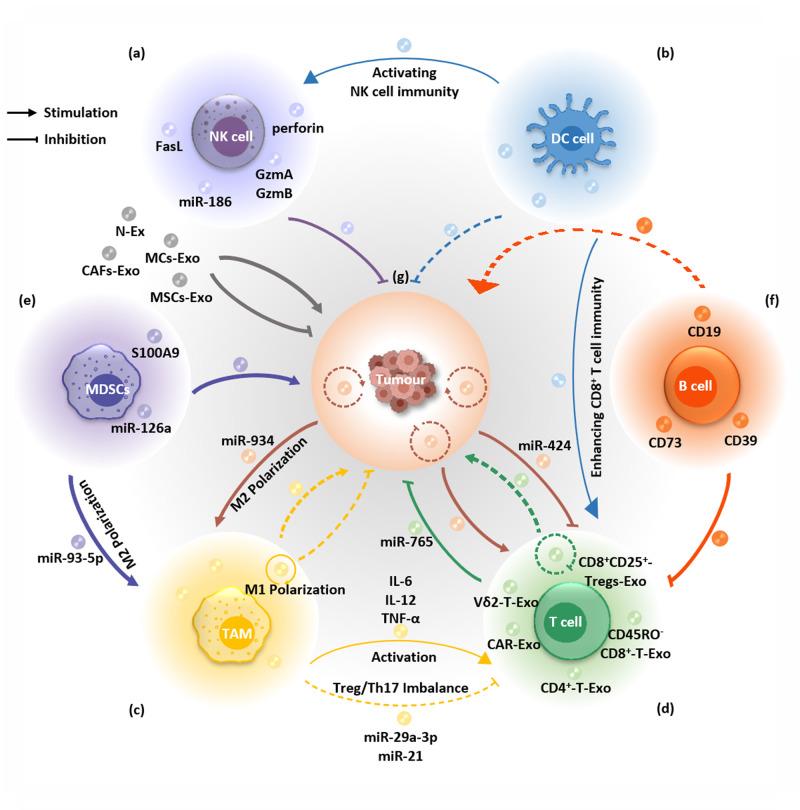
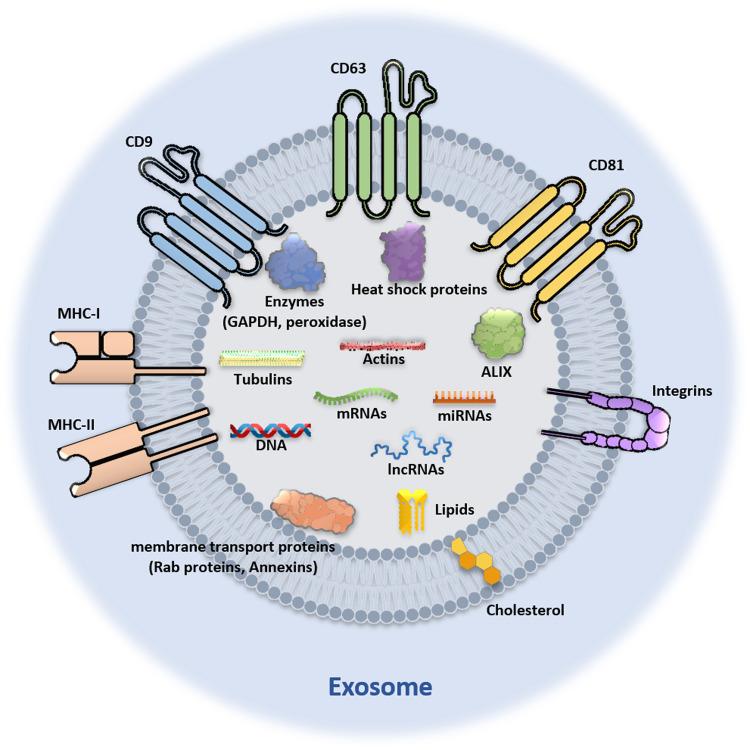
Although immunotherapy has made breakthrough progress, its efficacy in solid tumours remains unsatisfactory. Exosomes are the main type of extracellular vesicles that can deliver various intracellular molecules to adjacent or distant cells and organs, mediating various biological functions. Studies have found that exosomes can both activate the immune system and inhibit the immune system. The antigen and major histocompatibility complex (MHC) carried in exosomes make it possible to develop them as anticancer vaccines. Exosomes derived from blood, urine, saliva and cerebrospinal fluid can be used as ideal biomarkers in cancer diagnosis and prognosis. In recent years, exosome-based therapy has made great progress in the fields of drug transportation and immunotherapy. Here, we review the composition and sources of exosomes in the solid cancer immune microenvironment and further elaborate on the potential mechanisms and pathways by which exosomes influence immunotherapy for solid cancers. Moreover, we summarize the potential clinical application prospects of engineered exosomes and exosome vaccines in immunotherapy for solid cancers. Eventually, these findings may open up avenues for determining the potential of exosomes for diagnosis, treatment, and prognosis in solid cancer immunotherapy.
尽管免疫疗法已经取得了突破性进展,但它在实体瘤中的疗效仍不尽人意。外泌体是主要的细胞外囊泡类型,可将各种细胞内分子递送到相邻或远处的细胞和器官,介导各种生物学功能。研究发现,外泌体既能激活免疫系统,又能抑制免疫系统。外泌体携带的抗原和主要组织相容性复合体(MHC)使其有可能被开发为抗癌疫苗。来自血液、尿液、唾液和脑脊液的外泌体可用作癌症诊断和预后的理想生物标志物。近年来,基于外泌体的治疗在药物输送和免疫治疗领域取得了重大进展。在这里,我们综述了实体癌免疫微环境中外泌体的组成和来源,并进一步阐述了外泌体影响实体癌免疫治疗的潜在机制和途径。此外,我们总结了工程化外泌体和外泌体疫苗在实体癌免疫治疗中的潜在临床应用前景。最终,这些发现可能为确定外泌体在实体癌免疫治疗中的诊断、治疗和预后潜力开辟途径。



 Zotero 插件