
细胞外囊泡作为疾病治疗的工具和靶点
Extracellular vesicles as tools and targets in therapy for diseases.
作者信息
Kumar Mudasir A, Baba Sadaf K, Sadida Hana Q, Marzooqi Sara Al, Jerobin Jayakumar, Altemani Faisal H, Algehainy Naseh, Alanazi Mohammad A, Abou-Samra Abdul-Badi, Kumar Rakesh, Al-Shabeeb Akil Ammira S, Macha Muzafar A, Mir Rashid, Bhat Ajaz A
机构信息
Watson-Crick Centre for Molecular Medicine, Islamic University of Science and Technology, Awantipora, Kashmir, 192122, India.
Department of Human Genetics-Precision Medicine in Diabetes, Obesity and Cancer Program, Sidra Medicine, Doha, Qatar.
出版信息
Signal Transduct Target Ther. 2024 Feb 5;9(1):27. doi: 10.1038/s41392-024-01735-1.
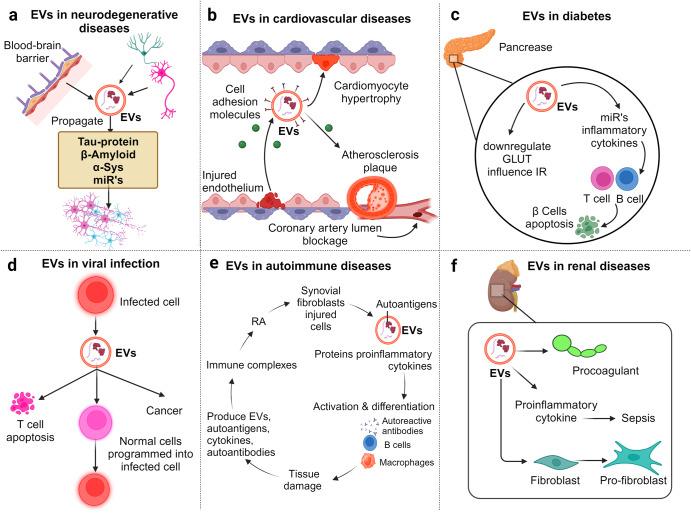
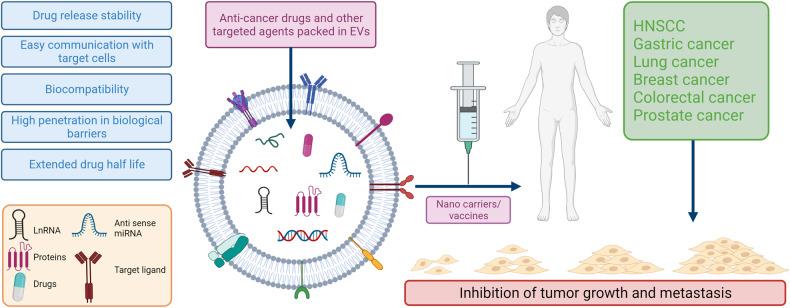
Extracellular vesicles (EVs) are nano-sized, membranous structures secreted into the extracellular space. They exhibit diverse sizes, contents, and surface markers and are ubiquitously released from cells under normal and pathological conditions. Human serum is a rich source of these EVs, though their isolation from serum proteins and non-EV lipid particles poses challenges. These vesicles transport various cellular components such as proteins, mRNAs, miRNAs, DNA, and lipids across distances, influencing numerous physiological and pathological events, including those within the tumor microenvironment (TME). Their pivotal roles in cellular communication make EVs promising candidates for therapeutic agents, drug delivery systems, and disease biomarkers. Especially in cancer diagnostics, EV detection can pave the way for early identification and offers potential as diagnostic biomarkers. Moreover, various EV subtypes are emerging as targeted drug delivery tools, highlighting their potential clinical significance. The need for non-invasive biomarkers to monitor biological processes for diagnostic and therapeutic purposes remains unfulfilled. Tapping into the unique composition of EVs could unlock advanced diagnostic and therapeutic avenues in the future. In this review, we discuss in detail the roles of EVs across various conditions, including cancers (encompassing head and neck, lung, gastric, breast, and hepatocellular carcinoma), neurodegenerative disorders, diabetes, viral infections, autoimmune and renal diseases, emphasizing the potential advancements in molecular diagnostics and drug delivery.
细胞外囊泡(EVs)是分泌到细胞外空间的纳米级膜结构。它们具有不同的大小、内容物和表面标志物,在正常和病理条件下均能从细胞中普遍释放。人血清是这些细胞外囊泡的丰富来源,不过从血清蛋白和非细胞外囊泡脂质颗粒中分离它们具有挑战性。这些囊泡能远距离运输各种细胞成分,如蛋白质、mRNA、miRNA、DNA和脂质,影响众多生理和病理事件,包括肿瘤微环境(TME)中的事件。它们在细胞通讯中的关键作用使细胞外囊泡成为治疗剂、药物递送系统和疾病生物标志物的有前景的候选者。特别是在癌症诊断中,细胞外囊泡检测可为早期识别铺平道路,并具有作为诊断生物标志物的潜力。此外,各种细胞外囊泡亚型正成为靶向药物递送工具,凸显了它们潜在的临床意义。对于用于诊断和治疗目的监测生物过程的非侵入性生物标志物的需求仍未得到满足。利用细胞外囊泡的独特组成可能在未来开启先进的诊断和治疗途径。在本综述中,我们详细讨论了细胞外囊泡在各种病症中的作用,包括癌症(涵盖头颈癌、肺癌、胃癌、乳腺癌和肝细胞癌)、神经退行性疾病、糖尿病、病毒感染、自身免疫性疾病和肾脏疾病,强调了分子诊断和药物递送方面的潜在进展。


 Zotero 插件