
糖尿病管理中的无创血糖监测技术:综述
Non-invasive blood glucose monitoring technology in diabetes management: review.
作者信息
Moses Jeban Chandir, Adibi Sasan, Wickramasinghe Nilmini, Nguyen Lemai, Angelova Maia, Islam Sheikh Mohammed Shariful
机构信息
School of Information Technology, Deakin University, Melbourne, VIC, Australia.
School of Computing, Engineering and Mathematical Sciences, La Trobe University, Melbourne, VIC, Australia.
出版信息
Mhealth. 2023 Dec 19;10:9. doi: 10.21037/mhealth-23-9. eCollection 2024.
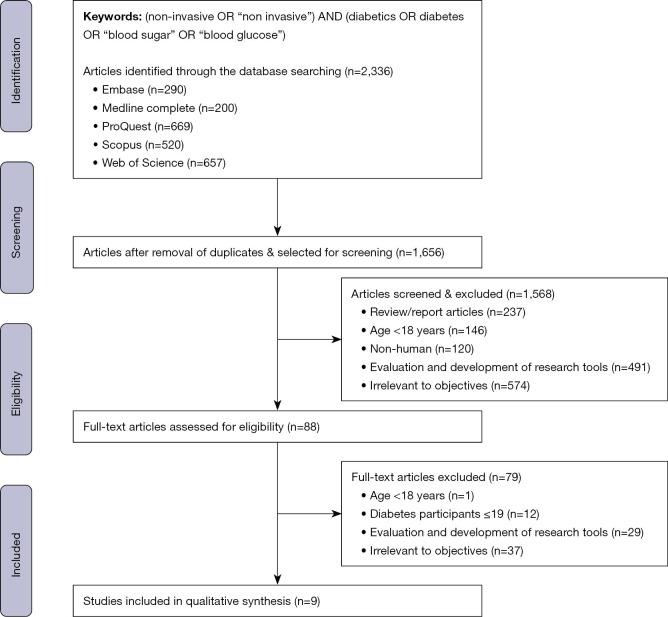
Diabetes is one of the leading non-communicable diseases globally, adversely impacting an individual's quality of life and adding a considerable burden to the healthcare systems. The necessity for frequent blood glucose (BG) monitoring and the inconveniences associated with self-monitoring of BG, such as pain and discomfort, has motivated the development of non-invasive BG approaches. However, the current research progress is slow, and only a few BG self-monitoring devices have made considerable progress. Hence, we evaluate the available non-invasive glucose monitoring technologies validated against BG recordings to provide future research direction to design, develop, and deploy self-monitoring of BG with integrated emerging technologies. We searched five databases, Embase, MEDLINE, Proquest, Scopus, and Web of Science, to assess the non-invasive technology's scope in the diabetes management paradigm published from 2000 to 2020. A total of three approaches to non-invasive screening, including saliva, skin, and breath, were identified and discussed. We observed a statistical relationship between BG measurements obtained from non-invasive methods and standard clinical measures. Opportunities exist for future research to advance research progress and facilitate early technology adoption for healthcare practice. The results promise clinical validity; however, formulating regulatory guidelines could foresee the deployment of approved non-invasive BG monitoring technologies in healthcare practice. Further, research prospects are there to design, develop, and deploy integrated diabetes management systems with mobile technologies, data analytics, and the internet of things (IoT) to deliver a personalised monitoring system.
糖尿病是全球主要的非传染性疾病之一,对个人生活质量产生不利影响,并给医疗保健系统带来相当大的负担。频繁进行血糖(BG)监测的必要性以及自我监测BG所带来的不便,如疼痛和不适,促使了非侵入性BG检测方法的发展。然而,目前的研究进展缓慢,只有少数BG自我监测设备取得了显著进展。因此,我们评估了已有的针对BG记录进行验证的非侵入性血糖监测技术,为利用新兴技术设计、开发和部署BG自我监测提供未来的研究方向。我们检索了五个数据库,即Embase、MEDLINE、Proquest、Scopus和Web of Science,以评估2000年至2020年发表的糖尿病管理范式中无创技术的范围。共识别并讨论了三种非侵入性筛查方法,包括唾液、皮肤和呼吸。我们观察到从非侵入性方法获得的BG测量值与标准临床测量值之间存在统计学关系。未来的研究有机会推动研究进展,并促进医疗实践中早期采用该技术。结果表明具有临床有效性;然而,制定监管指南可以预见批准的非侵入性BG监测技术在医疗实践中的应用。此外,还有研究前景来设计、开发和部署集成了移动技术、数据分析和物联网(IoT)的糖尿病管理系统,以提供个性化的监测系统。


 Zotero 插件