
支持在雌激素受体阳性、内分泌依赖的转移性乳腺癌中进行有效免疫刺激的实验和临床证据。
Experimental and clinical evidence in favour of an effective immune stimulation in ER-positive, endocrine-dependent metastatic breast cancer.
机构信息
Department of Oncology, Transplantations and New Technologies in Medicine, University of Pisa, Pisa, Italy.
Epidemiology and Biostatistics Unit, Institute of Clinical Physiology, National Research Council and Gabriele Monasterio Foundation, Pisa, Italy.
出版信息
Front Immunol. 2024 Jan 25;14:1225175. doi: 10.3389/fimmu.2023.1225175. eCollection 2023.
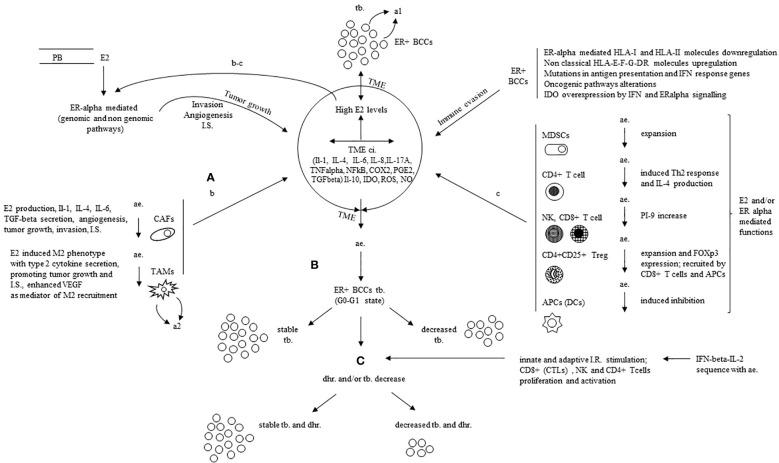
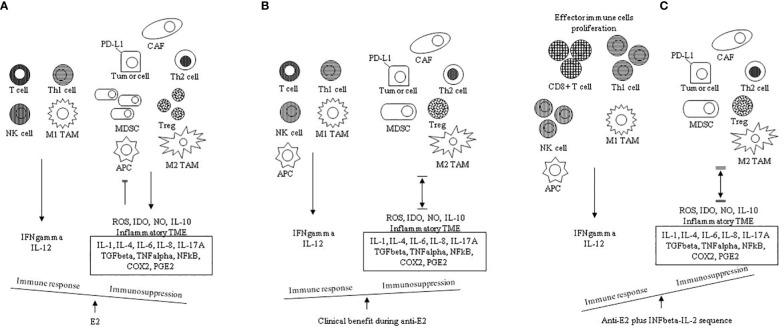
In ER+ breast cancer, usually seen as the low immunogenic type, the main mechanisms favouring the immune response or tumour growth and immune evasion in the tumour microenvironment (TME) have been examined. The principal implications of targeting the oestrogen-mediated pathways were also considered. Recent experimental findings point out that anti-oestrogens contribute to the reversion of the immunosuppressive TME. Moreover, some preliminary clinical data with the hormone-immunotherapy association in a metastatic setting support the notion that the reversion of immune suppression in TME is likely favoured by the G0-G1 state induced by anti-oestrogens. Following immune stimulation, the reverted immune suppression allows the boosting of the effector cells of the innate and adaptive immune response. This suggests that ER+ breast cancer is a molecular subtype where a successful active immune manipulation can be attained. If this is confirmed by a prospective multicentre trial, which is expected in light of the provided evidence, the proposed hormone immunotherapy can also be tested in the adjuvant setting. Furthermore, the different rationale suggests a synergistic activity of our proposed immunotherapy with the currently recommended regimen consisting of antioestrogens combined with cyclin kinase inhibitors. Overall, this lays the foundation for a shift in clinical practice within this most prevalent molecular subtype of breast cancer.
在 ER+ 乳腺癌中,通常被视为低免疫原性类型,已经研究了有利于肿瘤微环境(TME)中免疫反应或肿瘤生长和免疫逃逸的主要机制。还考虑了针对雌激素介导途径的靶向治疗的主要意义。最近的实验结果表明,抗雌激素有助于逆转免疫抑制性 TME。此外,一些关于激素免疫治疗在转移性环境中联合应用的初步临床数据支持这样一种观点,即抗雌激素诱导的 G0-G1 状态可能有利于 TME 中免疫抑制的逆转。免疫刺激后,逆转的免疫抑制允许增强先天和适应性免疫反应的效应细胞。这表明 ER+ 乳腺癌是一种可以通过成功的主动免疫干预来治疗的分子亚型。如果这一观点得到预期的多中心前瞻性临床试验的证实,鉴于提供的证据,所提出的激素免疫疗法也可以在辅助治疗环境中进行测试。此外,不同的基本原理表明,我们提出的免疫疗法与目前推荐的联合使用抗雌激素和细胞周期蛋白激酶抑制剂的方案具有协同作用。总的来说,这为在乳腺癌最常见的这种分子亚型的临床实践中转变奠定了基础。
 Zotero 插件