
脑-肠-微生物组相互作用的研究进展:信号机制、疾病及治疗意义的综合更新。
Advances in Brain-Gut-Microbiome Interactions: A Comprehensive Update on Signaling Mechanisms, Disorders, and Therapeutic Implications.
机构信息
G. Oppenheimer Center for Neurobiology of Stress and Resilience, University of California Los Angeles, Los Angeles, California; Goodman-Luskin Microbiome Center, David Geffen School of Medicine, University of California Los Angeles, Los Angeles, California; The Vatche and Tamar Manoukian Division of Digestive Diseases, Department of Medicine, David Geffen School of Medicine, University of California Los Angeles, Los Angeles, California.
G. Oppenheimer Center for Neurobiology of Stress and Resilience, University of California Los Angeles, Los Angeles, California; Goodman-Luskin Microbiome Center, David Geffen School of Medicine, University of California Los Angeles, Los Angeles, California; The Vatche and Tamar Manoukian Division of Digestive Diseases, Department of Medicine, David Geffen School of Medicine, University of California Los Angeles, Los Angeles, California.
出版信息
Cell Mol Gastroenterol Hepatol. 2024;18(1):1-13. doi: 10.1016/j.jcmgh.2024.01.024. Epub 2024 Feb 8.
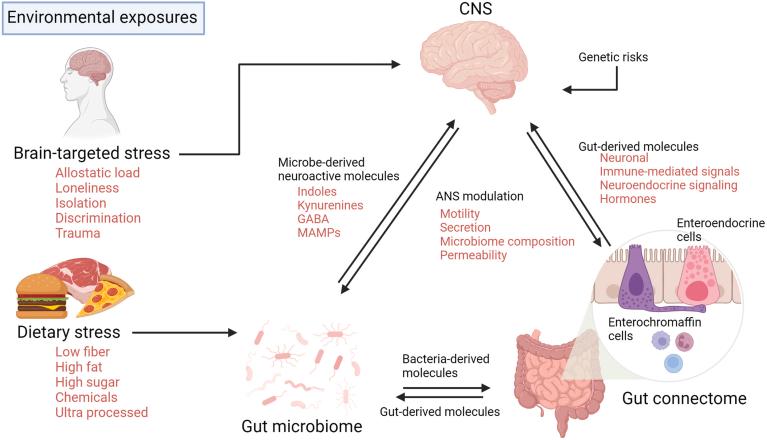
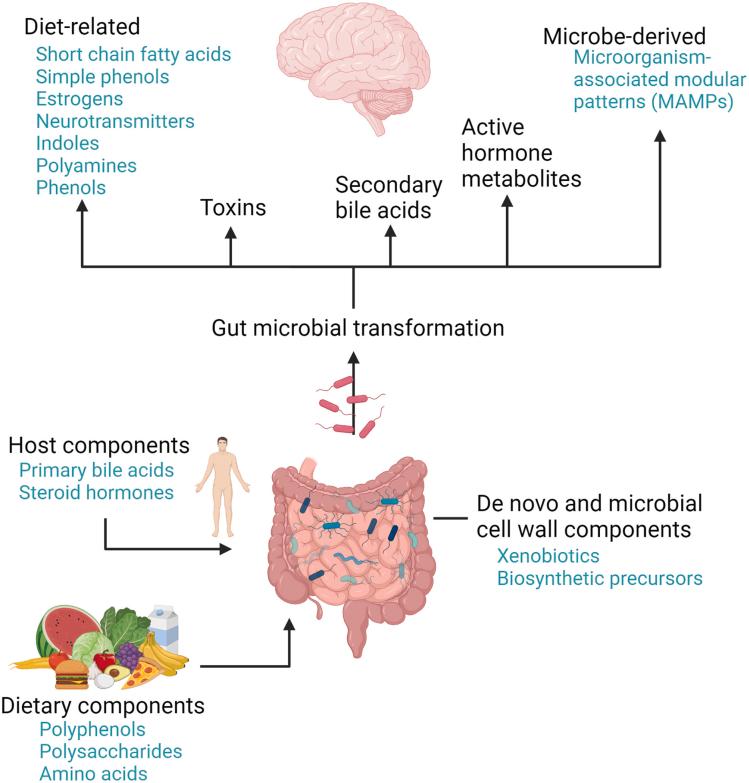
The complex, bidirectional interactions between the brain, the gut, and the gut microbes are best referred to as the brain gut microbiome system. Animal and clinical studies have identified specific signaling mechanisms within this system, with gut microbes communicating to the brain through neuronal, endocrine, and immune pathways. The brain, in turn, modulates the composition and function of the gut microbiota through the autonomic nervous system, regulating gut motility, secretion, permeability, and the release of hormones impacting microbial gene expression. Perturbations at any level of these interactions can disrupt the intricate balance, potentially contributing to the pathogenesis of intestinal, metabolic, neurologic, and psychiatric disorders. Understanding these interactions and their underlying mechanisms holds promise for identifying biomarkers, as well as novel therapeutic targets, and for developing more effective treatment strategies for these complex disorders. Continued research will advance our knowledge of this system, with the potential for improved understanding and management of a wide range of disorders. This review provides an update on the current state of knowledge regarding this system, with a focus on recent advancements and emerging research areas.
大脑、肠道和肠道微生物之间复杂的双向相互作用最好被称为脑-肠-微生物组系统。动物和临床研究已经确定了该系统内的特定信号机制,肠道微生物通过神经元、内分泌和免疫途径与大脑进行通讯。反过来,大脑通过自主神经系统调节肠道微生物群的组成和功能,调节肠道蠕动、分泌、通透性和影响微生物基因表达的激素释放。这些相互作用的任何水平的干扰都可能破坏微妙的平衡,从而可能导致肠道、代谢、神经和精神障碍的发病机制。了解这些相互作用及其潜在机制有望确定生物标志物以及新的治疗靶点,并为这些复杂疾病开发更有效的治疗策略。持续的研究将推进我们对该系统的认识,从而有潜力更好地理解和管理广泛的疾病。本综述提供了该系统当前知识状况的最新更新,重点介绍了最近的进展和新兴研究领域。
 Zotero 插件