
用于包封扁枝衣酸的纳米结构聚左旋丙交酯和聚甘油己二酸酯载体:一种有前景的肝脏保护方法。
Nanostructured Poly-l-lactide and Polyglycerol Adipate Carriers for the Encapsulation of Usnic Acid: A Promising Approach for Hepatoprotection.
作者信息
Brugnoli Benedetta, Perna Greta, Alfano Sara, Piozzi Antonella, Galantini Luciano, Axioti Eleni, Taresco Vincenzo, Mariano Alessia, Scotto d'Abusco Anna, Vecchio Ciprioti Stefano, Francolini Iolanda
机构信息
Department of Chemistry, Sapienza University of Rome, P.le A. Moro, 00185 Rome, Italy.
School of Chemistry, University of Nottingham, Nottingham NG7 2RD, UK.
出版信息
Polymers (Basel). 2024 Feb 3;16(3):427. doi: 10.3390/polym16030427.
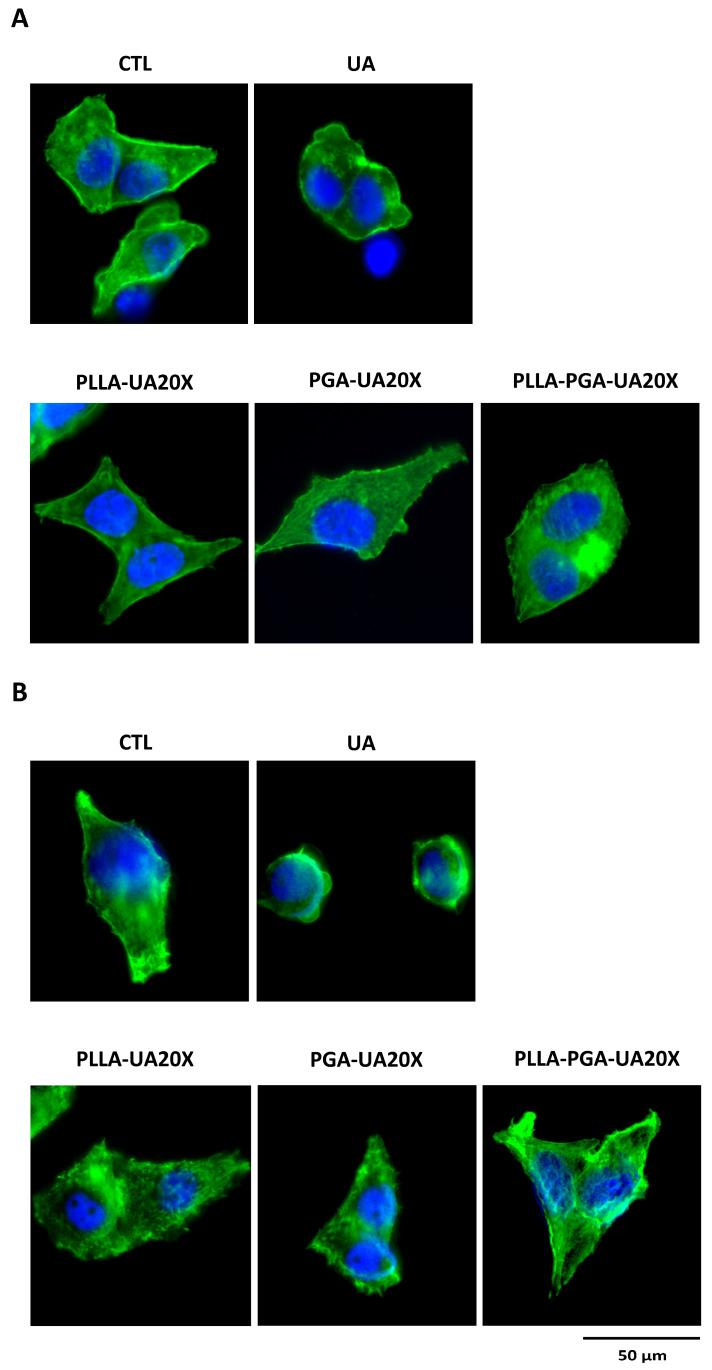
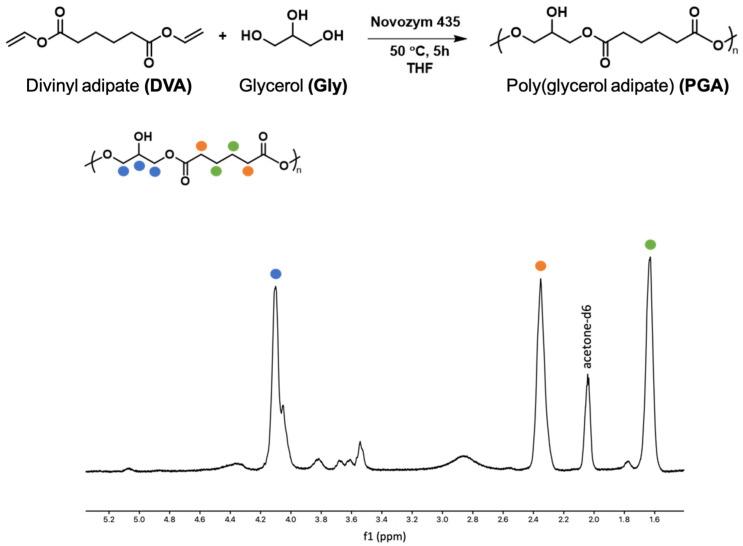
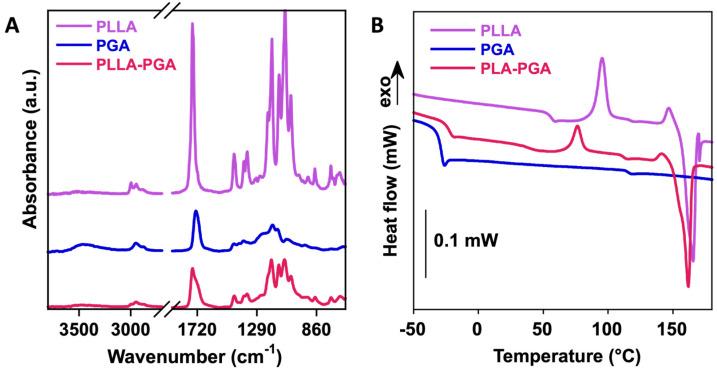
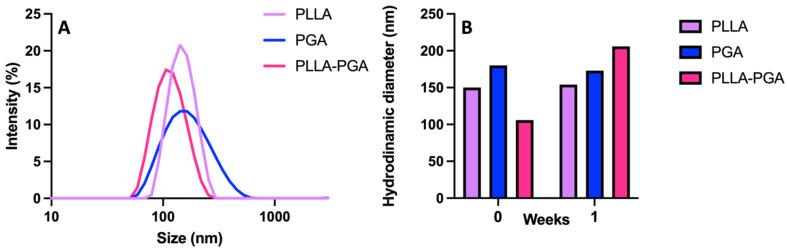
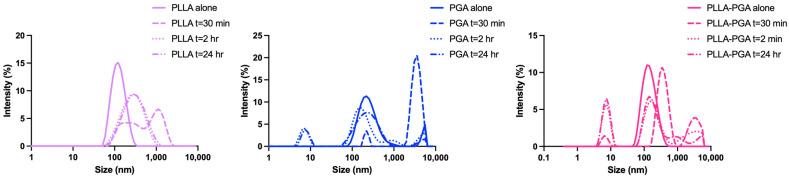
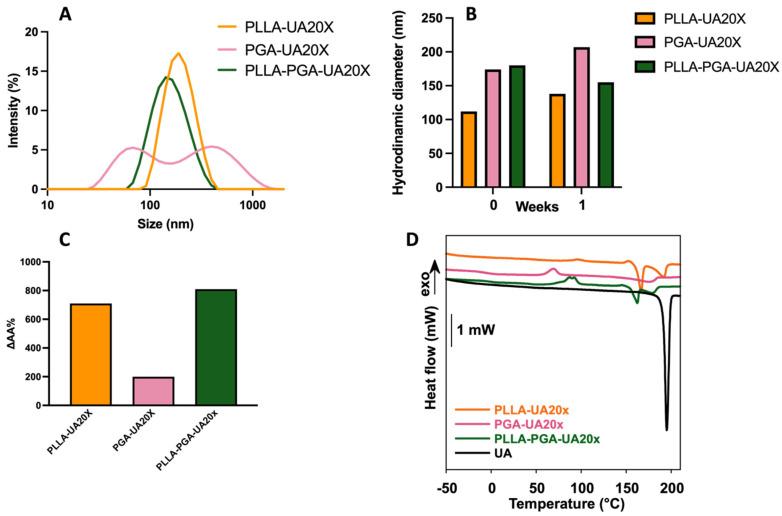
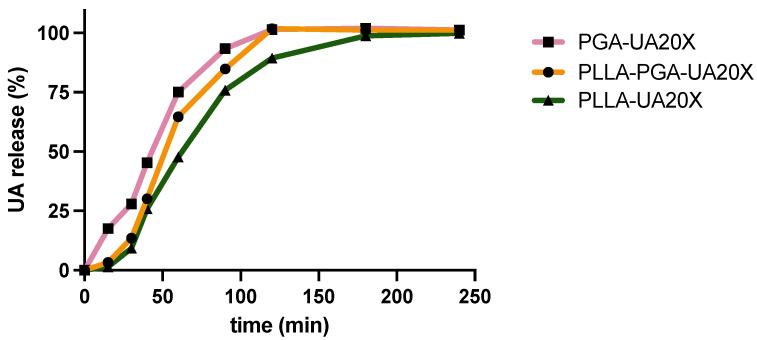
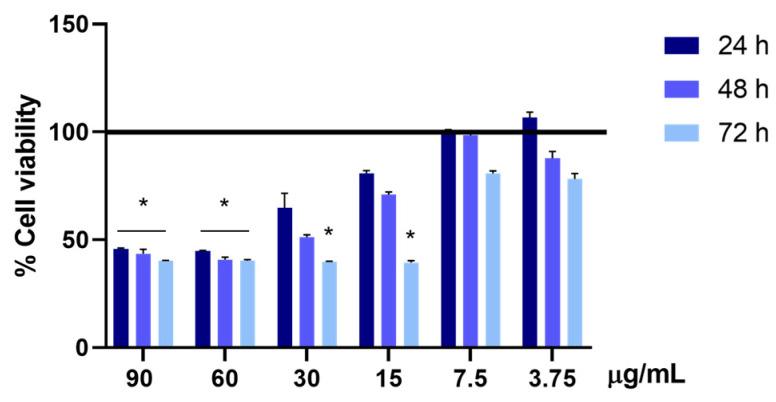
The present study investigates the utilization of nanoparticles based on poly-l-lactide (PLLA) and polyglycerol adipate (PGA), alone and blended, for the encapsulation of usnic acid (UA), a potent natural compound with various therapeutic properties including antimicrobial and anticancer activities. The development of these carriers offers an innovative approach to overcome the challenges associated with usnic acid's limited aqueous solubility, bioavailability, and hepatotoxicity. The nanosystems were characterized according to their physicochemical properties (among others, size, zeta potential, thermal properties), apparent aqueous solubility, and in vitro cytotoxicity. Interestingly, the nanocarrier obtained with the PLLA-PGA 50/50 weight ratio blend showed both the lowest size and the highest UA apparent solubility as well as the ability to decrease UA cytotoxicity towards human hepatocytes (HepG2 cells). This research opens new avenues for the effective utilization of these highly degradable and biocompatible PLLA-PGA blends as nanocarriers for reducing the cytotoxicity of usnic acid.
本研究考察了基于聚左旋乳酸(PLLA)和聚己二酸甘油酯(PGA)的纳米颗粒单独使用以及混合使用时,对扁枝衣酸(UA)的包封情况。扁枝衣酸是一种具有多种治疗特性(包括抗菌和抗癌活性)的强效天然化合物。这些载体的开发为克服与扁枝衣酸有限的水溶性、生物利用度和肝毒性相关的挑战提供了一种创新方法。根据纳米系统的物理化学性质(包括尺寸、zeta电位、热性质等)、表观水溶性和体外细胞毒性对其进行了表征。有趣的是,以50/50重量比的PLLA-PGA共混物制备的纳米载体显示出最小的尺寸、最高的UA表观溶解度以及降低UA对人肝细胞(HepG2细胞)细胞毒性的能力。这项研究为有效利用这些高度可降解且生物相容的PLLA-PGA共混物作为纳米载体来降低扁枝衣酸的细胞毒性开辟了新途径。


 Zotero 插件