
利用ELAVL1、ZfP36和HNRNPD mRNA基因对慢性阻塞性肺疾病中的嗜酸性粒细胞炎症进行内型分型。
Endotyping Eosinophilic Inflammation in COPD with ELAVL1, ZfP36 and HNRNPD mRNA Genes.
作者信息
Voulgareli Ilektra, Semitekolou Maria, Morianos Ioannis, Blizou Myrto, Sfika Maria, Hillas Georgios, Bakakos Petros, Loukides Stelios
机构信息
2nd Respiratory Medicine Department, "Attikon" University Hospital, National and Kapodistrian University of Athens Medical School, 11527 Athens, Greece.
School of Medicine, Institute of Molecular Biology and Biotechnology, University of Crete, Foundation for Research and Technology-Hellas Voutes, 71110 Heraklion, Crete, Greece.
出版信息
J Clin Med. 2024 Feb 1;13(3):854. doi: 10.3390/jcm13030854.
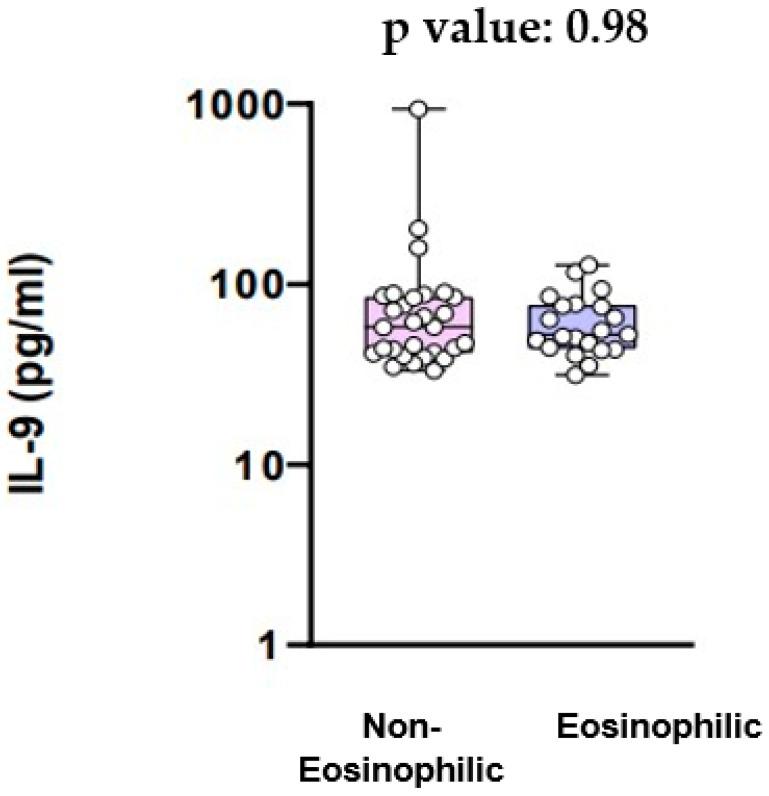
: Chronic obstructive pulmonary disease (COPD) is a common disease characterized by progressive airflow obstruction, influenced by genetic and environmental factors. Eosinophils have been implicated in COPD pathogenesis, prompting the categorization into eosinophilic and non-eosinophilic endotypes. This study explores the association between eosinophilic inflammation and mRNA expression of ELAVL1, ZfP36, and HNRNPD genes, which encode HuR, TTP and AUF-1 proteins, respectively. Additionally, it investigates the expression of IL-9 and IL-33 in COPD patients with distinct eosinophilic profiles. Understanding these molecular associations could offer insights into COPD heterogeneity and provide potential therapeutic targets. : We investigated 50 COPD patients, of whom 21 had eosinophilic inflammation and 29 had non-eosinophilic inflammation. Epidemiological data, comorbidities, and pulmonary function tests were recorded. Peripheral blood mononuclear cells were isolated for mRNA analysis of ELAVL1, ZfP36, and HNRNPD genes and serum cytokines (IL-9, IL-33) were measured using ELISA kits. : The study comprised 50 participants, with 66% being male and a mean age of 68 years (SD: 8.9 years). Analysis of ELAVL1 gene expression revealed a 0.45-fold increase in non-eosinophilic and a 3.93-fold increase in eosinophilic inflammation ( = 0.11). For the ZfP36 gene, expression was 6.19-fold higher in non-eosinophilic and 119.4-fold higher in eosinophilic groups ( = 0.07). Similarly, HNRNPD gene expression was 0.23-fold higher in non-eosinophilic and 0.72-fold higher in eosinophilic inflammation ( = 0.06). Furthermore, serum levels of IL-9 showed no statistically significant difference between the eosinophilic and non-eosinophilic group (58.03 pg/mL vs. 52.55 pg/mL, = 0.98). Additionally, there was no significant difference in IL-33 serum levels between COPD patients with eosinophilic inflammation and those with non-eosinophilic inflammation (39.61 pg/mL vs. 37.94 pg/mL, = 0.72). : The data suggest a notable trend, lacking statistical significance, towards higher mRNA expression for the ZfP36 and HNRNPD genes for COPD patients with eosinophilic inflammation compared to those with non-eosinophilic inflammation.
慢性阻塞性肺疾病(COPD)是一种常见疾病,其特征为进行性气流受限,受遗传和环境因素影响。嗜酸性粒细胞与COPD发病机制有关,促使其分为嗜酸性粒细胞型和非嗜酸性粒细胞型内型。本研究探讨嗜酸性粒细胞炎症与ELAVL1、ZfP36和HNRNPD基因mRNA表达之间的关联,这三个基因分别编码HuR、TTP和AUF-1蛋白。此外,还研究了具有不同嗜酸性粒细胞特征的COPD患者中IL-9和IL-33的表达。了解这些分子关联可为COPD的异质性提供见解,并提供潜在的治疗靶点。
我们调查了50例COPD患者,其中21例有嗜酸性粒细胞炎症,29例有非嗜酸性粒细胞炎症。记录了流行病学数据、合并症和肺功能测试结果。分离外周血单个核细胞用于ELAVL1、ZfP36和HNRNPD基因的mRNA分析,并使用ELISA试剂盒检测血清细胞因子(IL-9、IL-33)。
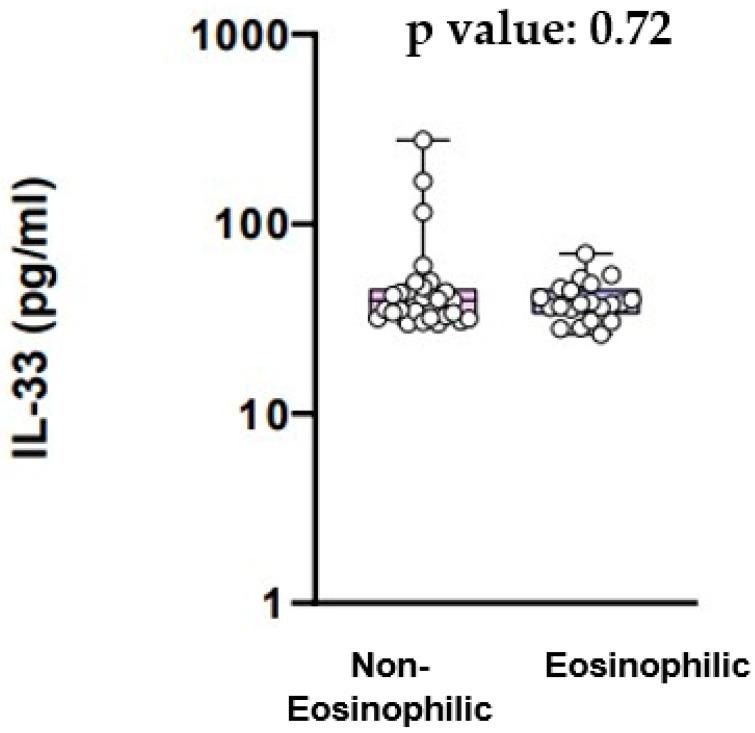
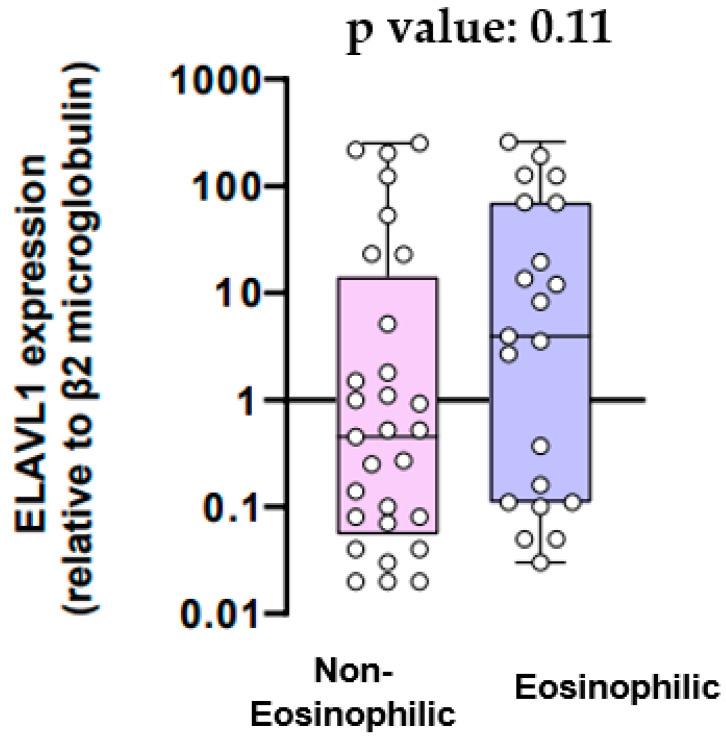
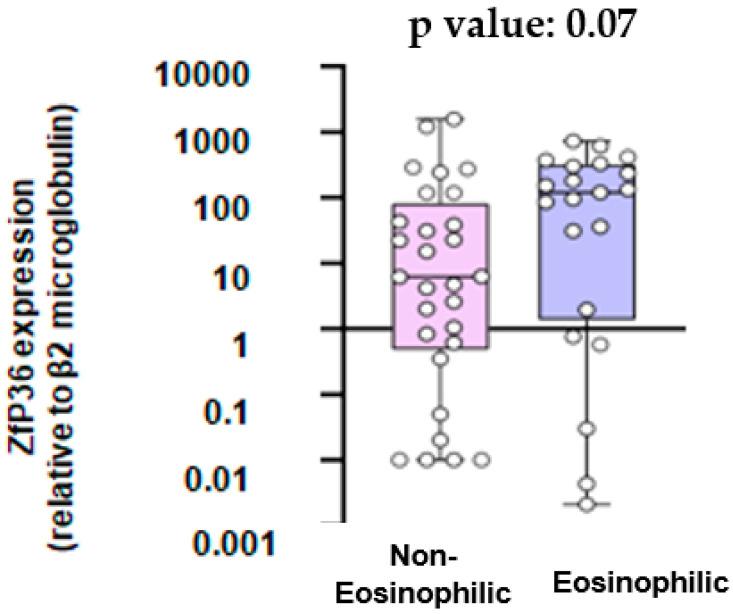
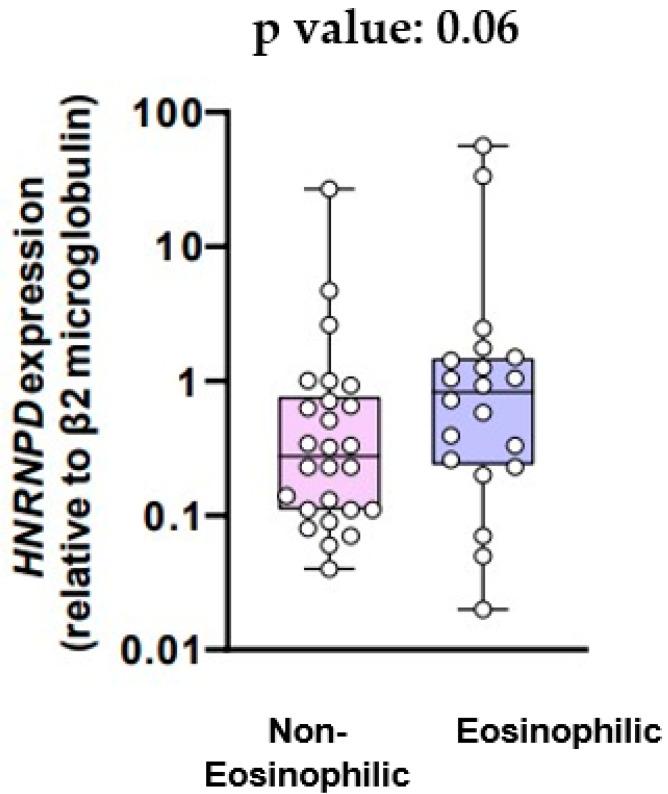
该研究包括50名参与者,其中66%为男性,平均年龄68岁(标准差:8.9岁)。ELAVL1基因表达分析显示,非嗜酸性粒细胞炎症组增加0.45倍,嗜酸性粒细胞炎症组增加3.93倍(P = 0.11)。对于ZfP36基因,非嗜酸性粒细胞组表达高6.19倍,嗜酸性粒细胞组高119.4倍(P = 0.07)。同样,HNRNPD基因表达在非嗜酸性粒细胞炎症组高0.23倍,在嗜酸性粒细胞炎症组高0.72倍(P = 0.06)。此外,嗜酸性粒细胞组和非嗜酸性粒细胞组血清IL-9水平无统计学显著差异(58.03 pg/mL对52.55 pg/mL,P = 0.98)。另外,嗜酸性粒细胞炎症的COPD患者和非嗜酸性粒细胞炎症的COPD患者血清IL-33水平也无显著差异(39.61 pg/mL对37.94 pg/mL,P = 0.72)。
数据表明,与非嗜酸性粒细胞炎症的COPD患者相比,嗜酸性粒细胞炎症的COPD患者ZfP36和HNRNPD基因mRNA表达有明显升高趋势,但无统计学意义。
 Zotero 插件