
血管体靶向腘下血管成形术:对临床结局的影响——一项观察性研究
Angiosome-Targeted Infrapopliteal Angioplasty: Impact on Clinical Outcomes-An Observational Study.
作者信息
Popitiu Mircea Ionut, Alexandrescu Vlad Adrian, Clerici Giacomo, Ionac Stefan, Gavrila-Ardelean Gloria, Ion Miruna Georgiana, Ionac Mihai Edmond
机构信息
Research Center in Vascular and Endovascular Surgery, "Victor Babes" University of Medicine and Pharmacy, 300041 Timisoara, Romania.
Cardio-Vascular and Thoracic Surgery Department, CHUp Sart-Tilman Hospital, University of Liège, 4000 Liège, Belgium.
出版信息
J Clin Med. 2024 Feb 2;13(3):883. doi: 10.3390/jcm13030883.
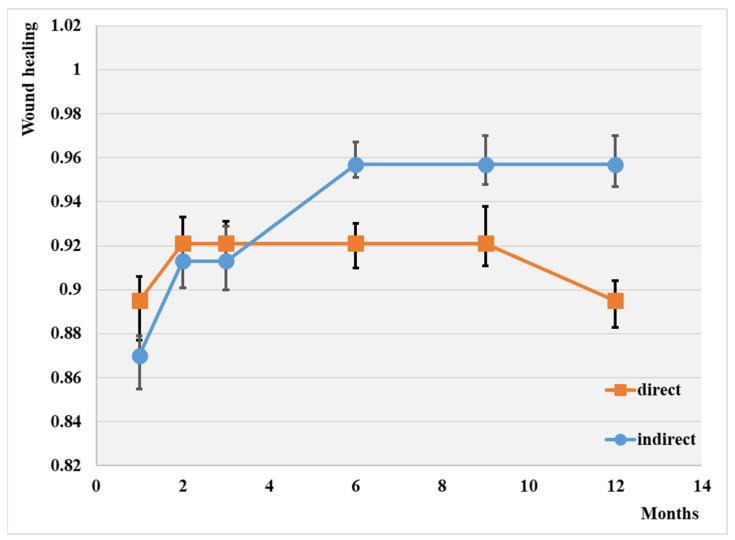
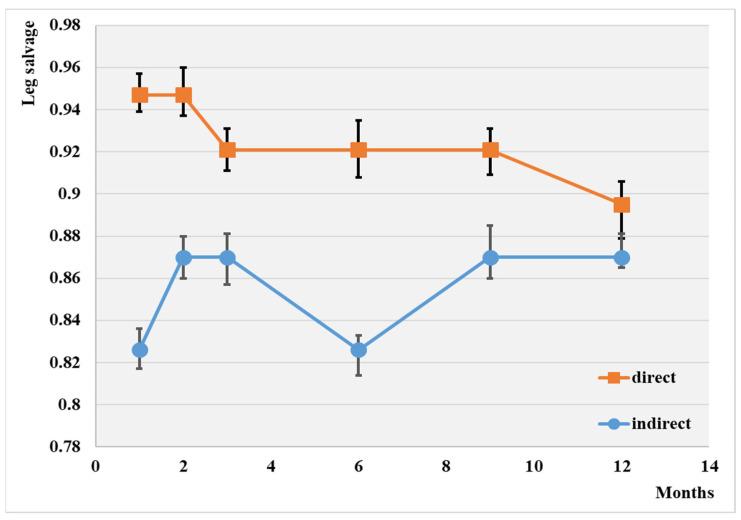
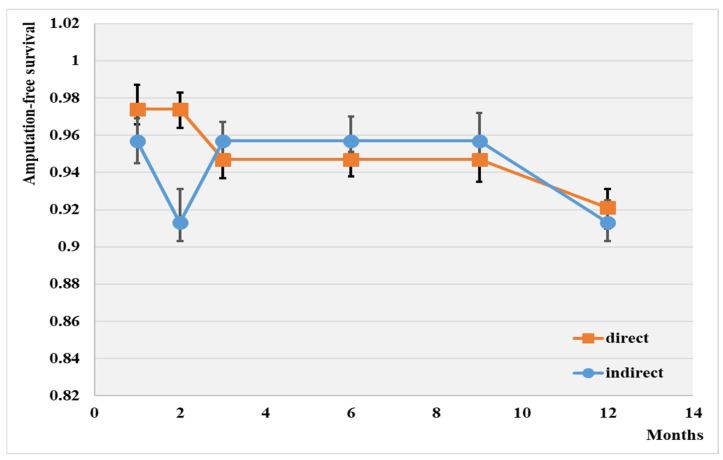
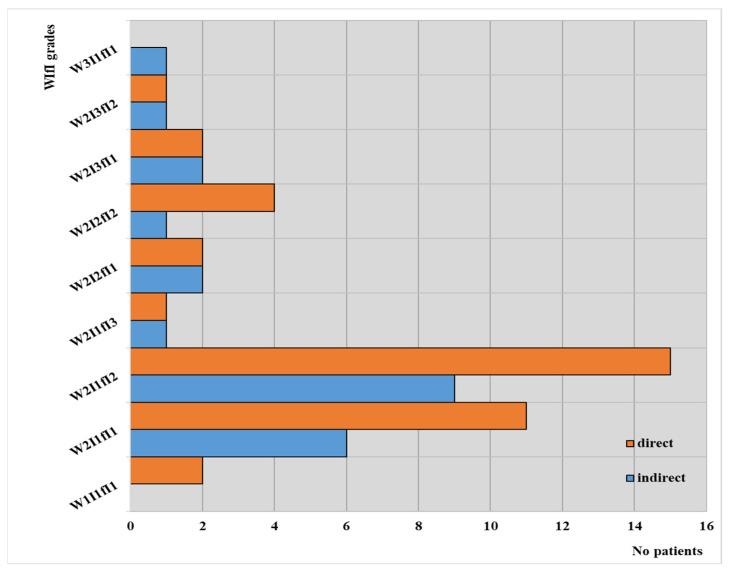
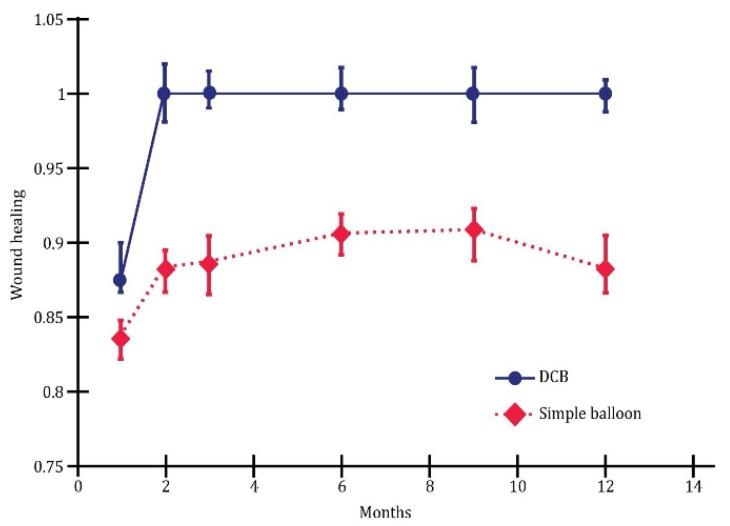
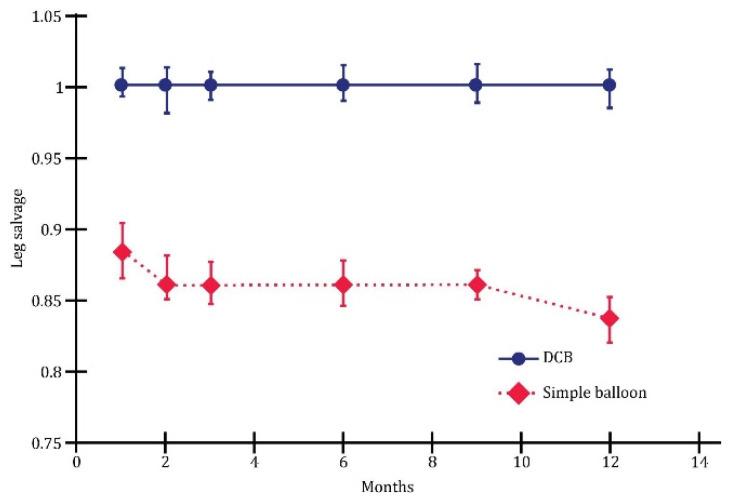
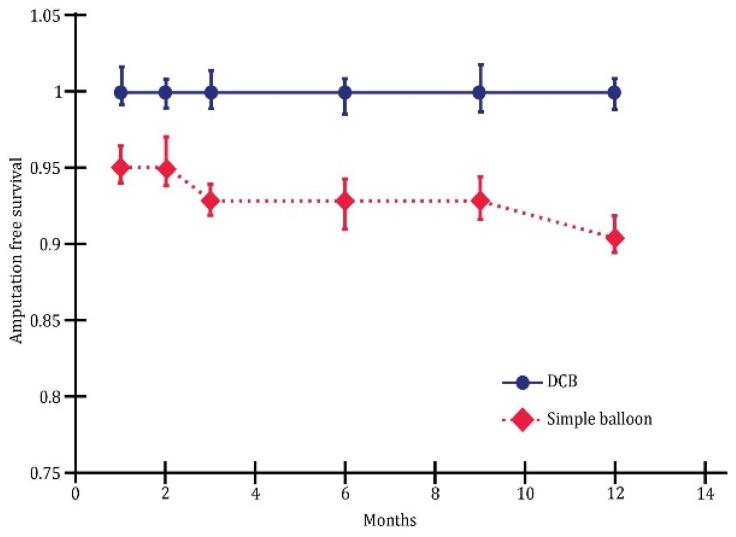
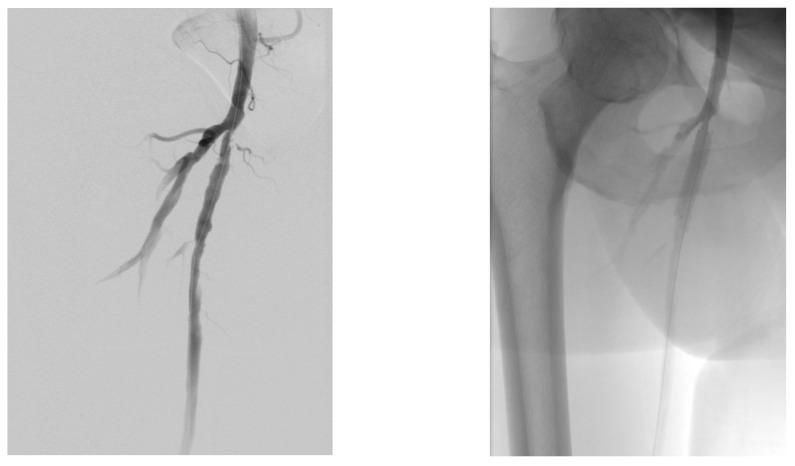
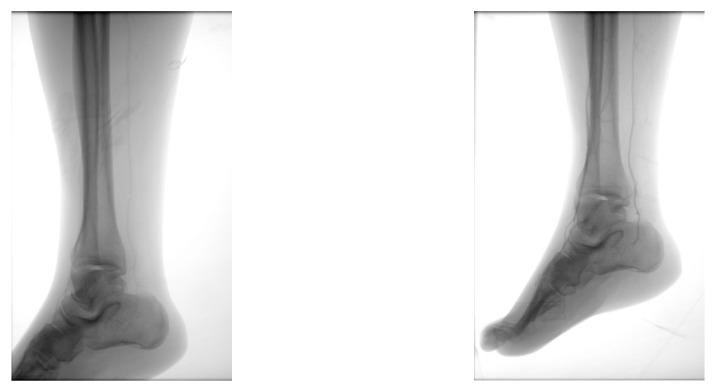
: Revascularization based on the angiosome concept (AC) is a controversial subject because there is currently no clear evidence of its efficacy, due to the heterogeneity of patients (multiple and diverse risk factors and comorbidities, multiple variations in the affected angiosomes). Choke vessels change the paradigm of the AC, and the presence or absence of the plantar arch directly affects the course of targeted revascularization. The aim of this study was to evaluate the effect of revascularization based on the AC in diabetic patients with chronic limb-threatening ischemia (CLTI). This retrospective analysis included 51 patients (40 men, 11 women), with a mean age of 69 years (66-72) and a total of 51 limbs, who presented with Rutherford 5-6 CLTI, before and after having undergone a drug-coated balloon angioplasty (8 patients) or plain balloon angioplasty (43). Between November 2018 and November 2019, all patients underwent below-the-knee balloon angioplasties and were followed up for an average of 12 months. The alteration of microcirculation was compared between directly and indirectly revascularized angiosomes. The study assessed clinical findings and patient outcomes, with follow-up investigations, comparing wound healing rates between the different revascularization methods. Patient records and periprocedural leg digital subtraction angiographies (DSA) were analyzed. Differences in outcomes after direct revascularization and indirect percutaneous transluminal angioplasty (PTa) were examined using Cox proportional hazards analysis, with the following endpoints: ulcer healing, limb salvage, and also amputation-free survival. Direct blood flow to the angiosome supplying the ulcer area was achieved in 38 legs, in contrast to 13 legs with indirect revascularization. Among the cases, there were 39 lesions in the anterior tibial artery (ATA), 42 lesions in the posterior tibial artery (PTA), and 8 lesions in the peroneal artery (PA). According to a Cox proportional hazards analysis, having fewer than three (<3) affected angiosomes (HR 0.49, 95% CI 0.19-1.25, = 0.136) was associated with improved wound healing. Conversely, wound healing outcomes were least favorable after indirect angioplasty ( = 0.206). When adjusting the Cox proportional hazard analysis for the number of affected angiosomes, it was found that direct drug-coated angioplasty resulted in the most favorable wound healing ( = 0.091). At the 1-year follow-up, the major amputation rate was 17.7%, and, according to a Cox proportional hazards analysis, atrial fibrillation (HR 0.85, 95% CI 0.42-1.69, = 0.637), hemodialysis (HR 1.26, 95% CI 0.39-4.04, = 0.699), and number of affected angiosomes > 3 (HR 0.94, 95% CI 0.63-1.39, = 0.748) were significantly associated with poor leg salvage. Additionally, direct endovascular revascularization was associated with a lower rate of major amputation compared to indirect angioplasty (HR 1.09, 95% CI 0.34-3.50, = 0.884). Observing the angiosomes concept in decision-making appears to result in improved rates of arterial ulcer healing and leg salvage, particularly in targeted drug-coated balloon angioplasty for diabetic critical limb ischemia, where multiple angiosomes are typically affected.
基于血管体概念(AC)的血运重建是一个有争议的话题,因为目前尚无明确证据证明其疗效,这是由于患者存在异质性(多种不同的风险因素和合并症,受累血管体存在多种变异)。窒息血管改变了AC的模式,足底弓的存在与否直接影响靶向血运重建的进程。本研究的目的是评估基于AC的血运重建对慢性肢体威胁性缺血(CLTI)糖尿病患者的影响。这项回顾性分析纳入了51例患者(40例男性,11例女性),平均年龄69岁(66 - 72岁),共51条肢体,这些患者在接受药物涂层球囊血管成形术(8例)或普通球囊血管成形术(43例)前后均表现为卢瑟福5 - 6级CLTI。在2018年11月至2019年11月期间,所有患者均接受了膝下球囊血管成形术,并平均随访12个月。比较了直接和间接血运重建血管体之间的微循环变化。该研究评估了临床发现和患者预后,并通过随访调查比较了不同血运重建方法之间的伤口愈合率。分析了患者记录和围手术期腿部数字减影血管造影(DSA)。使用Cox比例风险分析检查直接血运重建和间接经皮腔内血管成形术(PTa)后结局的差异,终点如下:溃疡愈合、肢体挽救以及无截肢生存率。38条腿实现了向供应溃疡区域的血管体的直接血流,相比之下,13条腿为间接血运重建。在这些病例中,胫前动脉(ATA)有39处病变,胫后动脉(PTA)有42处病变,腓动脉(PA)有8处病变。根据Cox比例风险分析,受累血管体少于三个(<3)(HR 0.49,95%CI 0.19 - 1.25,P = 0.136)与伤口愈合改善相关。相反,间接血管成形术后伤口愈合结局最不理想(P = 0.206)。在对受累血管体数量进行Cox比例风险分析调整后,发现直接药物涂层血管成形术导致最有利的伤口愈合(P = 0.091)。在1年随访时,大截肢率为17.7%,根据Cox比例风险分析,心房颤动(HR 0.85,95%CI 0.42 - 1.69,P = 0.637)、血液透析(HR 1.26,95%CI 0.39 - 4.04,P = 0.699)以及受累血管体数量>3(HR 0.94,95%CI 0.63 - 1.39,P = 0.748)与肢体挽救不佳显著相关。此外,与间接血管成形术相比,直接血管内血运重建与较低的大截肢率相关(HR 1.09, 95%CI 0.34 - 3.50, P = 0.884)。在决策过程中遵循血管体概念似乎能提高动脉溃疡愈合率和肢体挽救率,特别是在针对糖尿病严重肢体缺血的靶向药物涂层球囊血管成形术中,此时多个血管体通常会受累。





 Zotero 插件