
迈向可持续蛋白质来源:替代蛋白质的热学和流变学特性
Towards Sustainable Protein Sources: The Thermal and Rheological Properties of Alternative Proteins.
作者信息
Burghardt Kaitlyn, Craven Tierney, Sardar Nabil A, Pearce Joshua M
机构信息
Department of Chemical & Biochemical Engineering, Western University, London, ON N6A 5B9, Canada.
BeeHex, LLC, Columbus, OH 43230, USA.
出版信息
Foods. 2024 Jan 31;13(3):448. doi: 10.3390/foods13030448.
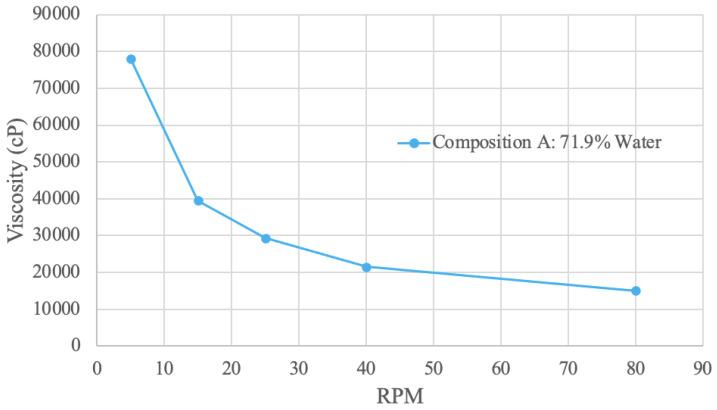
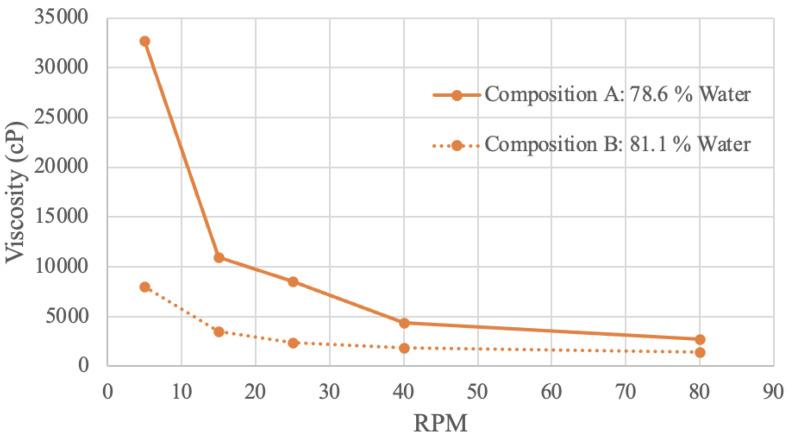
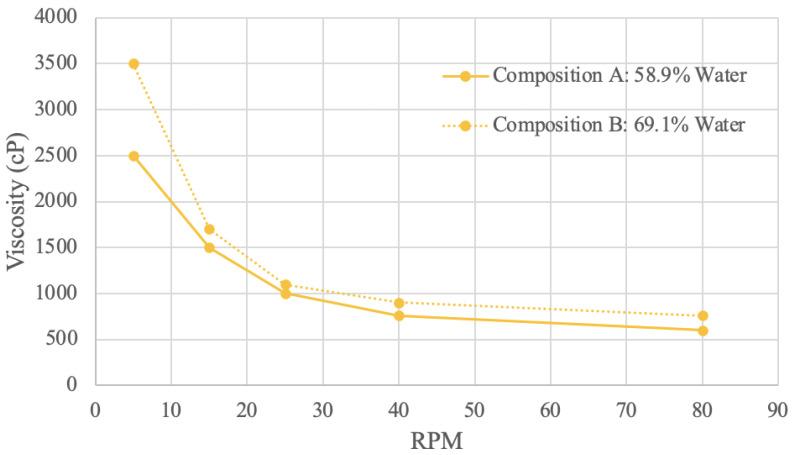
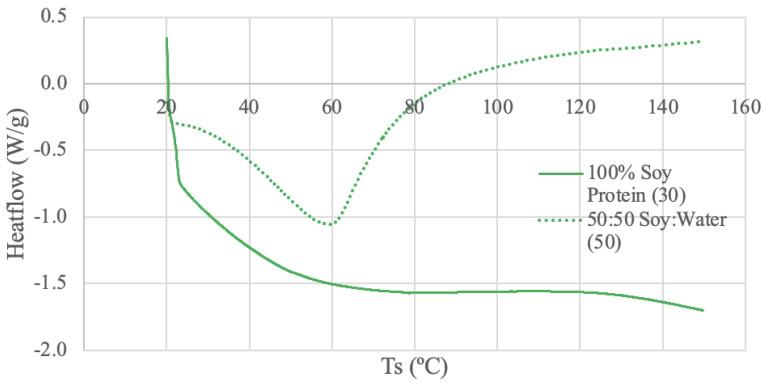
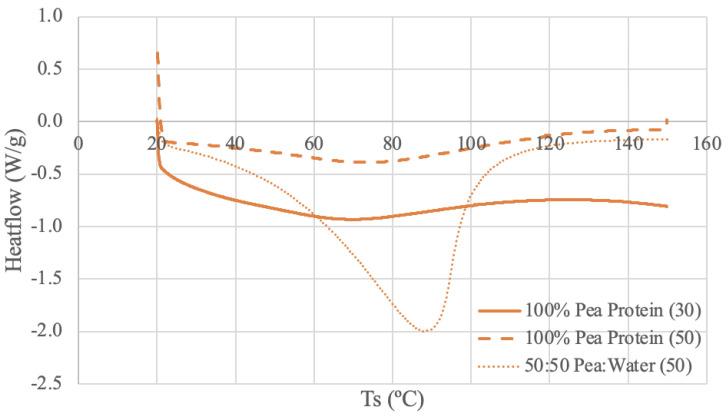
Reducing meat consumption reduces carbon emissions and other environmental harms. Unfortunately, commercial plant-based meat substitutes have not seen widespread adoption. In order to enable more flexible processing methods, this paper analyzes the characteristics of commercially available spirulina, soy, pea, and brown rice protein isolates to provide data for nonmeat protein processing that can lead to cost reductions. The thermal and rheological properties, as well as viscosity, density, and particle size distribution, were analyzed for further study into alternative protein-based food processing. The differential scanning calorimetry analysis produced dry amorphous-shaped curves and paste curves with a more distinct endothermic peak. The extracted linear temperature ranges for processing within food production were 70-90 °C for spirulina, 87-116 °C for soy protein, 67-77 °C for pea protein, and 87-97 °C for brown rice protein. The viscosity analysis determined that each protein material was shear-thinning and that viscosity increased with decreased water concentration, with rice being an exception to the latter trend. The obtained viscosity range for spirulina was 15,100-78,000 cP, 3200-80,000 cP for soy protein, 1400-32,700 cP for pea protein, and 600-3500 cP for brown rice protein. The results indicate that extrusion is a viable method for the further processing of protein isolates, as this technique has a large temperature operating range and variable screw speed. The data provided here can be used to make single or multi-component protein substitutes.
减少肉类消费可降低碳排放和其他环境危害。不幸的是,商业化的植物性肉类替代品尚未得到广泛应用。为了实现更灵活的加工方法,本文分析了市售螺旋藻、大豆、豌豆和糙米分离蛋白的特性,为可降低成本的非肉类蛋白质加工提供数据。分析了其热性能、流变性能以及粘度、密度和粒度分布,以进一步研究基于替代蛋白质的食品加工。差示扫描量热分析产生了干燥无定形曲线和具有更明显吸热峰的糊化曲线。食品生产中加工的提取线性温度范围为:螺旋藻70 - 90℃,大豆蛋白87 - 116℃,豌豆蛋白67 - 77℃,糙米蛋白87 - 97℃。粘度分析确定每种蛋白质材料均为剪切变稀,且粘度随水分浓度降低而增加,但大米是后一种趋势的例外。螺旋藻的粘度范围为15,100 - 78,000厘泊,大豆蛋白为3200 - 80,000厘泊,豌豆蛋白为1400 - 32,700厘泊,糙米蛋白为600 - 3500厘泊。结果表明,挤压是进一步加工分离蛋白的可行方法,因为该技术具有较大的温度操作范围和可变的螺杆速度。此处提供的数据可用于制造单组分或多组分蛋白质替代品。






 Zotero 插件