
GMP 级别的即时即用 BCMA.CAR-T 细胞在不同冻存时间点的体外功能和持久性。
In Vitro Functionality and Endurance of GMP-Compliant Point-of-Care BCMA.CAR-T Cells at Different Timepoints of Cryopreservation.
机构信息
Department of Internal Medicine V, University Clinic Heidelberg, 69120 Heidelberg, Germany.
Department of Translational Tumor Immunology, Max-Delbrück Center for Molecular Medicine (MDC), 13125 Berlin, Germany.
出版信息
Int J Mol Sci. 2024 Jan 23;25(3):1394. doi: 10.3390/ijms25031394.
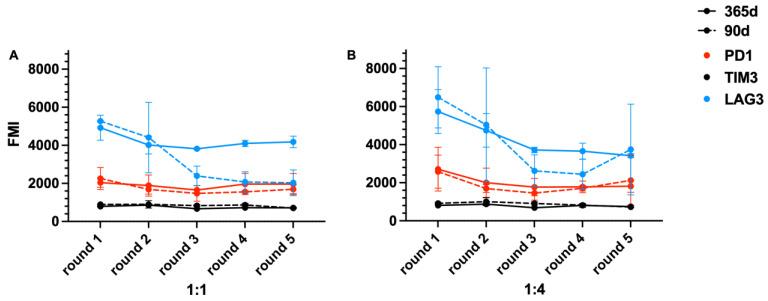
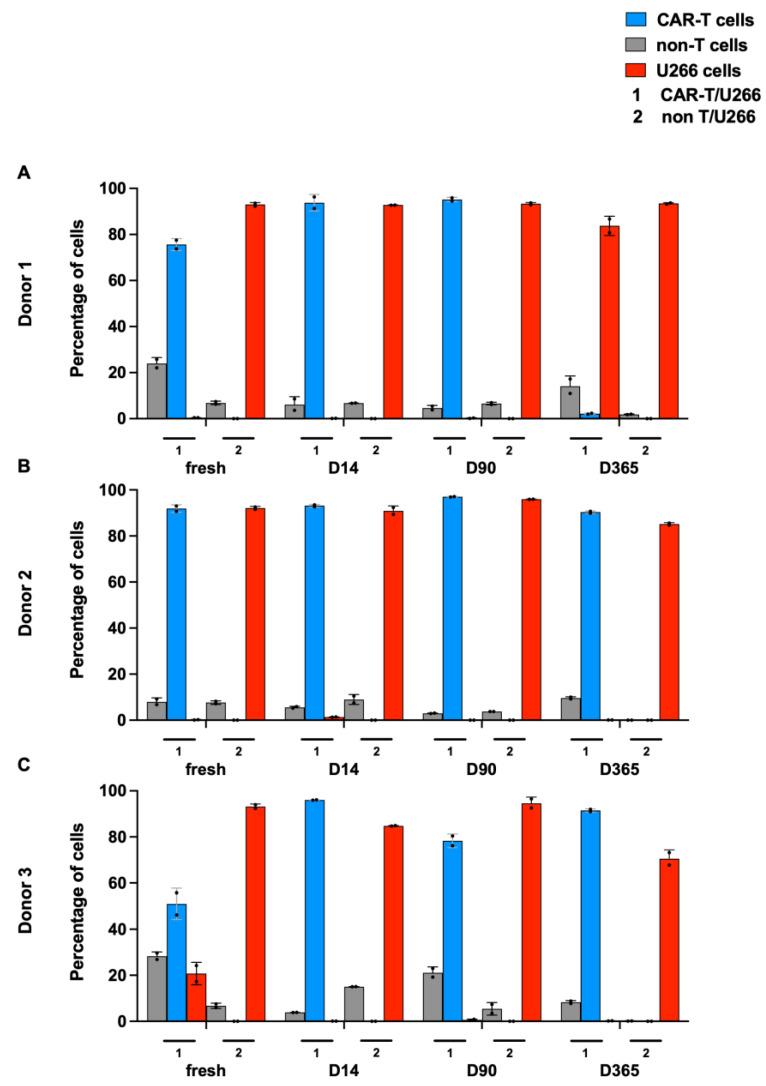
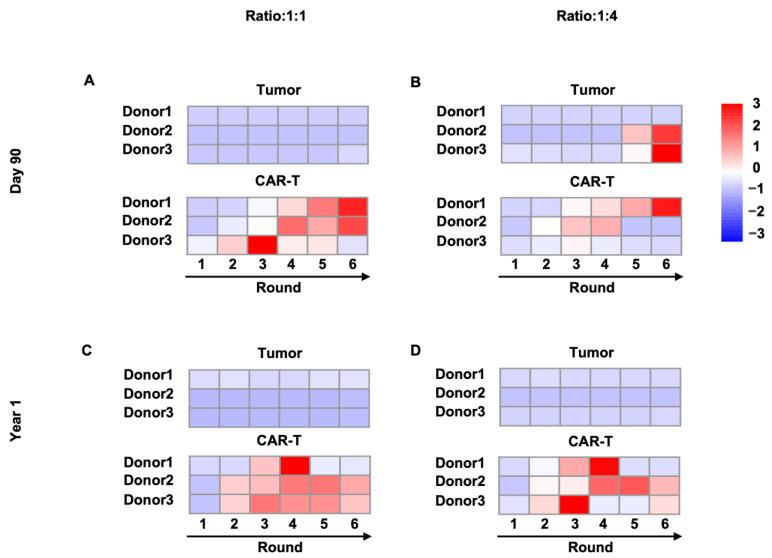
The search for target antigens for CAR-T cell therapy against multiple myeloma defined the B-cell maturation antigen (BCMA) as an interesting candidate. Several studies with BCMA-directed CAR-T cell therapy showed promising results. Second-generation point-of-care BCMA.CAR-T cells were manufactured to be of a GMP (good manufacturing practice) standard using the CliniMACS Prodigy device. Cytokine release in BCMA.CAR-T cells after stimulation with BCMA positive versus negative myeloma cell lines, U266/HL60, was assessed via intracellular staining and flow cytometry. The short-term cytotoxic potency of CAR-T cells was evaluated by chromium-51 release, while the long-term potency used co-culture (3 days/round) at effector/target cell ratios of 1:1 and 1:4. To evaluate the activation and exhaustion of CAR-T cells, exhaustion markers were assessed via flow cytometry. Stability was tested through a comparison of these evaluations at different timepoints: d0 as well as d + 14, d + 90 and d + 365 of cryopreservation. As results, (1) Killing efficiency of U266 cells correlated with the dose of CAR-T cells in a classical 4 h chromium-release assay. There was no significant difference after cryopreservation on different timepoints. (2) In terms of endurance of BCMA.CAR-T cell function, BCMA.CAR-T cells kept their ability to kill all tumor cells over six rounds of co-culture. (3) BCMA.CAR-T cells released high amounts of cytokines upon stimulation with tumor cells. There was no significant difference in cytokine release after cryopreservation. According to the results, BCMA.CAR-T cells manufactured under GMP conditions exerted robust and specific killing of target tumor cells with a high release of cytokines. Even after 1 year of cryopreservation, cytotoxic functions were maintained at the same level. This gives clinicians sufficient time to adjust the timepoint of BCMA.CAR-T cell application to the patient's course of the underlying disease.
针对多发性骨髓瘤的 CAR-T 细胞疗法的靶点抗原的研究将 B 细胞成熟抗原 (BCMA) 定义为一个有趣的候选物。几项针对 BCMA 导向的 CAR-T 细胞疗法的研究显示出了有前景的结果。第二代即时 BCMA.CAR-T 细胞是使用 CliniMACS Prodigy 设备按照 GMP(良好生产规范)标准制造的。通过细胞内染色和流式细胞术评估了 BCMA.CAR-T 细胞在受到 BCMA 阳性与阴性骨髓瘤细胞系(U266/HL60)刺激后的细胞因子释放情况。通过铬-51 释放评估了 CAR-T 细胞的短期细胞毒性效力,而通过共培养(3 天/轮)在效应物/靶细胞比为 1:1 和 1:4 下评估了长期效力。为了评估 CAR-T 细胞的激活和耗竭,通过流式细胞术评估了耗竭标志物。通过比较不同时间点(d0 以及冻存后的 d+14、d+90 和 d+365)的这些评估来测试稳定性。结果显示:(1) U266 细胞的杀伤效率与 CAR-T 细胞的剂量在经典的 4 h 铬释放测定中相关。在不同时间点的冻存后没有显著差异。(2) 在 BCMA.CAR-T 细胞功能的耐久性方面,BCMA.CAR-T 细胞在六轮共培养中保持了杀伤所有肿瘤细胞的能力。(3) BCMA.CAR-T 细胞在受到肿瘤细胞刺激时释放大量细胞因子。在冻存后细胞因子释放没有显著差异。根据结果,在 GMP 条件下制造的 BCMA.CAR-T 细胞对靶肿瘤细胞具有强大且特异性的杀伤作用,并释放大量细胞因子。即使在冻存 1 年后,细胞毒性功能仍保持在相同水平。这为临床医生提供了足够的时间来根据患者基础疾病的病程调整 BCMA.CAR-T 细胞应用的时间点。



 Zotero 插件