
钠离子通道β亚基——动物对河豚毒素抗性的另一个因素?
Sodium Channel β Subunits-An Additional Element in Animal Tetrodotoxin Resistance?
机构信息
Adaptive Biotoxicology Lab, School of the Environment, The University of Queensland, St Lucia, QLD 4067, Australia.
Evolutionary Genomics Group, Research School of Biology, Australian National University, Canberra, ACT 0200, Australia.
出版信息
Int J Mol Sci. 2024 Jan 25;25(3):1478. doi: 10.3390/ijms25031478.
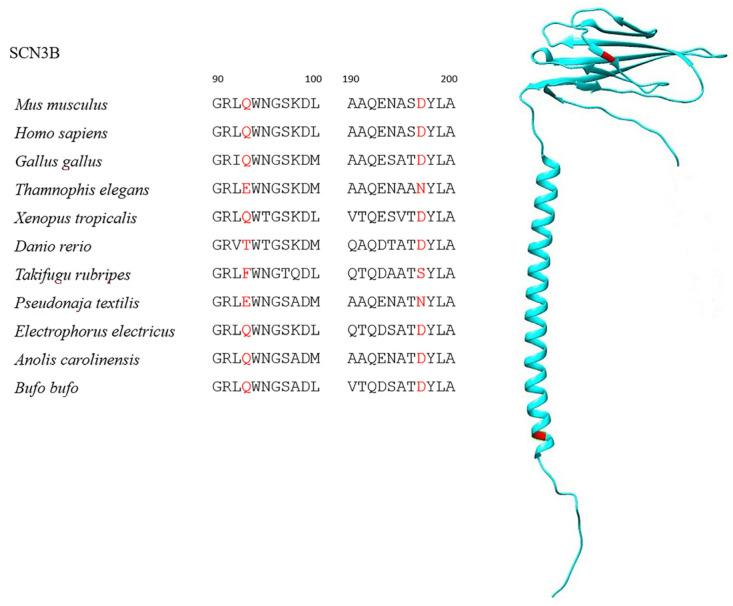
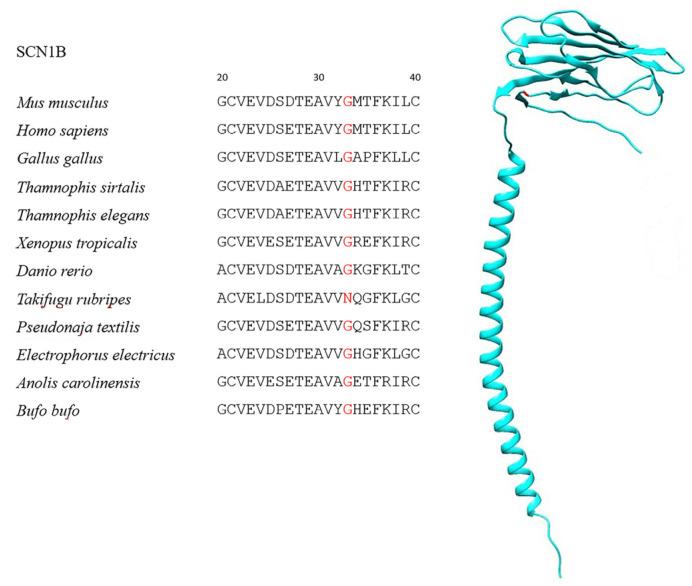
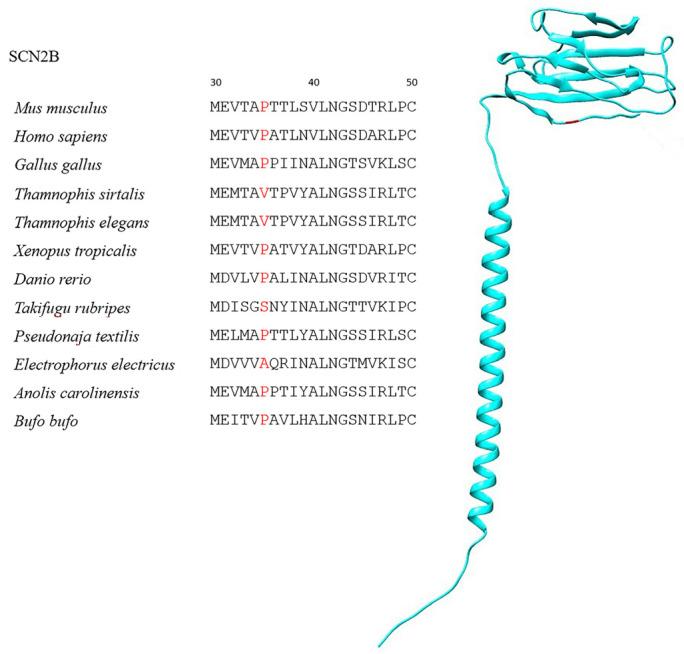
Tetrodotoxin (TTX) is a neurotoxic molecule used by many animals for defense and/or predation, as well as an important biomedical tool. Its ubiquity as a defensive agent has led to repeated independent evolution of tetrodotoxin resistance in animals. TTX binds to voltage-gated sodium channels (VGSC) consisting of α and β subunits. Virtually all studies investigating the mechanisms behind TTX resistance have focused on the α subunit of voltage-gated sodium channels, where tetrodotoxin binds. However, the possibility of β subunits also contributing to tetrodotoxin resistance was never explored, though these subunits act in concert. In this study, we present preliminary evidence suggesting a potential role of β subunits in the evolution of TTX resistance. We gathered mRNA sequences for all β subunit types found in vertebrates across 12 species (three TTX-resistant and nine TTX-sensitive) and tested for signatures of positive selection with a maximum likelihood approach. Our results revealed several sites experiencing positive selection in TTX-resistant taxa, though none were exclusive to those species in subunit β1, which forms a complex with the main physiological target of TTX (VGSC Na1.4). While experimental data validating these findings would be necessary, this work suggests that deeper investigation into β subunits as potential players in tetrodotoxin resistance may be worthwhile.
河豚毒素(TTX)是一种神经毒素分子,被许多动物用于防御和/或捕食,也是一种重要的生物医学工具。由于其作为防御剂的普遍性,动物对河豚毒素的抗性已经经历了多次独立进化。TTX 结合电压门控钠离子通道(VGSC)的α和β亚基。几乎所有研究河豚毒素抗性机制的研究都集中在河豚毒素结合的电压门控钠离子通道的α亚基上。然而,β亚基也可能对河豚毒素抗性有贡献的可能性从未被探索过,尽管这些亚基协同作用。在这项研究中,我们提出了初步证据,表明β亚基在河豚毒素抗性进化中可能发挥作用。我们收集了 12 种脊椎动物中所有β亚基类型的 mRNA 序列(三种河豚毒素抗性和九种河豚毒素敏感),并采用最大似然法测试了正选择的特征。我们的结果表明,河豚毒素抗性分类群中有几个位点经历了正选择,但在β1 亚基中没有一个位点是特异性的,β1 亚基与河豚毒素的主要生理靶标(VGSC Na1.4)形成复合物。虽然需要验证这些发现的实验数据,但这项工作表明,深入研究β亚基作为河豚毒素抗性的潜在参与者可能是值得的。

 Zotero 插件