
玉米 C4 光合作用双功能酶 PDRPs 被募集到细胞质病毒复制复合物中,以促进一种流行的马铃薯 Y 病毒——甘蔗花叶病毒的感染。
The C4 photosynthesis bifunctional enzymes, PDRPs, of maize are co-opted to cytoplasmic viral replication complexes to promote infection of a prevalent potyvirus sugarcane mosaic virus.
机构信息
State Key Laboratory for Maize Bio-breeding and Department of Plant Pathology, China Agricultural University, Beijing, China.
Longping Agriculture Science Co. Ltd., Beijing, China.
出版信息
Plant Biotechnol J. 2024 Jul;22(7):1812-1832. doi: 10.1111/pbi.14304. Epub 2024 Feb 10.
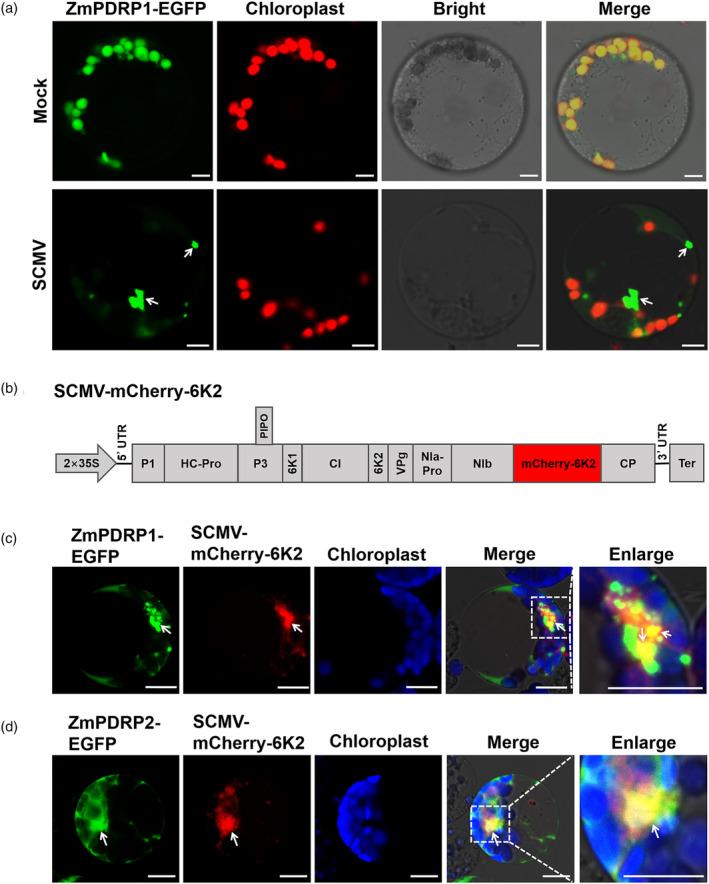
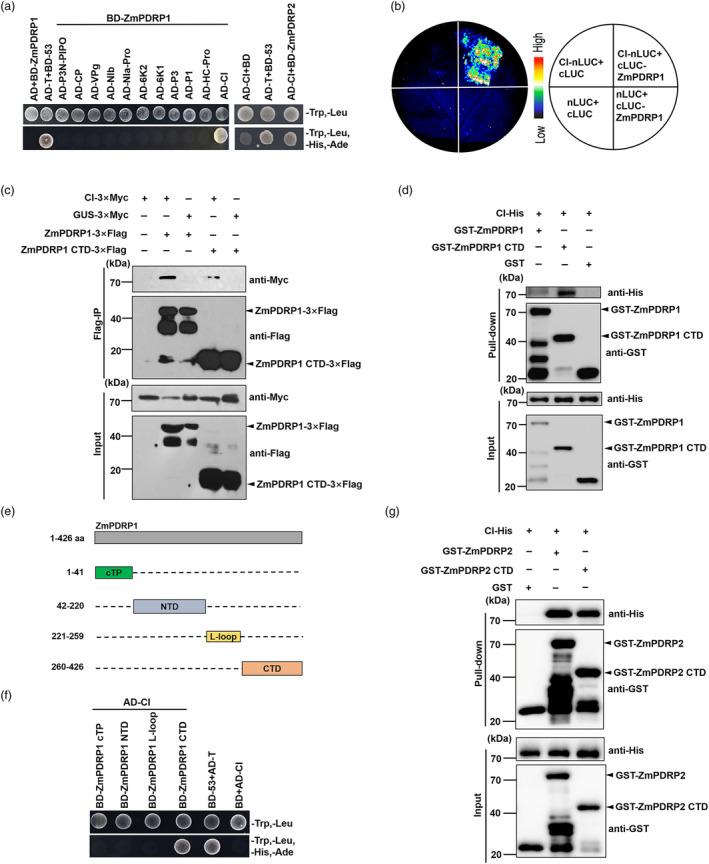
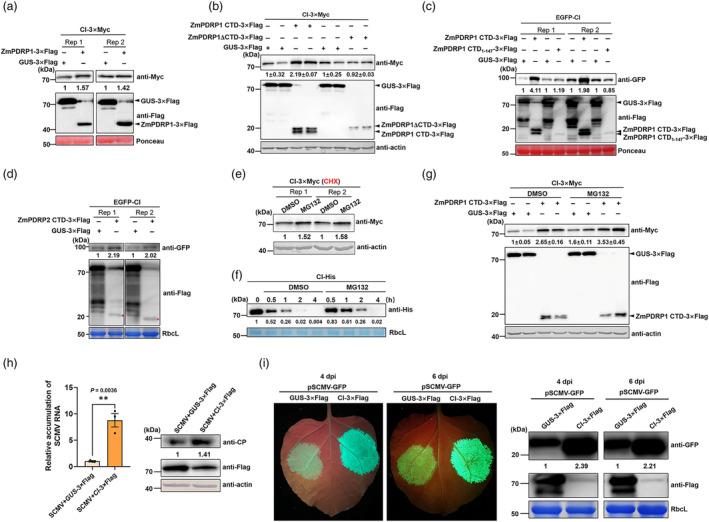
In maize, two pyruvate orthophosphate dikinase (PPDK) regulatory proteins, ZmPDRP1 and ZmPDRP2, are respectively specific to the chloroplast of mesophyll cells (MCs) and bundle sheath cells (BSCs). Functionally, ZmPDRP1/2 catalyse both phosphorylation/inactivation and dephosphorylation/activation of ZmPPDK, which is implicated as a major rate-limiting enzyme in C4 photosynthesis of maize. Our study here showed that maize plants lacking ZmPDRP1 or silencing of ZmPDRP1/2 confer resistance to a prevalent potyvirus sugarcane mosaic virus (SCMV). We verified that the C-terminal domain (CTD) of ZmPDRP1 plays a key role in promoting viral infection while independent of enzyme activity. Intriguingly, ZmPDRP1 and ZmPDRP2 re-localize to cytoplasmic viral replication complexes (VRCs) following SCMV infection. We identified that SCMV-encoded cytoplasmic inclusions protein CI targets directly ZmPDRP1 or ZmPDRP2 or their CTDs, leading to their re-localization to cytoplasmic VRCs. Moreover, we found that CI could be degraded by the 26S proteasome system, while ZmPDRP1 and ZmPDRP2 could up-regulate the accumulation level of CI through their CTDs by a yet unknown mechanism. Most importantly, with genetic, cell biological and biochemical approaches, we provide evidence that BSCs-specific ZmPDRP2 could accumulate in MCs of Zmpdrp1 knockout (KO) lines, revealing a unique regulatory mechanism crossing different cell types to maintain balanced ZmPPDK phosphorylation, thereby to keep maize normal growth. Together, our findings uncover the genetic link of the two cell-specific maize PDRPs, both of which are co-opted to VRCs to promote viral protein accumulation for robust virus infection.
在玉米中,两种丙酮酸 orthophosphate dikinase(PPDK)调节蛋白,ZmPDRP1 和 ZmPDRP2,分别特异于叶肉细胞(MCs)和束鞘细胞(BSCs)的叶绿体。功能上,ZmPDRP1/2 催化 ZmPPDK 的磷酸化/失活和去磷酸化/激活,ZmPPDK 被认为是玉米 C4 光合作用的主要限速酶。我们的研究表明,缺乏 ZmPDRP1 的玉米植株或沉默 ZmPDRP1/2 赋予了对流行的马铃薯 Y 病毒(SCMV)的抗性。我们验证了 ZmPDRP1 的 C 端结构域(CTD)在促进病毒感染中起着关键作用,而与酶活性无关。有趣的是,ZmPDRP1 和 ZmPDRP2 在 SCMV 感染后重新定位于细胞质病毒复制复合物(VRC)。我们确定 SCMV 编码的细胞质内含子蛋白 CI 直接靶向 ZmPDRP1 或 ZmPDRP2 或它们的 CTD,导致它们重新定位于细胞质 VRC。此外,我们发现 CI 可以被 26S 蛋白酶体系统降解,而 ZmPDRP1 和 ZmPDRP2 可以通过未知机制通过它们的 CTD 上调 CI 的积累水平。最重要的是,通过遗传、细胞生物学和生化方法,我们提供了证据表明,BSC 特异性 ZmPDRP2 可以在 Zmpdrp1 敲除(KO)系的 MC 中积累,揭示了一种独特的调节机制,可以跨越不同的细胞类型来维持平衡的 ZmPPDK 磷酸化,从而使玉米保持正常生长。总之,我们的发现揭示了这两种细胞特异性玉米 PDRP 的遗传联系,它们都被招募到 VRC 以促进病毒蛋白积累,从而实现稳健的病毒感染。





 Zotero 插件