
替莫唑胺方案治疗晚期胰腺神经内分泌肿瘤的疗效和安全性:系统评价和荟萃分析。
Efficacy and safety of temozolomide-based regimens in advanced pancreatic neuroendocrine tumors: a systematic review and meta-analysis.
机构信息
Department of Medicine, Division of Hematology & Oncology, University of Pittsburgh Medical Center, Pittsburgh, PA, USA.
Novant Health Cancer Institute, Charlotte, NC, USA.
出版信息
BMC Cancer. 2024 Feb 12;24(1):192. doi: 10.1186/s12885-024-11926-2.
BACKGROUND
Recent advances in the management of pancreatic neuroendocrine tumors (pNETs) highlight the potential benefits of temozolomide, an alkylating agent, for these patients. In this meta-analysis, we aimed to assess the outcome of temozolomide, alone or in combination with other anticancer medications in patients with advanced pNET.
METHODS
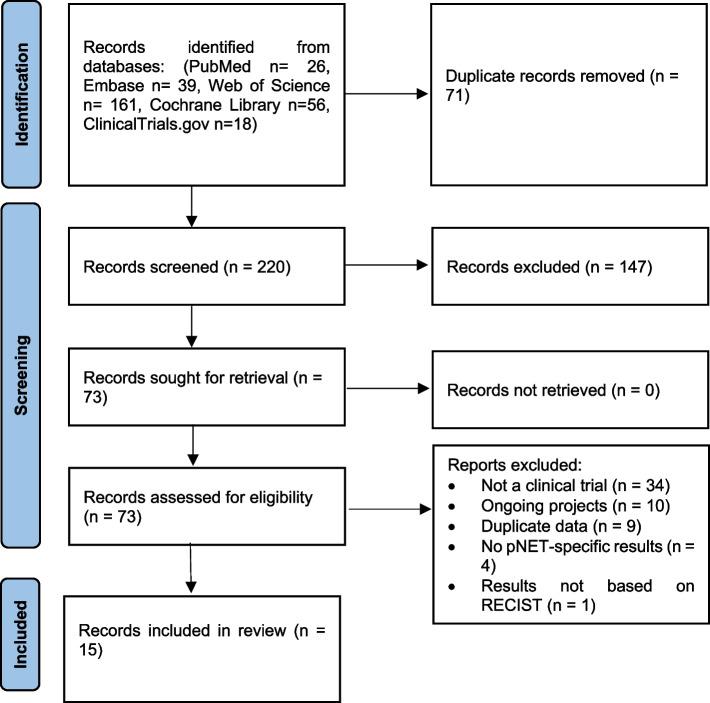
Online databases of PubMed, Web of Science, Embase, the Cochrane Library, and ClinicalTrials.gov were searched systematically for clinical trials that reported the efficacy and safety of temozolomide in patients with advanced pNET. Random-effect model was utilized to estimate pooled rates of outcomes based on Response Evaluation Criteria in Solid Tumors criteria, biochemical response, and adverse events (AEs).
RESULTS
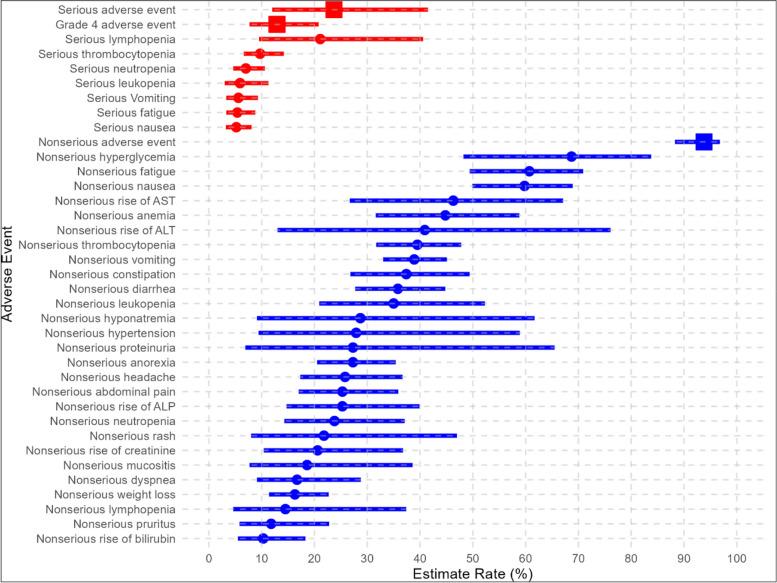
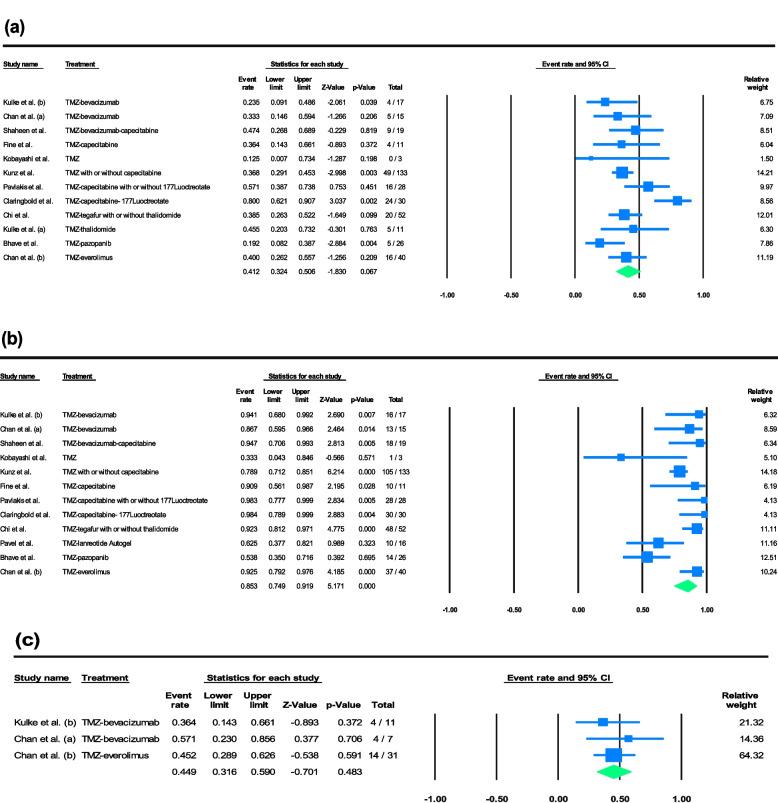
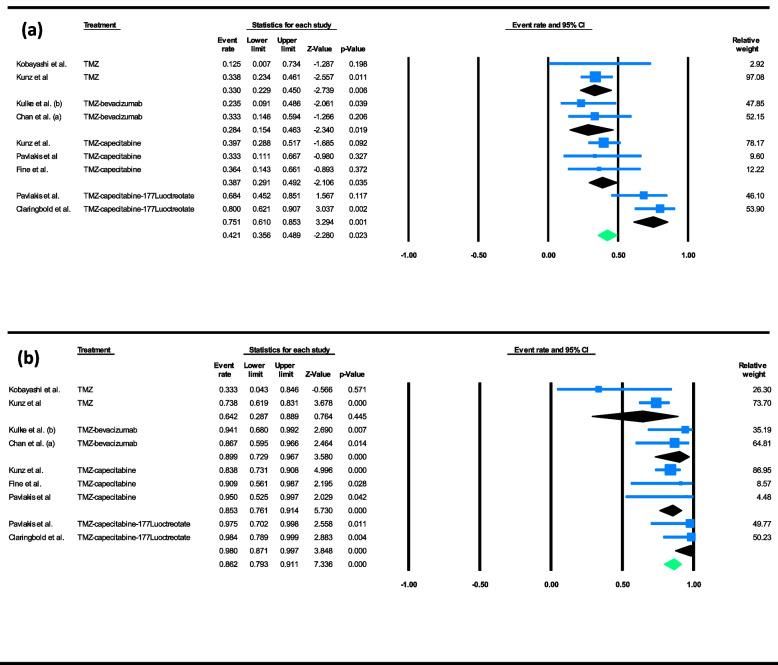
A total of 14 studies, providing details of 441 individuals with advanced pNET, were included. The quantitative analyses showed a pooled objective response rate (ORR) of 41.2% (95% confidence interval, CI, of 32.4%-50.6%), disease control rate (DCR) of 85.3% (95% CI of 74.9%-91.9%), and a more than 50% decrease from baseline chromogranin A levels of 44.9% (95% CI of 31.6%-49.0%). Regarding safety, the results showed that the pooled rates of nonserious AEs and serious AEs were 93.8% (95% CI of 88.3%-96.8%) and 23.7% (95% CI of 12.0%-41.5%), respectively. The main severe AEs encompassed hematological toxicities.
CONCLUSIONS
In conclusion, our meta-analysis suggests that treatment with temozolomide, either as a monotherapy or in combination with other anticancer treatments might be an effective and relatively safe option for patients with advanced locally unresectable and metastatic pNET. However, additional clinical trials are required to further strengthen these findings. This study has been registered in PROSPERO (CRD42023409280).
背景
最近,在胰腺神经内分泌肿瘤(pNET)的治疗方面取得了进展,这突显了替莫唑胺(一种烷化剂)对这些患者的潜在益处。在这项荟萃分析中,我们旨在评估替莫唑胺单独或联合其他抗癌药物治疗晚期 pNET 患者的疗效和安全性。
方法
系统地检索了 PubMed、Web of Science、Embase、Cochrane 图书馆和 ClinicalTrials.gov 在线数据库,以查找报告替莫唑胺治疗晚期 pNET 患者疗效和安全性的临床试验。根据实体瘤反应评估标准,采用随机效应模型估计基于客观缓解率(ORR)、生化缓解和不良事件(AE)的汇总结局发生率。
结果
共纳入 14 项研究,提供了 441 例晚期 pNET 患者的详细信息。定量分析显示,替莫唑胺的总体客观缓解率(ORR)为 41.2%(95%置信区间,32.4%-50.6%),疾病控制率(DCR)为 85.3%(95%置信区间,74.9%-91.9%),且基线嗜铬粒蛋白 A 水平降低超过 50%的比例为 44.9%(95%置信区间,31.6%-49.0%)。安全性方面,结果显示非严重 AE 和严重 AE 的汇总发生率分别为 93.8%(95%置信区间,88.3%-96.8%)和 23.7%(95%置信区间,12.0%-41.5%)。主要严重 AE 包括血液学毒性。
结论
总之,我们的荟萃分析表明,替莫唑胺单药或联合其他抗癌治疗可能是局部不可切除和转移性晚期 pNET 患者的一种有效且相对安全的选择。然而,需要进一步的临床试验来进一步证实这些发现。本研究已在 PROSPERO(CRD42023409280)注册。
 Zotero 插件