
淀粉样β(1-40)的类脂纤维的冷冻电镜结构。
Cryo-EM structures of lipidic fibrils of amyloid-β (1-40).
机构信息
Institute of Biological Information Processing (IBI-7: Structural Biochemistry) and JuStruct: Jülich Center for Structural Biology, Forschungszentrum Jülich, Jülich, Germany.
Department of NMR-Based Structural Biology, Max Planck Institute for Multidisciplinary Sciences, Göttingen, Germany.
出版信息
Nat Commun. 2024 Feb 13;15(1):1297. doi: 10.1038/s41467-023-43822-x.
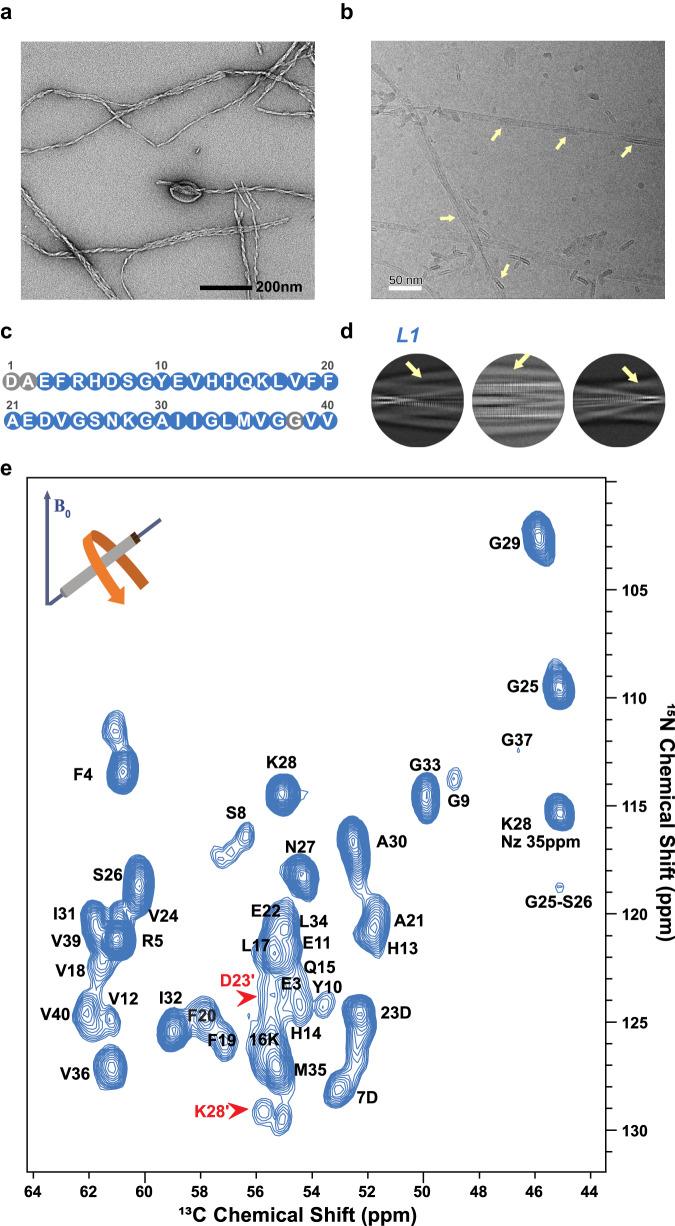
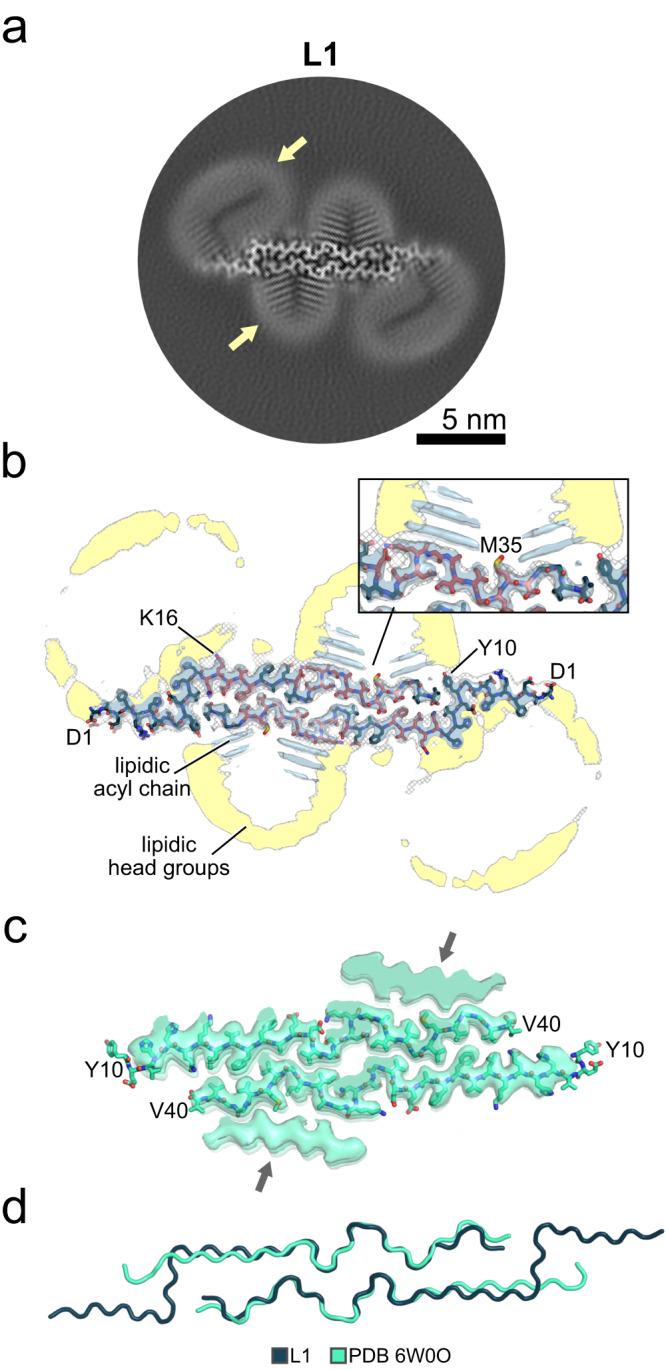
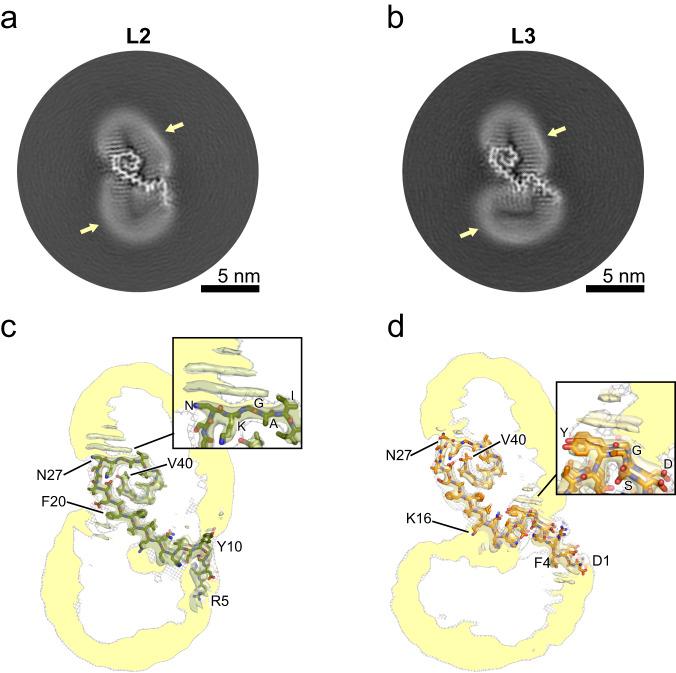
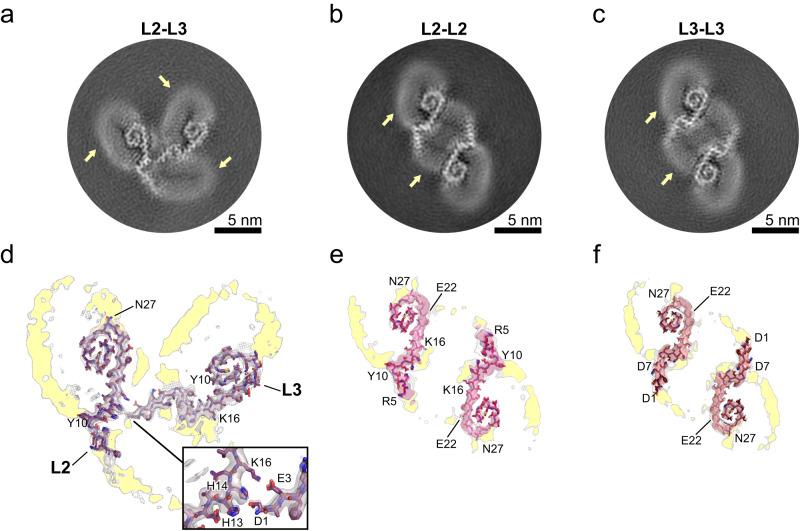
Alzheimer's disease (AD) is a progressive and incurable neurodegenerative disease characterized by the extracellular deposition of amyloid plaques. Investigation into the composition of these plaques revealed a high amount of amyloid-β (Aβ) fibrils and a high concentration of lipids, suggesting that fibril-lipid interactions may also be relevant for the pathogenesis of AD. Therefore, we grew Aβ40 fibrils in the presence of lipid vesicles and determined their structure by cryo-electron microscopy (cryo-EM) to high resolution. The fold of the major polymorph is similar to the structure of brain-seeded fibrils reported previously. The majority of the lipids are bound to the fibrils, as we show by cryo-EM and NMR spectroscopy. This apparent lipid extraction from vesicles observed here in vitro provides structural insights into potentially disease-relevant fibril-lipid interactions.
阿尔茨海默病(AD)是一种进行性且无法治愈的神经退行性疾病,其特征是细胞外淀粉样斑块的沉积。对这些斑块的组成进行研究表明,其中含有大量的淀粉样β(Aβ)纤维和高浓度的脂质,这表明纤维-脂质相互作用也可能与 AD 的发病机制有关。因此,我们在脂质小泡存在的情况下培养 Aβ40 纤维,并通过低温电子显微镜(cryo-EM)确定其高分辨率结构。主要多形体的折叠类似于之前报道的脑源性纤维的结构。我们通过低温电镜和 NMR 光谱证明,大部分脂质与纤维结合。我们在这里体外观察到的这种从小泡中明显提取脂质为潜在的与疾病相关的纤维-脂质相互作用提供了结构见解。


 Zotero 插件