
血红素结合蛋白从 中摄取血红素可减少非典型 的呼吸道定植和感染。
Heme sequestration by hemophilin from reduces respiratory tract colonization and infection with non-typeable .
机构信息
Department of Otolaryngology, University of Colorado School of Medicine, Aurora, Colorado, USA.
School of Health Sciences, University of Tasmania, Launceston, Tasmania, Australia.
出版信息
mSphere. 2024 Mar 26;9(3):e0000624. doi: 10.1128/msphere.00006-24. Epub 2024 Feb 21.
UNLABELLED
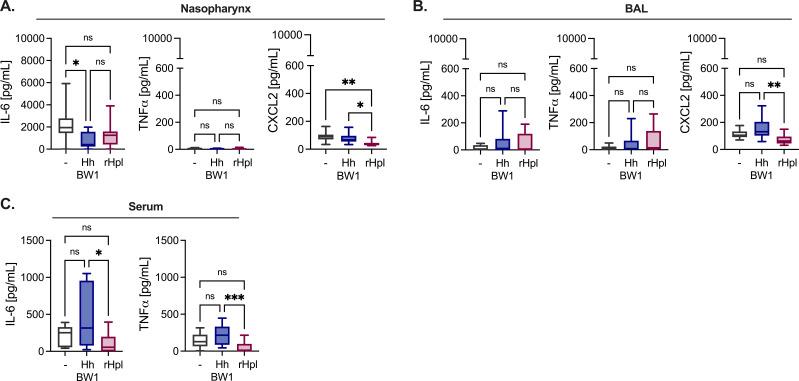
Iron acquisition is a key feature dictating the success of pathogen colonization and infection. Pathogens scavenging iron from the host must contend with other members of the microbiome similarly competing for the limited pool of bioavailable iron, often in the form of heme. In this study, we identify a beneficial role for the heme-binding protein hemophilin (Hpl) produced by the non-pathogenic bacterium against its close relative, the opportunistic respiratory tract pathogen non-typeable (NTHi). Using a mouse model, we found that pre-exposure to significantly reduced NTHi colonization of the upper airway and impaired NTHi infection of the lungs in an Hpl-dependent manner. Further, treatment with recombinant Hpl was sufficient to decrease airway burdens of NTHi without exacerbating lung immunopathology or systemic inflammation. Instead, mucosal production of the neutrophil chemokine CXCL2, lung myeloperoxidase, and serum pro-inflammatory cytokines IL-6 and TNFα were lower in Hpl-treated mice. Mechanistically, suppressed NTHi growth and adherence to human respiratory tract epithelial cells through the expression of Hpl, and recombinant Hpl could recapitulate these effects. Together, these findings indicate that heme sequestration by non-pathogenic, Hpl-producing is protective against NTHi colonization and infection.
IMPORTANCE
The microbiome provides a critical layer of protection against infection with bacterial pathogens. This protection is accomplished through a variety of mechanisms, including interference with pathogen growth and adherence to host cells. In terms of immune defense, another way to prevent pathogens from establishing infections is by limiting the availability of nutrients, referred to as nutritional immunity. Restricting pathogen access to iron is a central component of this approach. Here, we uncovered an example where these two strategies intersect to impede infection with the respiratory tract bacterial pathogen . Specifically, we find that a non-pathogenic (commensal) bacterium closely related to called improves protection against by limiting the ability of this pathogen to access iron. These findings suggest that beneficial members of the microbiome improve protection against pathogen infection by effectively contributing to host nutritional immunity.
未加标签
铁的获取是决定病原体定殖和感染成功的关键特征。从宿主中掠夺铁的病原体必须与其他同样争夺有限的生物可利用铁池的微生物组成员竞争,通常是以血红素的形式。在这项研究中,我们发现非致病性细菌 产生的血红素结合蛋白(hemophilin,Hpl)对其密切相关的机会性病原体无定型奈瑟菌(non-typeable )(NTHi)具有有益作用。通过小鼠模型,我们发现 预先暴露可显著降低 NTHi 在上呼吸道的定殖,并以 Hpl 依赖的方式损害 NTHi 对肺部的感染。此外,用重组 Hpl 治疗足以减少 NTHi 的气道负担,而不会加重肺部免疫病理学或全身炎症。相反,Hpl 处理的小鼠气道中中性粒细胞趋化因子 CXCL2、肺髓过氧化物酶和血清促炎细胞因子 IL-6 和 TNFα 的产生降低。从机制上讲, 通过表达 Hpl, 抑制了 NTHi 的生长和对人呼吸道上皮细胞的粘附,而重组 Hpl 可以再现这些作用。总之,这些发现表明非致病性、产生 Hpl 的 通过螯合血红素来防止 NTHi 的定殖和感染是一种保护机制。
意义
微生物组为防止细菌病原体感染提供了关键的保护层。这种保护是通过多种机制实现的,包括干扰病原体的生长和对宿主细胞的粘附。就免疫防御而言,防止病原体感染的另一种方法是限制营养物质的可用性,称为营养免疫。限制病原体获取铁是这种方法的一个核心组成部分。在这里,我们发现了一个例子,其中这两种策略相交以阻碍呼吸道细菌病原体 的感染。具体来说,我们发现一种与 密切相关的非致病性(共生)细菌 通过限制该病原体获取铁的能力,改善了对 的保护。这些发现表明,有益的微生物组成员通过有效地促进宿主营养免疫来改善对病原体感染的保护。


 Zotero 插件