
泛素依赖性 Wnt 受体调控在肿瘤发生中的新见解。
New insights in ubiquitin-dependent Wnt receptor regulation in tumorigenesis.
机构信息
Department of Biochemistry, Graduate School of Medicine, Hokkaido University, 15NW7, Kita-Ku, Sapporo, Hokkaido, 060-8638, Japan.
出版信息
In Vitro Cell Dev Biol Anim. 2024 May;60(5):449-465. doi: 10.1007/s11626-024-00855-w. Epub 2024 Feb 21.
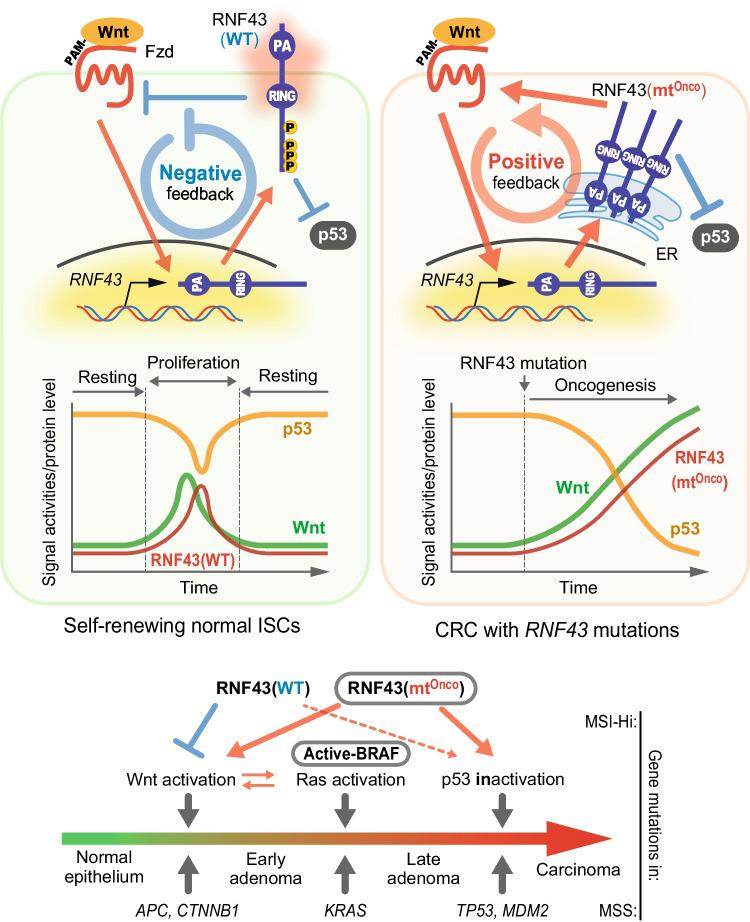
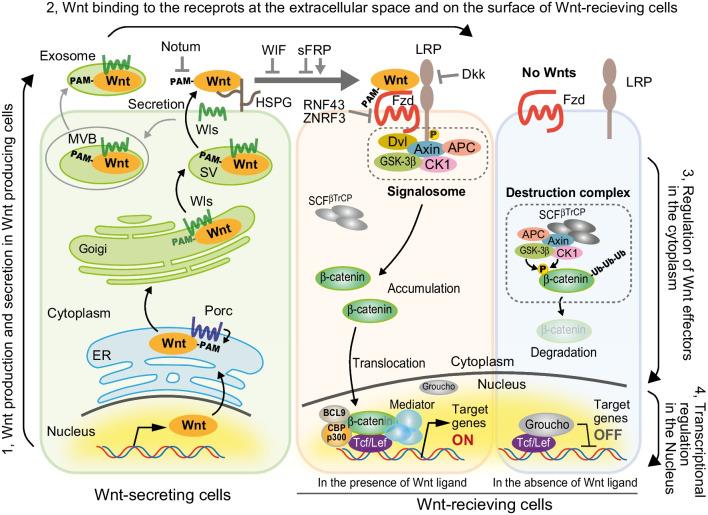
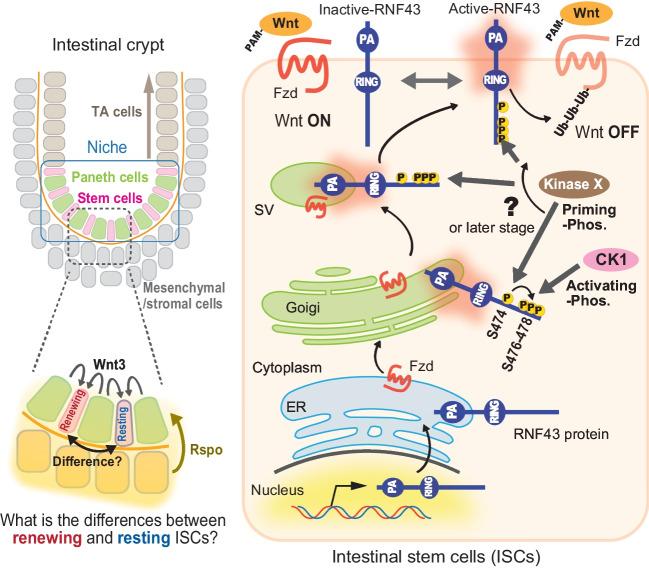
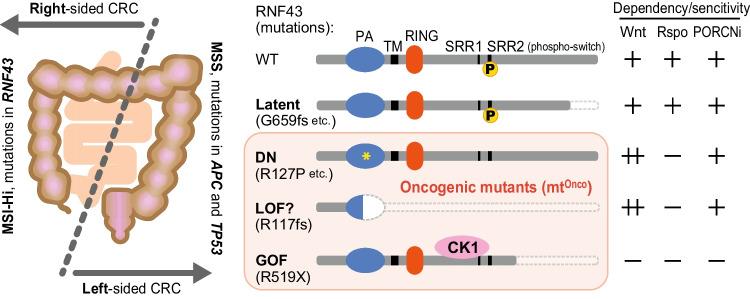
Wnt signaling plays a crucial role in embryonic development and homeostasis maintenance. Delicate and sensitive fine-tuning of Wnt signaling based on the proper timings and positions is required to balance cell proliferation and differentiation and maintain individual health. Therefore, homeostasis is broken by tissue hypoplasia or tumor formation once Wnt signal dysregulation disturbs the balance of cell proliferation. The well-known regulatory mechanism of Wnt signaling is the molecular reaction associated with the cytoplasmic accumulation of effector β-catenin. In addition to β-catenin, most Wnt effector proteins are also regulated by ubiquitin-dependent modification, both qualitatively and quantitatively. This review will explain the regulation of the whole Wnt signal in four regulatory phases, as well as the different ubiquitin ligases and the function of deubiquitinating enzymes in each phase. Along with the recent results, the mechanism by which RNF43 negatively regulates the surface expression of Wnt receptors, which has recently been well understood, will be detailed. Many RNF43 mutations have been identified in pancreatic and gastrointestinal cancers and examined for their functional alteration in Wnt signaling. Several mutations facilitate or activate the Wnt signal, reversing the RNF43 tumor suppressor function into an oncogene. RNF43 may simultaneously play different roles in classical multistep tumorigenesis, as both wild-type and mutant RNF43 suppress the p53 pathway. We hope that the knowledge obtained from further research in RNF43 will be applied to cancer treatment in the future despite the fully unclear function of RNF43.
Wnt 信号在胚胎发育和维持内稳态中起着至关重要的作用。为了平衡细胞增殖和分化,维持个体健康,需要根据适当的时间和位置对 Wnt 信号进行精细和敏感的微调。因此,一旦 Wnt 信号失调扰乱了细胞增殖的平衡,组织发育不良或肿瘤形成就会打破内稳态。众所周知,Wnt 信号的调节机制是与效应物β-连环蛋白胞质积累相关的分子反应。除了β-连环蛋白,大多数 Wnt 效应蛋白的活性也受到泛素依赖性修饰的调节,无论是在质量上还是数量上。本综述将解释整个 Wnt 信号在四个调节阶段的调节,以及不同的泛素连接酶和去泛素化酶在每个阶段的功能。随着最近的结果,RNF43 负调控 Wnt 受体表面表达的机制最近得到了很好的理解,将详细说明。在胰腺和胃肠道癌症中已经鉴定出许多 RNF43 突变,并研究了它们在 Wnt 信号中的功能改变。一些突变促进或激活了 Wnt 信号,将 RNF43 的肿瘤抑制功能逆转成癌基因。RNF43 可能同时在经典的多步骤肿瘤发生中发挥不同的作用,因为野生型和突变型 RNF43 都抑制 p53 途径。尽管 RNF43 的功能完全不清楚,但我们希望从进一步研究 RNF43 中获得的知识能够应用于未来的癌症治疗。


 Zotero 插件