
作为中国绿海龟最大筑巢地的海滩上微塑料的分布特征与来源
Microplastic Distribution Characteristics and Sources on Beaches That Serve as the Largest Nesting Ground for Green Turtles in China.
作者信息
Zhang Ting, Li Deqin, Liu Yunteng, Li Yupei, Yu Yangfei, An Xiaoyu, Jiang Yongkang, Wang Jichao, Shi Haitao, Lin Liu
机构信息
Ministry of Education Key Laboratory for Ecology of Tropical Islands, Key Laboratory of Tropical Animal and Plant Ecology of Hainan Province, College of Life Sciences, Hainan Normal University, Haikou 571158, China.
Hainan Sansha Provincial Observation and Research Station of Sea Turtle Ecology, Sansha 573100, China.
出版信息
Toxics. 2024 Jan 28;12(2):109. doi: 10.3390/toxics12020109.
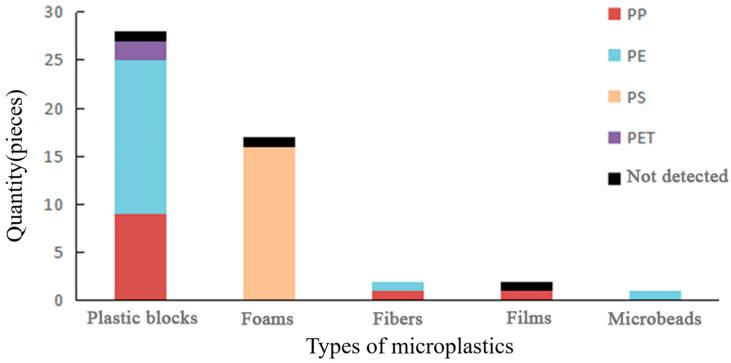
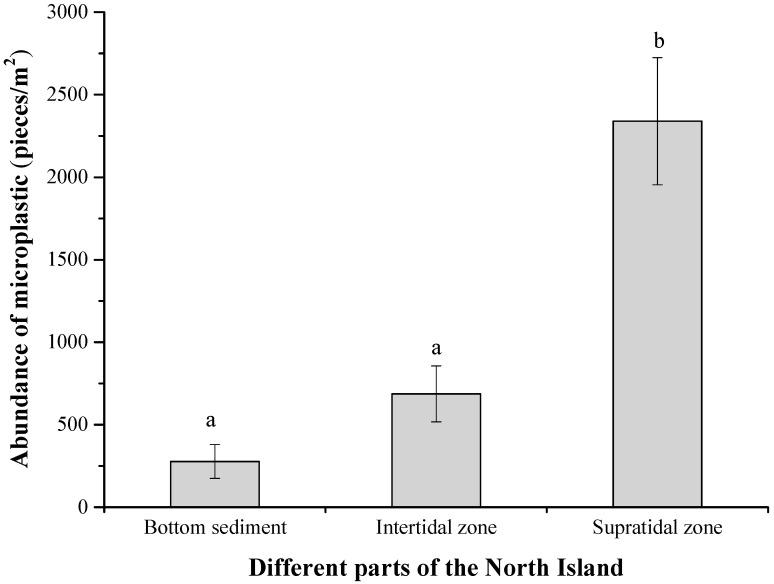
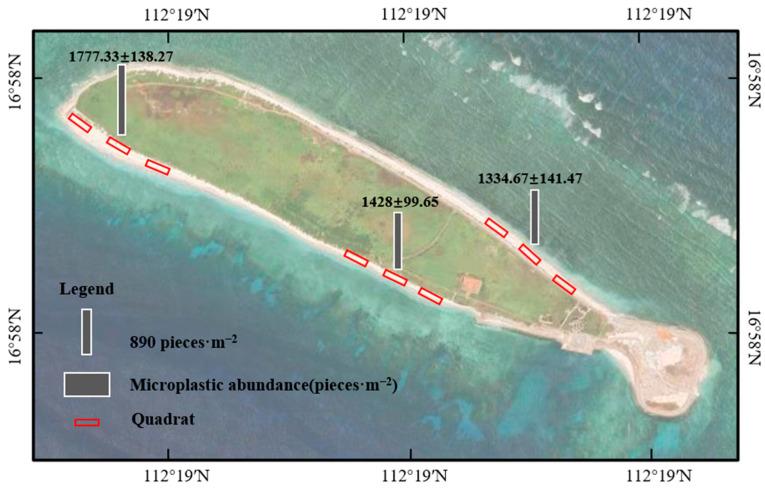
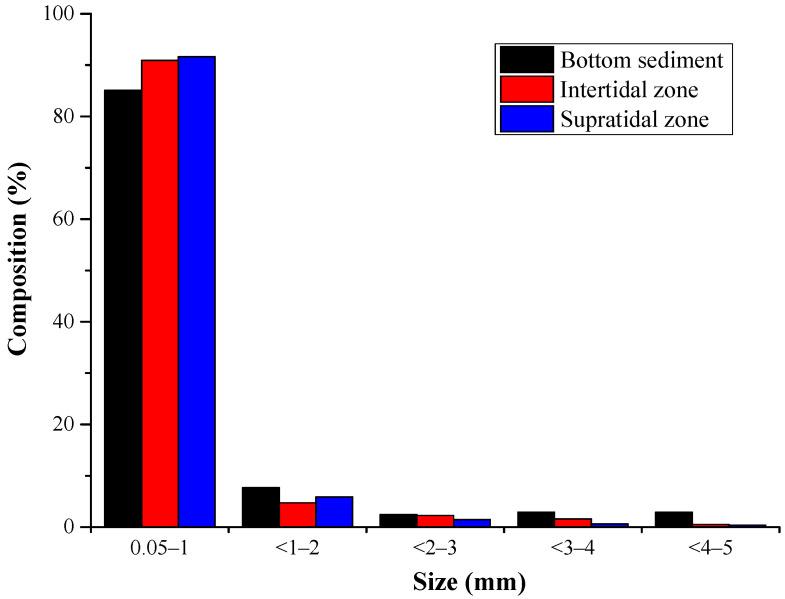
The threat of microplastics to marine animals and habitats is increasing, which may affect sea turtle nesting grounds. The Qilianyu Islands are the largest remaining green turtle () nesting grounds in China. Despite being far from the mainland, microplastic pollution cannot be ignored. In this study, the level of microplastic pollution in surface sediments from three different zones, namely, the bottom, intertidal, and supratidal zone, was investigated on North Island, Qilianyu Islands. The results showed that the abundance of microplastics in the supratidal zone was significantly higher than that in the bottom zone and intertidal zone (r = 3.65, = 0.011), with the highest average abundance of microplastics located on the southwest coast of North Island. In the bottom zone, only plastic blocks (88%) and fibers (12%) were found. The main types of microplastics in the intertidal and supratidal zones were plastic blocks (48%) and foam (42%), with polyethylene (PE) (40%) and polystyrene (PS) (34%) being the predominant components. These types and components of microplastics differed from those in the surrounding seawater, but corresponding types and components were found in the plastic debris on the beach. Meanwhile, it was also observed that there were multiple instances of fragmented plastic on the beach. Thus, we suggest that the microplastics on the beach in North Island were mainly derived from the fragmentation of microplastic debris, indicating secondary microplastics. It is recommended to further strengthen the regular cleaning of plastic debris on the beach, especially the removal of small plastic debris, in order to reduce the pollution from secondary microplastics generated by the fragmentation of beach plastic debris and to better protect China's most important sea turtle nesting site in the South China Sea.
微塑料对海洋动物和栖息地的威胁日益增加,这可能会影响海龟的筑巢地。七连屿是中国现存最大的绿海龟筑巢地。尽管距离大陆较远,但微塑料污染不容忽视。在本研究中,对七连屿北岛三个不同区域,即海底、潮间带和潮上带的表层沉积物中的微塑料污染水平进行了调查。结果表明,潮上带微塑料的丰度显著高于海底区域和潮间带(r = 3.65,P = 0.011),微塑料平均丰度最高的区域位于北岛西南海岸。在海底区域,仅发现塑料块(88%)和纤维(12%)。潮间带和潮上带微塑料的主要类型是塑料块(48%)和泡沫(42%),其中聚乙烯(PE)(40%)和聚苯乙烯(PS)(34%)是主要成分。这些微塑料的类型和成分与周围海水中的不同,但在海滩上的塑料碎片中发现了相应的类型和成分。同时,还观察到海滩上有多处破碎塑料。因此,我们认为北岛海滩上的微塑料主要来源于微塑料碎片的破碎,即次生微塑料。建议进一步加强海滩上塑料碎片的定期清理,特别是清除小塑料碎片,以减少海滩塑料碎片破碎产生的次生微塑料污染,更好地保护中国南海最重要的海龟筑巢地。

 Zotero 插件