
帕金森病中的铁沉积:小型综述。
Iron Deposition in Parkinson's Disease: A Mini-Review.
机构信息
Department of Neurology, The First People's Hospital of Foshan, Foshan, China.
Department of Cardiology, The Second Hospital of Zhangzhou, Zhangzhou, China.
出版信息
Cell Mol Neurobiol. 2024 Feb 23;44(1):26. doi: 10.1007/s10571-024-01459-4.
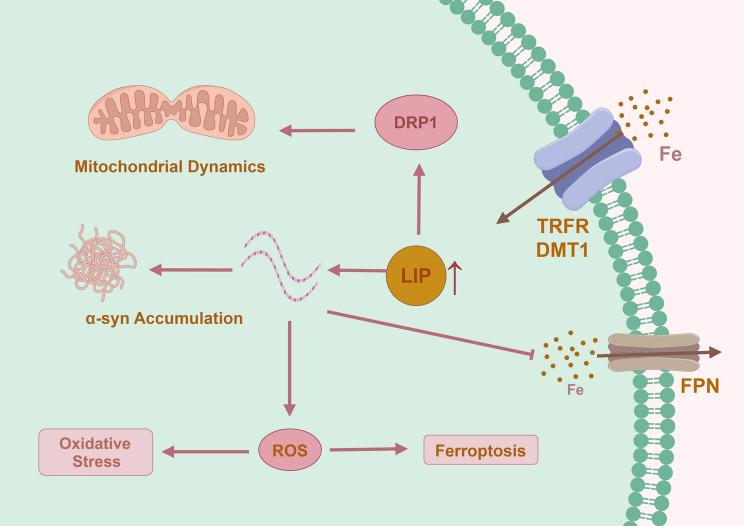
Iron deposition is crucial pathological changes observed in patients with Parkinson's disease (PD). Recently, scientists have actively explored therapeutic approaches targeting iron deposition in PD. However, several clinical studies have failed to yield consistent results. In this review, we provide an overview of iron deposition in PD, from both basic research and clinical perspectives. PD patients exhibit abnormalities in various iron metabolism-related proteins, leading to disruptions in iron distribution, transport, storage, and circulation, ultimately resulting in iron deposition. Excess iron can induce oxidative stress and iron-related cell death, and exacerbate mitochondrial dysfunction, contributing to the progression of PD pathology. Magnetic resonance imaging studies have indicated that the characteristics of iron deposition in the brains of PD patients vary. Iron deposition correlates with the clinical symptoms of PD, and patients with different disease courses and clinical presentations display distinct patterns of iron deposition. These iron deposition patterns may contribute to PD diagnosis. Iron deposition is a promising target for PD treatment. However, further research is required to elucidate the underlying mechanisms and their impacts on PD.
铁沉积是帕金森病(PD)患者观察到的关键病理变化。最近,科学家们积极探索针对 PD 中铁沉积的治疗方法。然而,几项临床研究并未得出一致的结果。在这篇综述中,我们从基础研究和临床角度概述了 PD 中的铁沉积。PD 患者表现出多种铁代谢相关蛋白的异常,导致铁分布、运输、储存和循环紊乱,最终导致铁沉积。过量的铁会引起氧化应激和铁相关的细胞死亡,并加重线粒体功能障碍,从而促进 PD 病理的进展。磁共振成像研究表明,PD 患者大脑中铁沉积的特征不同。铁沉积与 PD 的临床症状相关,不同病程和临床表现的患者显示出不同的铁沉积模式。这些铁沉积模式可能有助于 PD 的诊断。铁沉积是 PD 治疗的一个有前途的靶点。然而,需要进一步研究来阐明其潜在机制及其对 PD 的影响。
 Zotero 插件