
基于聚合物胶束的肿瘤微环境响应型药物递送用于精准癌症治疗:策略与展望
Tumor Microenvironment-Responsive Drug Delivery Based on Polymeric Micelles for Precision Cancer Therapy: Strategies and Prospects.
作者信息
Jin Zhu, Al Amili Majdi, Guo Shengrong
机构信息
Shanghai Frontiers Science Center of Drug Target Identification and Delivery, School of Pharmaceutical Sciences, Shanghai Jiao Tong University, Shanghai 200240, China.
出版信息
Biomedicines. 2024 Feb 11;12(2):417. doi: 10.3390/biomedicines12020417.
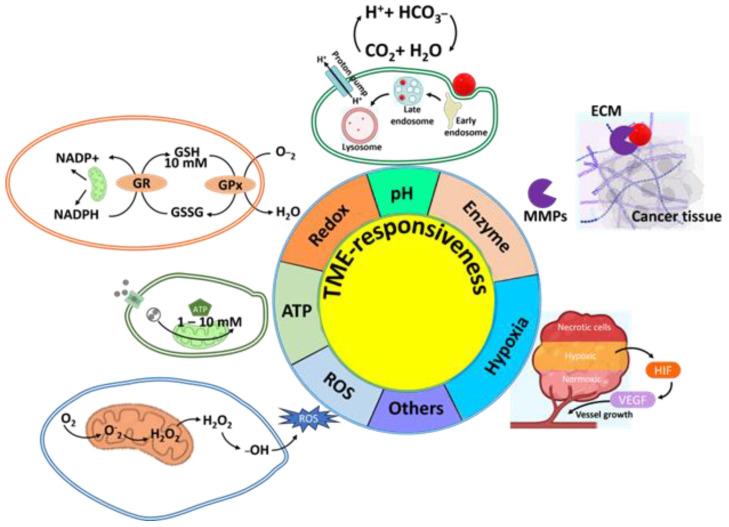
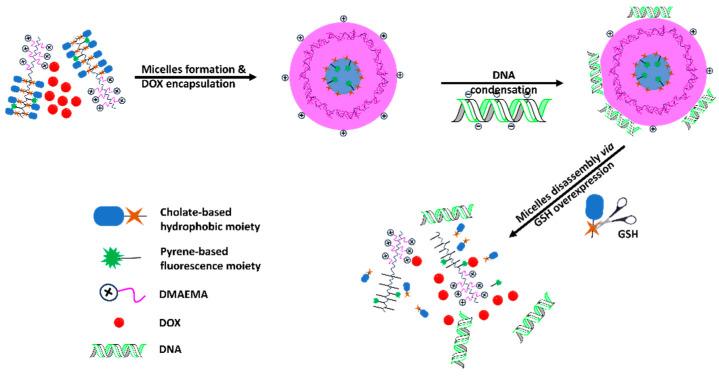
In clinical practice, drug therapy for cancer is still limited by its inefficiency and high toxicity. For precision therapy, various drug delivery systems, including polymeric micelles self-assembled from amphiphilic polymeric materials, have been developed to achieve tumor-targeting drug delivery. Considering the characteristics of the pathophysiological environment at the drug target site, the design, synthesis, or modification of environmentally responsive polymeric materials has become a crucial strategy for drug-targeted delivery. In comparison to the normal physiological environment, tumors possess a unique microenvironment, characterized by a low pH, high reactive oxygen species concentration, hypoxia, and distinct enzyme systems, providing various stimuli for the environmentally responsive design of polymeric micelles. Polymeric micelles with tumor microenvironment (TME)-responsive characteristics have shown significant improvement in precision therapy for cancer treatment. This review mainly outlines the most promising strategies available for exploiting the tumor microenvironment to construct internal stimulus-responsive drug delivery micelles that target tumors and achieve enhanced antitumor efficacy. In addition, the prospects of TME-responsive polymeric micelles for gene therapy and immunotherapy, the most popular current cancer treatments, are also discussed. TME-responsive drug delivery via polymeric micelles will be an efficient and robust approach for developing clinical cancer therapies in the future.
在临床实践中,癌症药物治疗仍然受到其低效性和高毒性的限制。对于精准治疗,人们已经开发了各种药物递送系统,包括由两亲性聚合物材料自组装而成的聚合物胶束,以实现肿瘤靶向药物递送。考虑到药物靶点部位病理生理环境的特点,环境响应性聚合物材料的设计、合成或修饰已成为药物靶向递送的关键策略。与正常生理环境相比,肿瘤具有独特的微环境,其特征为低pH值、高活性氧浓度、缺氧以及独特的酶系统,为聚合物胶束的环境响应性设计提供了各种刺激因素。具有肿瘤微环境(TME)响应特性的聚合物胶束在癌症治疗的精准治疗方面已显示出显著改善。本综述主要概述了利用肿瘤微环境构建靶向肿瘤并实现增强抗肿瘤疗效的内部刺激响应性药物递送胶束的最有前景的策略。此外,还讨论了TME响应性聚合物胶束在基因治疗和免疫治疗(当前最流行的癌症治疗方法)方面的前景。通过聚合物胶束进行TME响应性药物递送将是未来开发临床癌症治疗方法的一种高效且强大的途径。




 Zotero 插件