
蓝莓提取物对大脑中促氧化镉作用的保护影响——当前环境中人体暴露于这种有害元素的体内模型研究。
The Protective Impact of L. Berries Extract against Prooxidative Cadmium Action in the Brain-A Study in an In Vivo Model of Current Environmental Human Exposure to This Harmful Element.
机构信息
Department of Toxicology, Medical University of Bialystok, Adama Mickiewicza 2C Street, 15-222 Bialystok, Poland.
出版信息
Nutrients. 2024 Feb 9;16(4):502. doi: 10.3390/nu16040502.
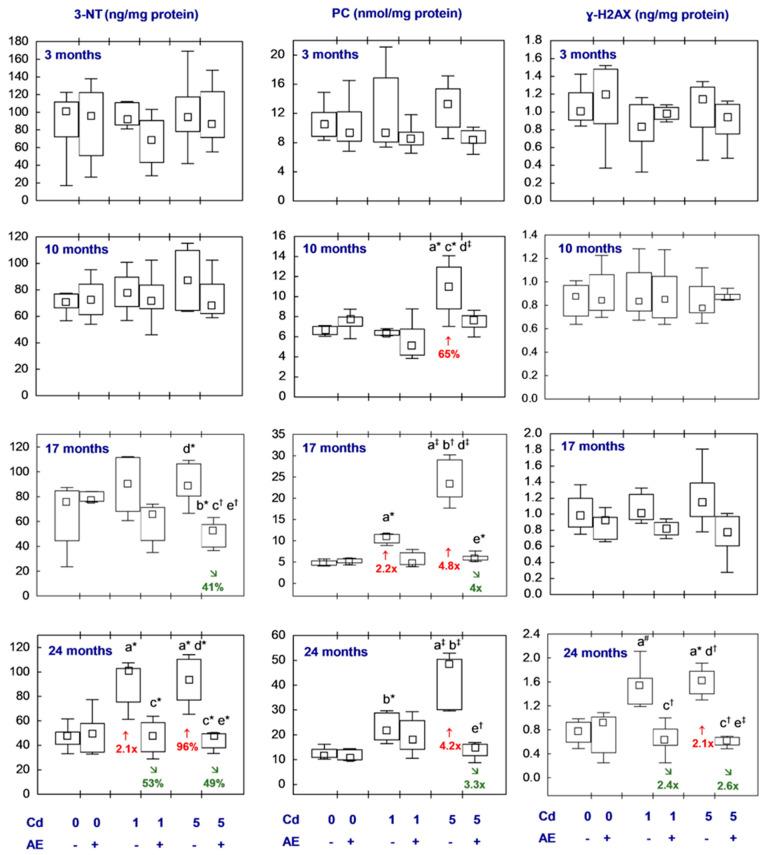
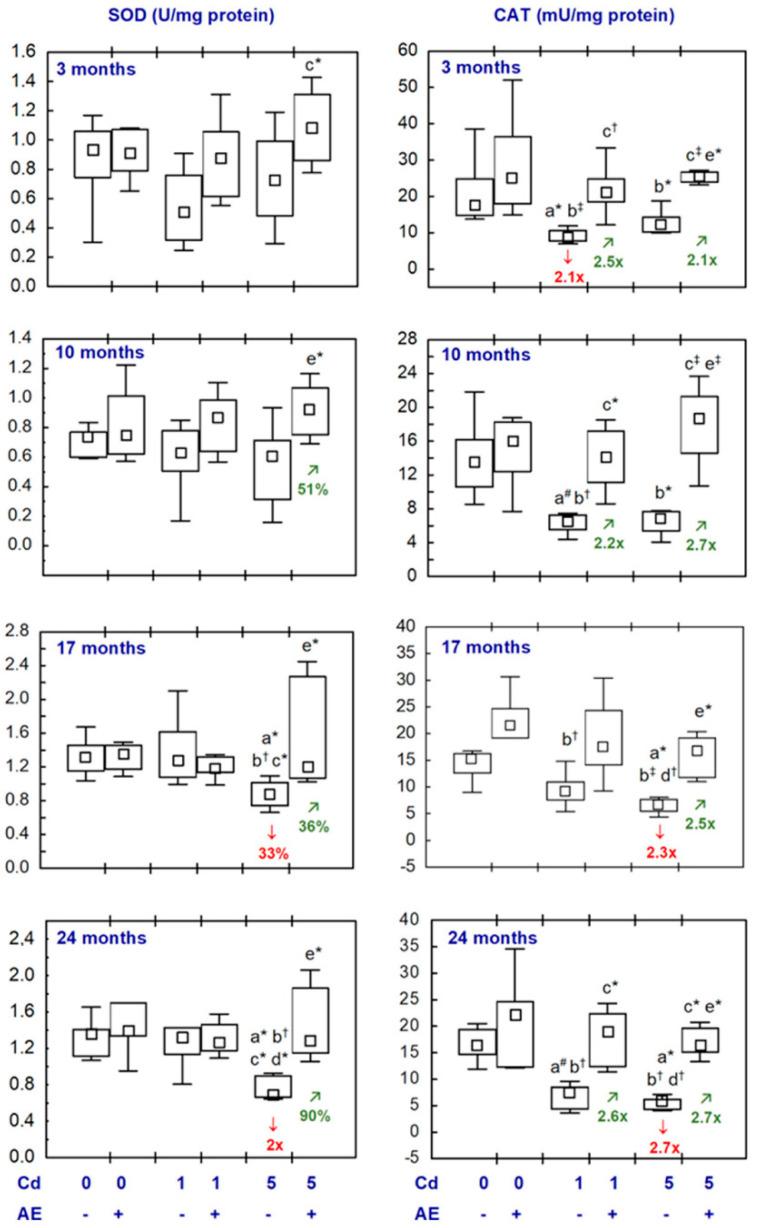
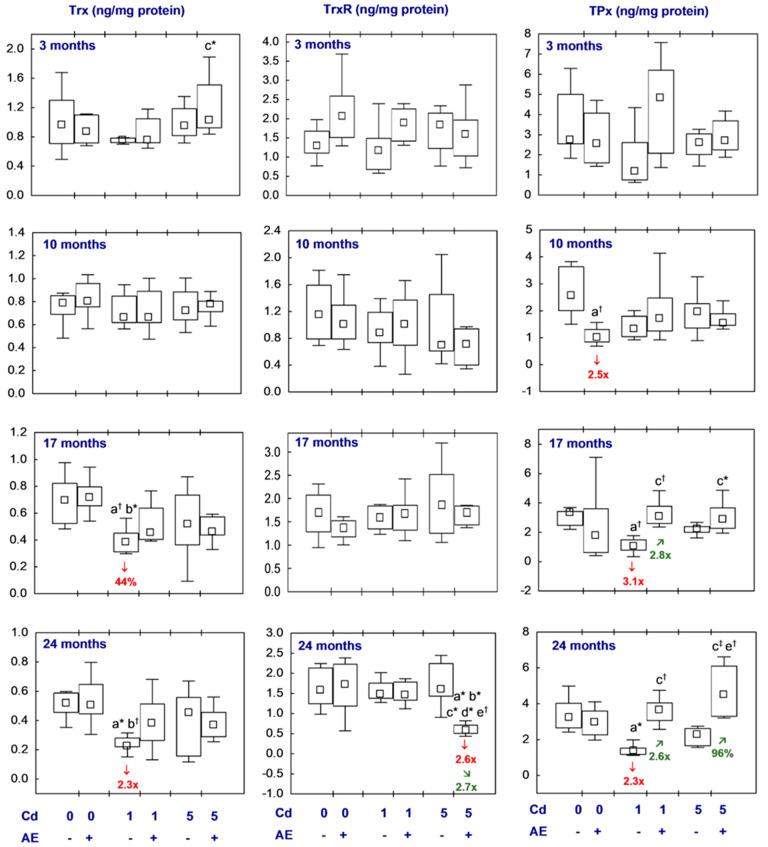
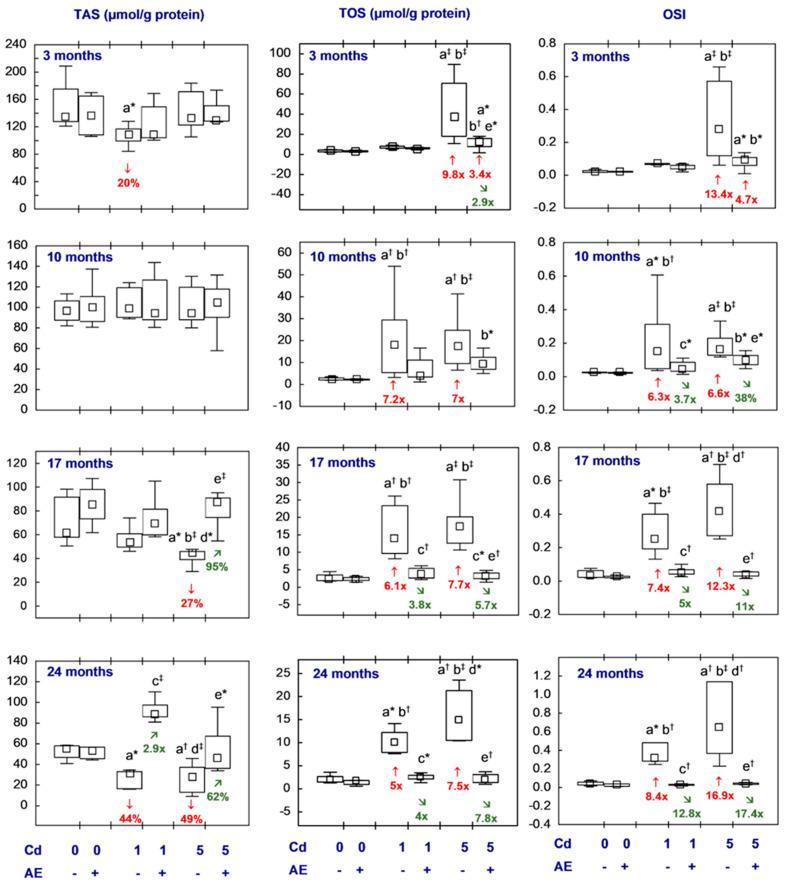
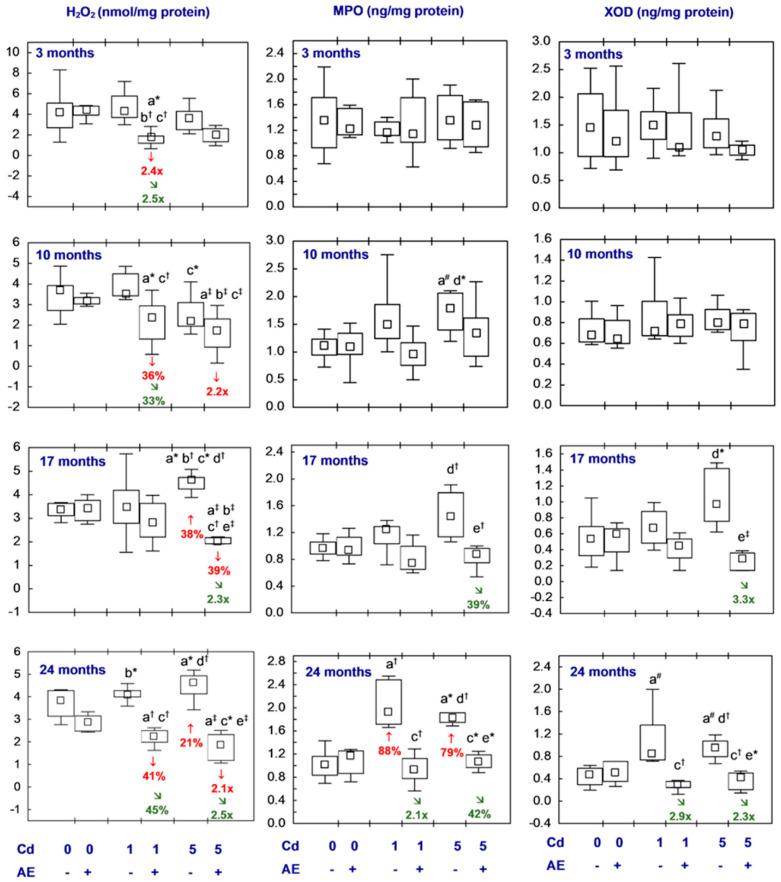
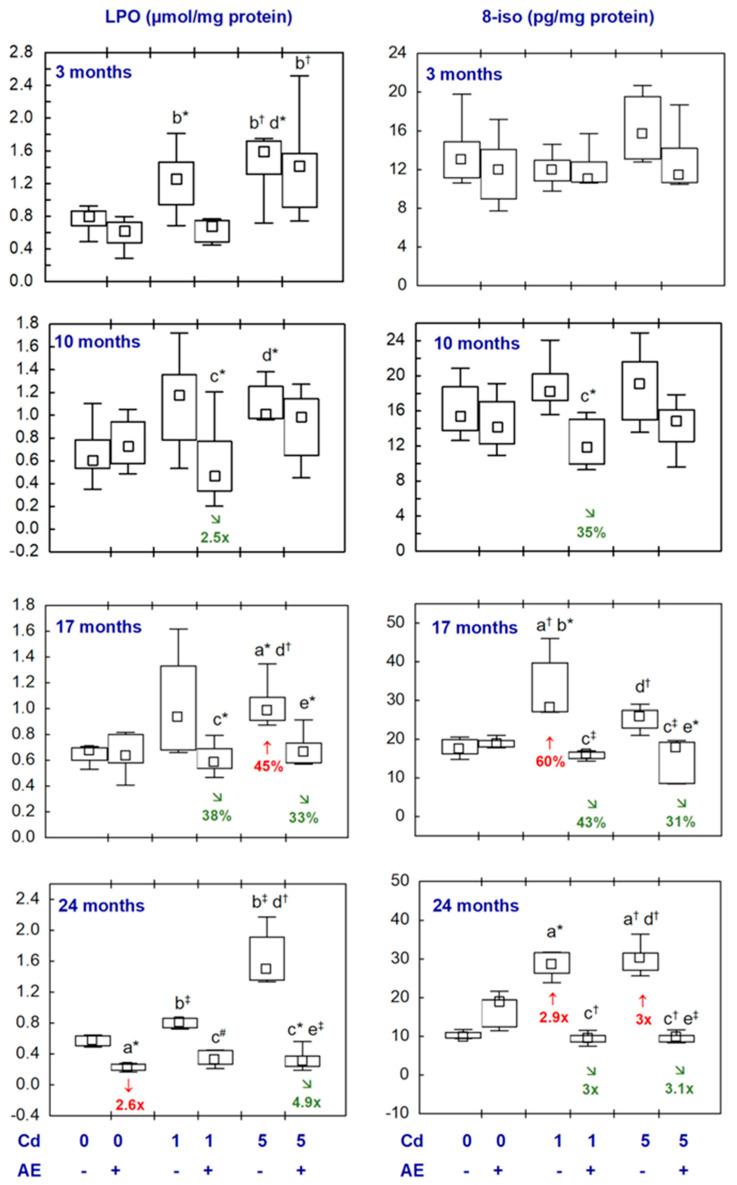
Cadmium (Cd) is a prooxidant that adversely affects human health, including the nervous system. As exposure of the general population to this heavy metal is inevitable, it is crucial to look for agents that can prevent the effects of its toxic action. An experimental model on female rats of current lifetime human exposure to cadmium (3-24-months' treatment with 1 or 5 mg Cd/kg diet) was used to test whether low-level and moderate intoxication can exert a prooxidative impact in the brain and whether supplementation with a 0.1% extract from the berries of L. (Michx.) Elliott (AE; chokeberry extract) can protect against this action. Numerous parameters of the non-enzymatic and enzymatic antioxidative barrier, as well as total antioxidative and oxidative status (TAS and TOS, respectively), were determined and the index of oxidative stress (OSI) was calculated. Moreover, chosen prooxidants (myeloperoxidase, xanthine oxidase, and hydrogen peroxide) and biomarkers of oxidative modifications of lipids, proteins, and deoxyribonucleic acid were assayed. Cadmium dysregulated the balance between oxidants and antioxidants in the brain and led to oxidative stress and oxidative injury of the cellular macromolecules, whereas the co-administration of AE alleviated these effects. To summarize, long-term, even low-level, cadmium exposure can pose a risk of failure of the nervous system by the induction of oxidative stress in the brain, whereas supplementation with products based on aronia berries seems to be an effective protective strategy.
镉 (Cd) 是一种促氧化剂,会对人体健康造成不良影响,包括神经系统。由于普通人群不可避免地会接触到这种重金属,因此寻找可以预防其毒性作用的药物至关重要。本研究采用当前终生暴露于镉的雌性大鼠实验模型(用 1 或 5mg Cd/kg 饮食进行 3-24 个月的治疗),以测试低水平和中度中毒是否会对大脑产生促氧化影响,以及补充 0.1%蓝莓(Michx.)艾略特(AE;黑果腺肋花楸提取物)提取物是否可以预防这种作用。测定了非酶和酶抗氧化屏障的许多参数,以及总抗氧化和氧化状态(TAS 和 TOS),并计算了氧化应激指数(OSI)。此外,还测定了选定的促氧化剂(髓过氧化物酶、黄嘌呤氧化酶和过氧化氢)以及脂质、蛋白质和脱氧核糖核酸氧化修饰的生物标志物。镉会使大脑中的氧化剂和抗氧化剂失衡,导致氧化应激和细胞大分子的氧化损伤,而 AE 的共同给药则减轻了这些作用。总之,长期甚至低水平的镉暴露可能会通过在大脑中诱导氧化应激而对神经系统的正常功能产生风险,而补充以黑果腺肋花楸为基础的产品似乎是一种有效的保护策略。




 Zotero 插件