
丁苯橡胶/聚丙烯改性沥青的热稳定性及微观改性机理评估
Evaluation of the Thermal Stability and Micro-Modification Mechanism of SBR/PP-Modified Asphalt.
作者信息
Zhang Qing, Hou Dehua, Li Zhongyu, Wang Hainian, Dong Shi
机构信息
Henan Key Laboratory of High-Grade Highway Detection and Maintenance Technology, Xinxiang 453003, China.
National Engineering Research Center of Highway Maintenance Equipment, Xinxiang 453003, China.
出版信息
Polymers (Basel). 2024 Feb 6;16(4):456. doi: 10.3390/polym16040456.
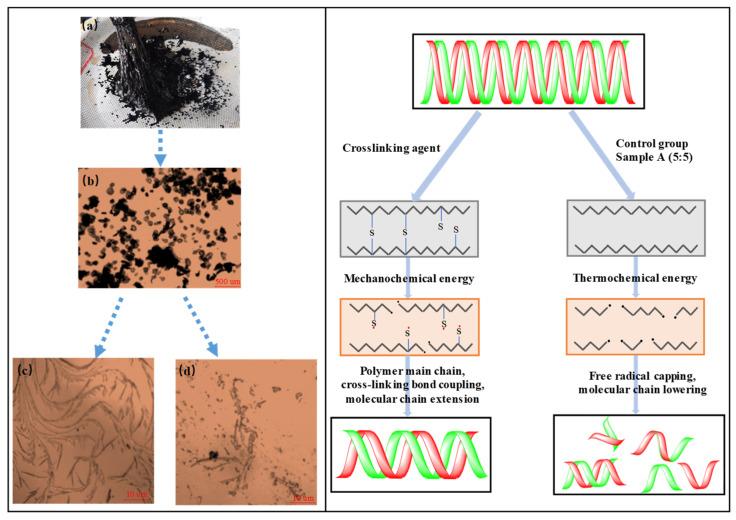
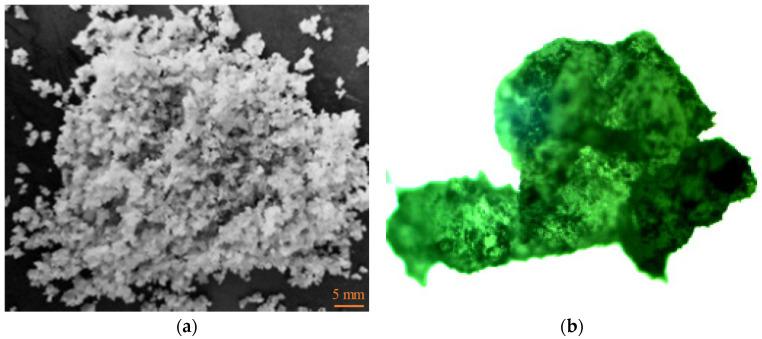
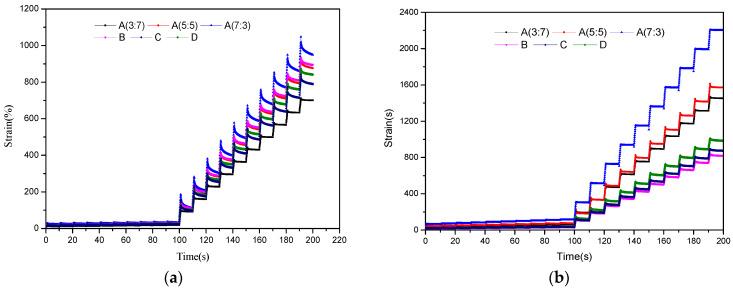
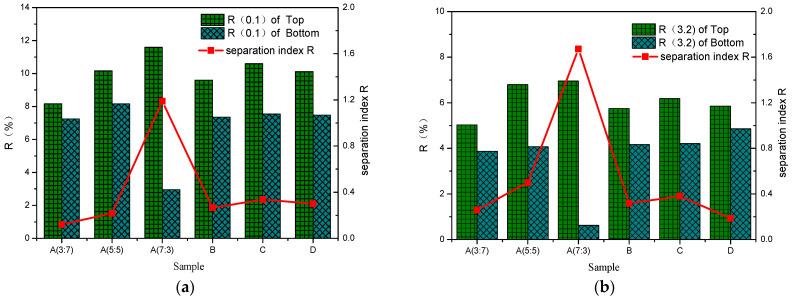
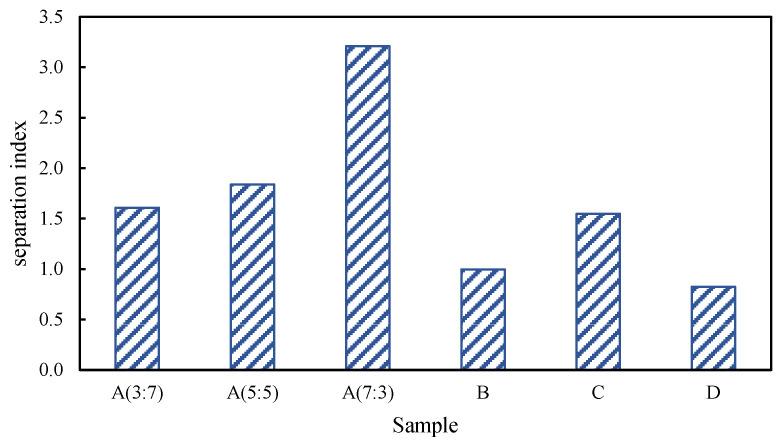
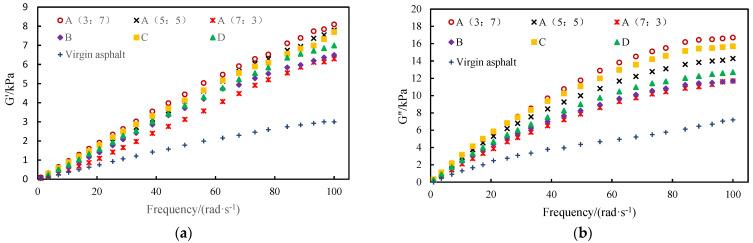
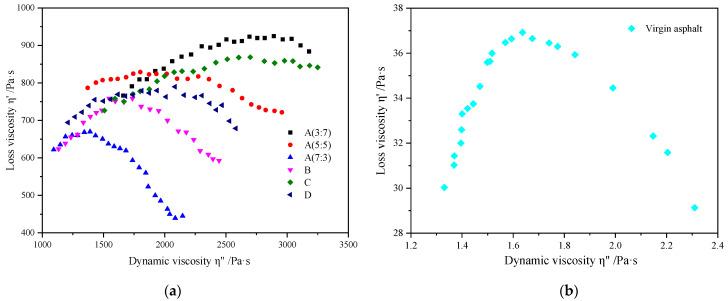
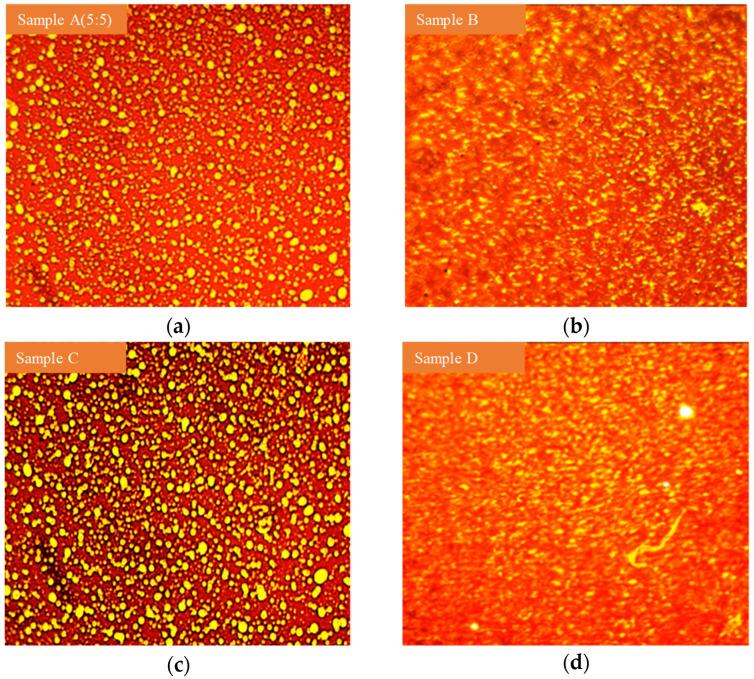
To evaluate the thermal stability of composite polymer-modified asphalt, thermoplastic elastomer styrene-butadiene rubber (SBR)/polypropylene (PP) pellets were prepared using a hot-melt blending technique, with butyl rubber powder and waste polypropylene pellets as raw materials. The effects of different evaluation indexes on the thermal stability of SBR/PP-modified asphalt were investigated using a frequency scan test and a multi-stress creep recovery (MSCR) test, and the compatibility of SBR/PP particles with asphalt was studied using the Cole-Cole diagram and microstructure images. The tests show that, firstly, the performance grade (PG) classification of asphalt can be improved by adding an SBR/PP thermoplastic elastomer to enhance the adaptability of asphalt in high- and low-temperature environments, and the evaluation separation index can reflect the high-temperature storage stability of composite-modified asphalt more reasonably. Additionally, the larger the rubber-to-plastic ratio the worse the high-temperature thermal stability of composite-modified asphalt. Moreover, the addition of additives to the composite particles can promote the SBR/PP particles in the asphalt to be more uniformly dispersed, forming a more desirable microstructure and improving the thermal stability of composite-modified asphalt. Ultimately, the semicircular curve of the Cole-Cole diagram can reflect the compatibility characteristics of the two-phase structure of SBR/PP-modified asphalt, which can be used as an auxiliary index to evaluate the compatibility of polymer-modified asphalt.
为评估复合聚合物改性沥青的热稳定性,以丁基橡胶粉和废旧聚丙烯颗粒为原料,采用热熔共混技术制备了热塑性弹性体苯乙烯-丁二烯橡胶(SBR)/聚丙烯(PP)颗粒。通过频率扫描试验和多应力蠕变恢复(MSCR)试验研究了不同评价指标对SBR/PP改性沥青热稳定性的影响,并利用Cole-Cole图和微观结构图像研究了SBR/PP颗粒与沥青的相容性。试验结果表明,首先,添加SBR/PP热塑性弹性体可提高沥青的性能等级(PG)分类,增强沥青在高温和低温环境下的适应性,且评价离析指标能更合理地反映复合改性沥青的高温储存稳定性。此外,橡胶与塑料的比例越大,复合改性沥青的高温热稳定性越差。而且,在复合颗粒中添加添加剂可促进SBR/PP颗粒在沥青中更均匀地分散,形成更理想的微观结构,提高复合改性沥青的热稳定性。最终,Cole-Cole图的半圆曲线能反映SBR/PP改性沥青两相结构的相容性特征,可作为评价聚合物改性沥青相容性的辅助指标。

 Zotero 插件