
疫情缓解期间的疫苗犹豫和公众不信任:意大利北部2021年和2023年横断面调查的结果
Vaccine Hesitancy and Public Mistrust during Pandemic Decline: Findings from 2021 and 2023 Cross-Sectional Surveys in Northern Italy.
作者信息
Barbieri Verena, Wiedermann Christian J, Lombardo Stefano, Piccoliori Giuliano, Gärtner Timon, Engl Adolf
机构信息
Institute of General Practice and Public Health, Claudiana-College of Health Professions, 39100 Bolzano, Italy.
Department of Public Health, Medical Decision Making and Health Technology Assessment, University of Health Sciences, Medical Informatics and Technology, 6060 Hall, Austria.
出版信息
Vaccines (Basel). 2024 Feb 8;12(2):176. doi: 10.3390/vaccines12020176.
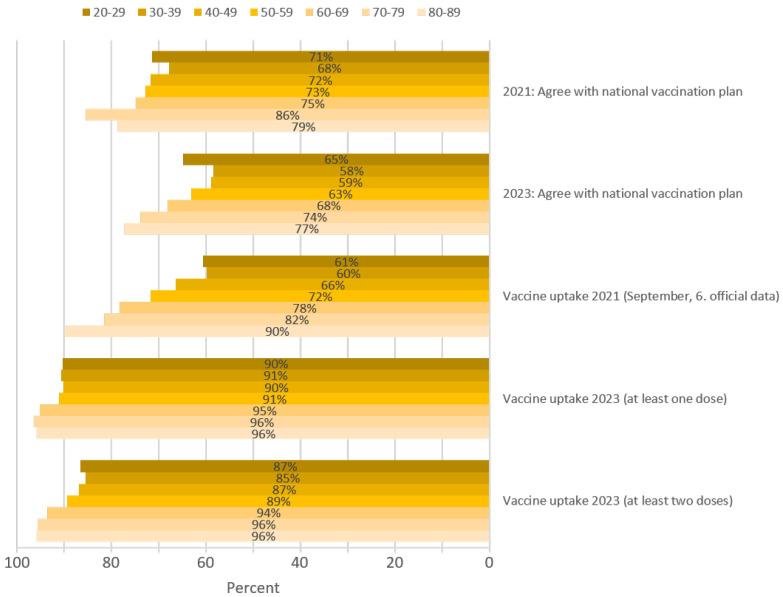
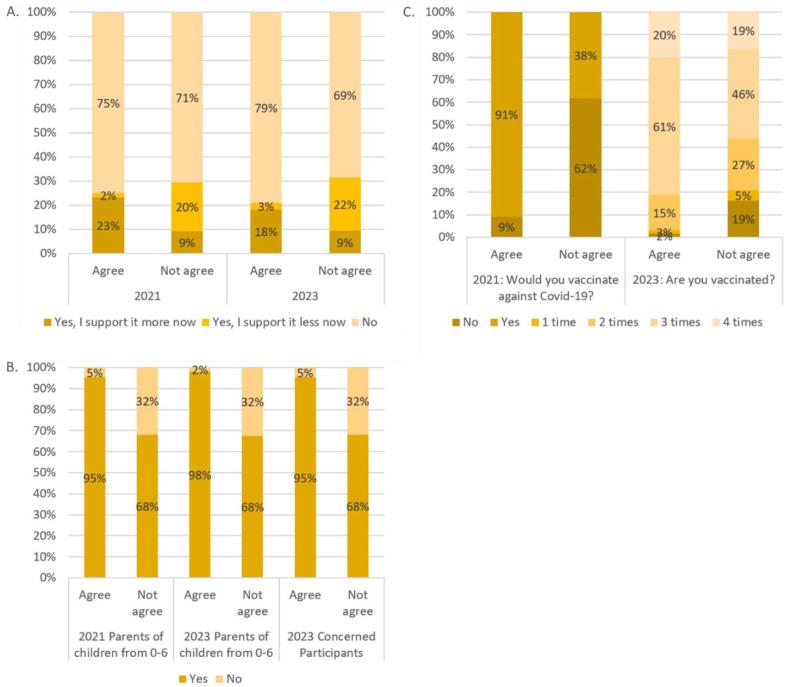
This study examines vaccine agreements in South Tyrol, Italy, within distinct socio-cultural and linguistic contexts. Using data from the 2021 and 2023 "COVID-19 Snapshot Monitoring" extended surveys, we assessed changes in attitudes towards COVID-19 and other vaccinations during the second and final years of the pandemic. Multivariate logistic regression analysis was used to examine factors such as trust in institutions, language groups, and the use of complementary and alternative medicine. The representativeness of the study is supported by good participation rates, ensuring a comprehensive view of attitudes towards vaccination in the region. The results show a shift in public agreement with the national vaccination plan to 64% by 2023, from a rate of about 73% agreement in 2021 ( < 0.001). A significant decrease in trust in health authorities and a negative correlation with complementary and alternative medicine consultations were observed. The results highlight the complex nature of vaccine hesitancy in diverse regions such as South Tyrol and underline the need for targeted communication strategies and trust-building initiatives to effectively reduce hesitancy. This study provides critical insights for the formulation of public health strategies in diverse sociocultural settings.
本研究考察了意大利南蒂罗尔不同社会文化和语言背景下的疫苗协议。利用2021年和2023年“COVID-19快速监测”扩展调查的数据,我们评估了在疫情的第二年和最后一年期间,对COVID-19疫苗和其他疫苗接种态度的变化。采用多变量逻辑回归分析来研究诸如对机构的信任、语言群体以及补充和替代医学的使用等因素。高参与率支持了该研究的代表性,确保了对该地区疫苗接种态度的全面了解。结果显示,公众对国家疫苗接种计划的认同率从2021年的约73%降至2023年的64%(<0.001)。观察到对卫生当局的信任显著下降,且与补充和替代医学咨询呈负相关。结果凸显了南蒂罗尔等不同地区疫苗犹豫问题的复杂性,并强调了制定有针对性的沟通策略和建立信任举措以有效减少犹豫的必要性。本研究为在不同社会文化环境中制定公共卫生策略提供了关键见解。

 Zotero 插件