
血脑屏障功能障碍可预测幼年大鼠创伤性脑损伤后的小胶质细胞激活。
Blood-Brain Barrier Dysfunction Predicts Microglial Activation After Traumatic Brain Injury in Juvenile Rats.
作者信息
Green Tabitha R F, Nguyen Tina, Dunker Veronika, Ashton Danielle, Ortiz J Bryce, Murphy Sean M, Rowe Rachel K
机构信息
Department of Integrative Physiology, University of Colorado Boulder, Colorado, USA.
Department of Child Health, University of Arizona College of Medicine-Phoenix, Arizona, USA.
出版信息
Neurotrauma Rep. 2024 Feb 8;5(1):95-116. doi: 10.1089/neur.2023.0057. eCollection 2024.
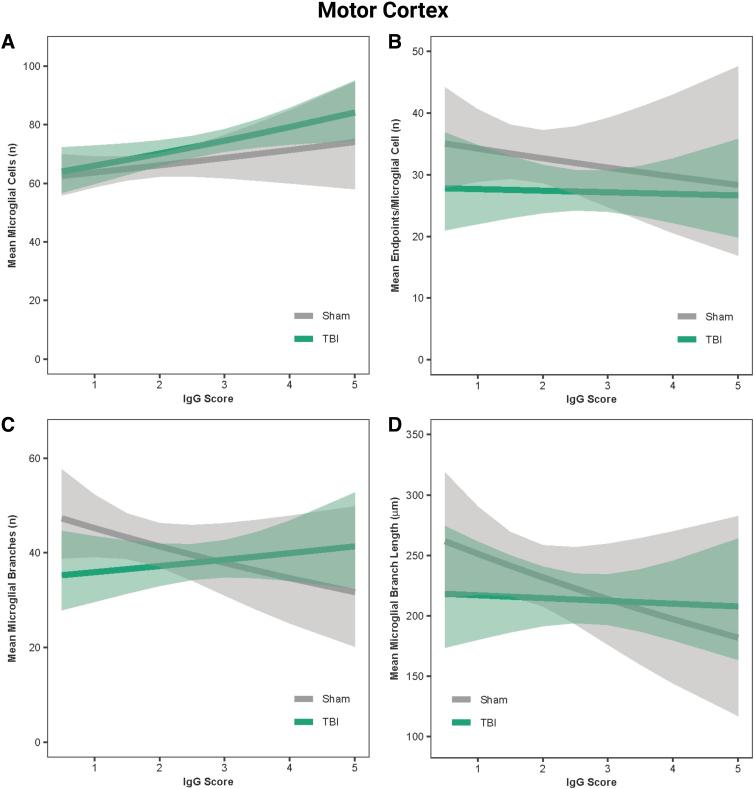
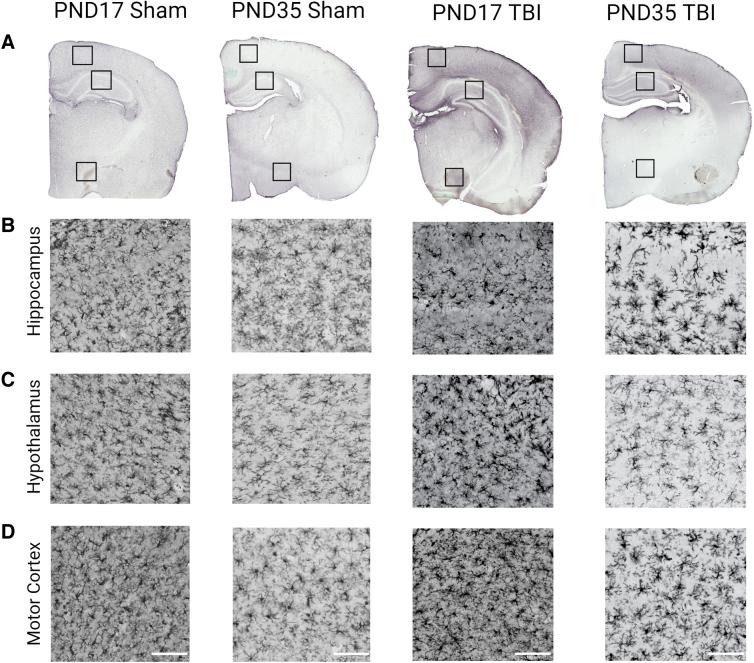
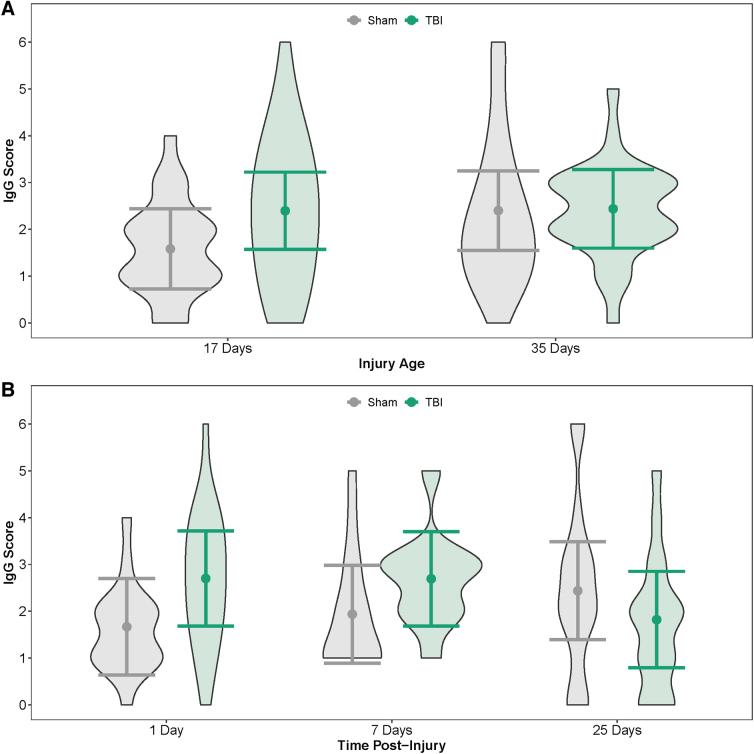
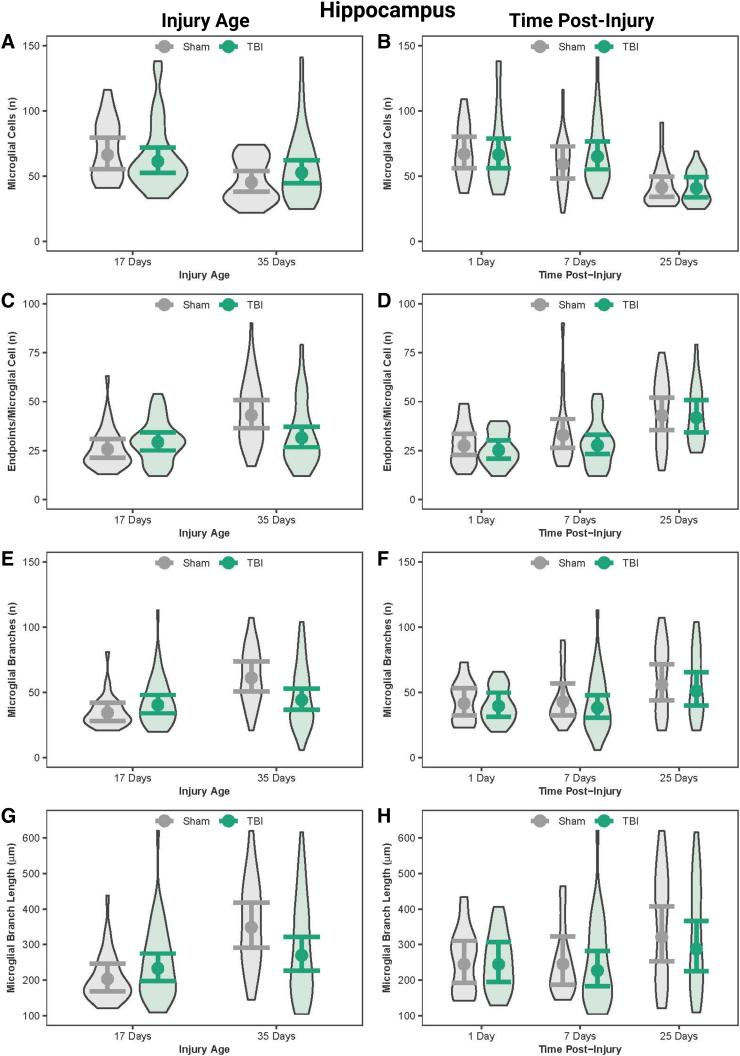
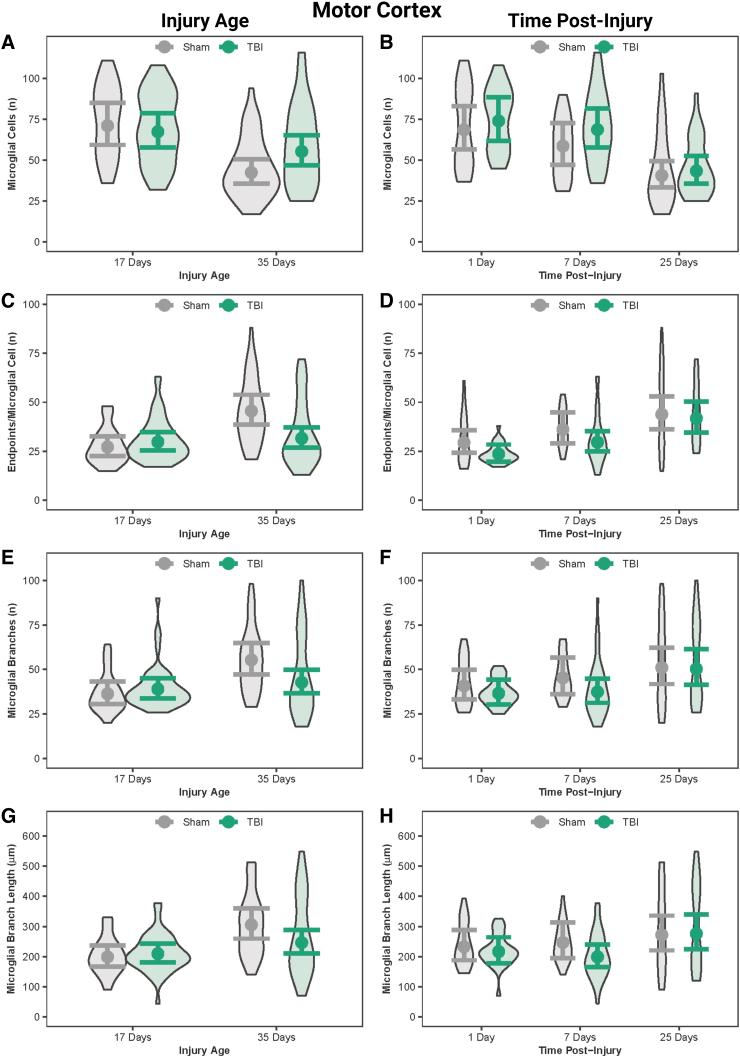
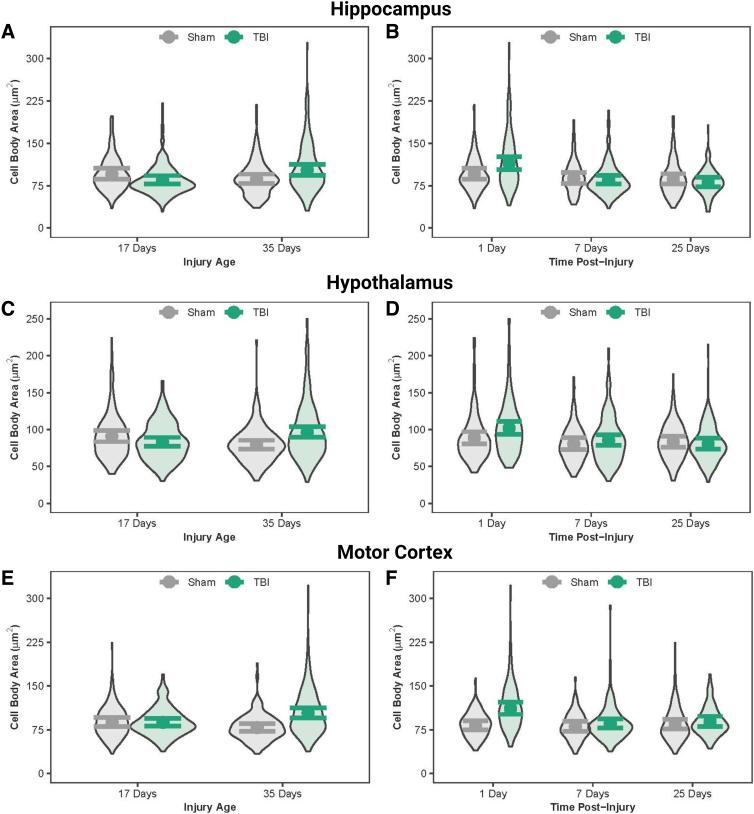
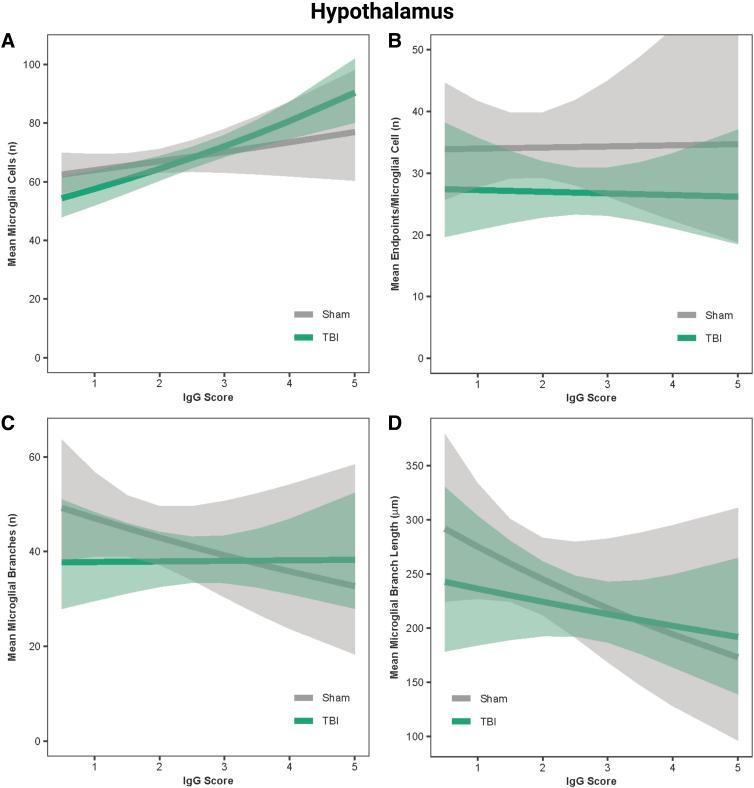
Traumatic brain injury (TBI) disrupts the blood-brain barrier (BBB), which may exacerbate neuroinflammation post-injury. Few translational studies have examined BBB dysfunction and subsequent neuroinflammation post-TBI in juveniles. We hypothesized that BBB dysfunction positively predicts microglial activation and that vulnerability to BBB dysfunction and associated neuroinflammation are dependent on age at injury. Post-natal day (PND)17 and PND35 rats ( = 56) received midline fluid percussion injury or sham surgery, and immunoglobulin-G (IgG) stain was quantified as a marker of extravasated blood in the brain and BBB dysfunction. We investigated BBB dysfunction and the microglial response in the hippocampus, hypothalamus, and motor cortex relative to age at injury and days post-injury (DPI; 1, 7, and 25). We measured the morphologies of ionized calcium-binding adaptor molecule 1-labeled microglia using cell body area and perimeter, microglial branch number and length, end-points/microglial cell, and number of microglia. Data were analyzed using generalized hierarchical models. In PND17 rats, TBI increased levels of IgG compared to shams. Independent of age at injury, IgG in TBI rats was higher at 1 and 7 DPI, but resolved by 25 DPI. TBI activated microglia (more cells and fewer end-points) in PND35 rats compared to respective shams. Independent of age at injury, TBI induced morphological changes indicative of microglial activation, which resolved by 25 DPI. TBI rats had fewer cells and end-points per cell at 1 and 7 DPI than 25 DPI. Independent of TBI, PND17 rats had larger, more activated microglia than PND35 rats; PND17 TBI rats had larger cell body areas and perimeters than PND35 TBI rats. Importantly, we found support in both ages that IgG quantification predicted microglial activation after TBI. The number of microglia increased with increasing IgG, whereas branch length decreased with increasing IgG, which together indicate microglial activation. Our results suggest that stabilization of the BBB after pediatric TBI may be an important therapeutic strategy to limit neuroinflammation and promote recovery.
创伤性脑损伤(TBI)会破坏血脑屏障(BBB),这可能会加剧损伤后的神经炎症。很少有转化研究探讨青少年TBI后的血脑屏障功能障碍及随后的神经炎症。我们假设血脑屏障功能障碍可正向预测小胶质细胞激活,且血脑屏障功能障碍及相关神经炎症的易感性取决于受伤时的年龄。出生后第17天(PND17)和第35天(PND35)的大鼠(n = 56)接受中线流体冲击伤或假手术,免疫球蛋白G(IgG)染色被定量作为脑内血管外渗血液和血脑屏障功能障碍的标志物。我们研究了相对于受伤时年龄和伤后天数(DPI;1、7和25天),海马体、下丘脑和运动皮层中的血脑屏障功能障碍及小胶质细胞反应。我们使用细胞体面积和周长、小胶质细胞分支数量和长度、端点/小胶质细胞以及小胶质细胞数量来测量离子钙结合衔接分子1标记的小胶质细胞的形态。数据使用广义分层模型进行分析。在PND17大鼠中,与假手术组相比,TBI增加了IgG水平。与受伤时年龄无关,TBI大鼠在1和7 DPI时IgG水平较高,但在25 DPI时恢复正常。与各自的假手术组相比,TBI激活了PND35大鼠中的小胶质细胞(细胞更多且端点更少)。与受伤时年龄无关,TBI诱导了表明小胶质细胞激活的形态学变化,这些变化在25 DPI时消失。TBI大鼠在1和7 DPI时每个细胞的细胞和端点比25 DPI时少。与TBI无关,PND17大鼠的小胶质细胞比PND35大鼠更大且更活跃;PND17 TBI大鼠的细胞体面积和周长比PND35 TBI大鼠更大。重要的是,我们在两个年龄段都发现IgG定量可预测TBI后的小胶质细胞激活。小胶质细胞数量随IgG增加而增加,而分支长度随IgG增加而减少,这共同表明小胶质细胞激活。我们的结果表明,小儿TBI后稳定血脑屏障可能是限制神经炎症和促进恢复的重要治疗策略。


 Zotero 插件