
用于检测慢性阻塞性肺疾病合并肺癌患者循环肿瘤DNA的机器学习模型
Machine learning model for circulating tumor DNA detection in chronic obstructive pulmonary disease patients with lung cancer.
作者信息
Shin Sun Hye, Cha Soojin, Lee Ho Yun, Shin Seung-Ho, Kim Yeon Jeong, Park Donghyun, Han Kyung Yeon, Oh You Jin, Park Woong-Yang, Ahn Myung-Ju, Kim Hojoong, Won Hong-Hee, Park Hye Yun
机构信息
Division of Pulmonary and Critical Care Medicine, Department of Medicine, Samsung Medical Center, Sungkyunkwan University School of Medicine, Seoul, Republic of Korea.
Department of Health Science and Technology, Samsung Advanced Institute for Health Sciences and Technology (SAIHST), Sungkyunkwan University, Samsung Medical Center, Seoul, Republic of Korea.
出版信息
Transl Lung Cancer Res. 2024 Jan 31;13(1):112-125. doi: 10.21037/tlcr-23-633. Epub 2024 Jan 29.
BACKGROUND
Patients with chronic obstructive pulmonary disease (COPD) have a high risk of developing lung cancer. Due to the high rates of complications from invasive diagnostic procedures in this population, detecting circulating tumor DNA (ctDNA) as a non-invasive method might be useful. However, clinical characteristics that are predictive of ctDNA mutation detection remain incompletely understood. This study aimed to investigate factors associated with ctDNA detection in COPD patients with lung cancer.
METHODS
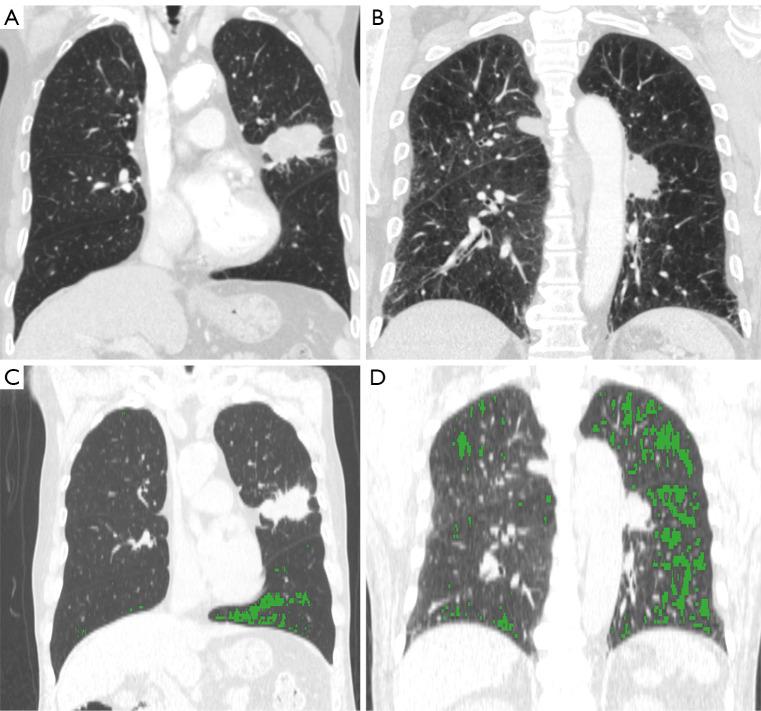
Herein, 177 patients with COPD and lung cancer were prospectively recruited. Plasma ctDNA was genotyped using targeted deep sequencing. Comprehensive clinical variables were collected, including the emphysema index (EI), using chest computed tomography. Machine learning models were constructed to predict ctDNA detection.
RESULTS
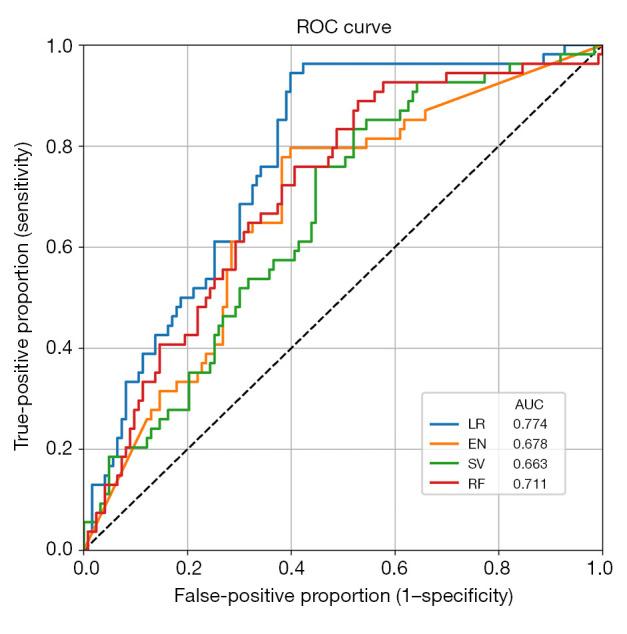
At least one ctDNA mutation was detected in 54 (30.5%) patients. After adjustment for potential confounders, tumor stage, C-reactive protein (CRP) level, and milder emphysema were independently associated with ctDNA detection. An increase of 1% in the EI was associated with a 7% decrease in the odds of ctDNA detection (adjusted odds ratio =0.933; 95% confidence interval: 0.857-0.999; P=0.047). Machine learning models composed of multiple clinical factors predicted individuals with ctDNA mutations at high performance (AUC =0.774).
CONCLUSIONS
ctDNA mutations were likely to be observed in COPD patients with lung cancer who had an advanced clinical stage, high CRP level, or milder emphysema. This was validated in machine learning models with high accuracy. Further prospective studies are required to validate the clinical utility of our findings.
背景
慢性阻塞性肺疾病(COPD)患者患肺癌的风险很高。由于该人群侵入性诊断程序的并发症发生率较高,检测循环肿瘤DNA(ctDNA)作为一种非侵入性方法可能会有所帮助。然而,预测ctDNA突变检测的临床特征仍未完全明确。本研究旨在调查COPD合并肺癌患者中与ctDNA检测相关的因素。
方法
前瞻性招募了177例COPD合并肺癌患者。使用靶向深度测序对血浆ctDNA进行基因分型。收集综合临床变量,包括使用胸部计算机断层扫描的肺气肿指数(EI)。构建机器学习模型以预测ctDNA检测。
结果
54例(30.5%)患者检测到至少一种ctDNA突变。在调整潜在混杂因素后,肿瘤分期、C反应蛋白(CRP)水平和较轻的肺气肿与ctDNA检测独立相关。EI每增加1%,ctDNA检测几率降低7%(调整后的优势比=0.933;95%置信区间:0.857-0.999;P=0.047)。由多个临床因素组成的机器学习模型对ctDNA突变个体的预测性能较高(AUC=0.774)。
结论
在临床分期较晚、CRP水平较高或肺气肿较轻的COPD合并肺癌患者中可能观察到ctDNA突变。这在高精度的机器学习模型中得到了验证。需要进一步的前瞻性研究来验证我们发现的临床实用性。


 Zotero 插件