
将具有公平性重点的复杂干预措施的规划、开发和实施与当地情况相协调:PRISM/RE-AIM 框架的应用。
Aligning the planning, development, and implementation of complex interventions to local contexts with an equity focus: application of the PRISM/RE-AIM Framework.
机构信息
Adult and Child Center for Health Outcomes Research and Delivery Science (ACCORDS), University of Colorado School of Medicine, Anschutz Medical Campus, Mailstop F443, 1890 North Revere Court, Aurora, CO, 80045, USA.
Department of General Pediatrics, University of Colorado School of Medicine, Anschutz Medical Campus, Aurora, CO, USA.
出版信息
Int J Equity Health. 2024 Feb 27;23(1):41. doi: 10.1186/s12939-024-02130-6.
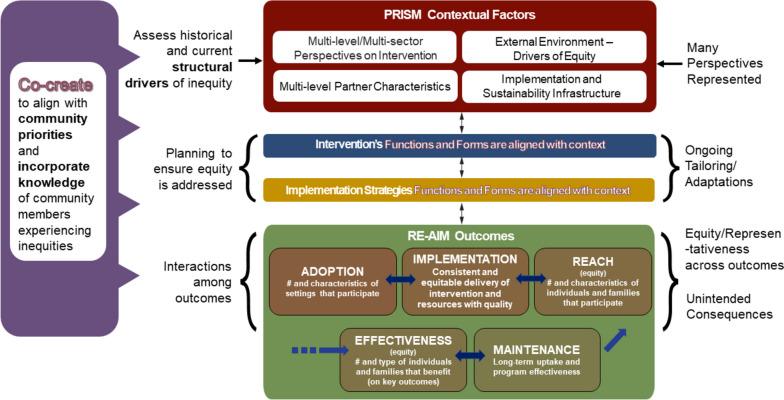
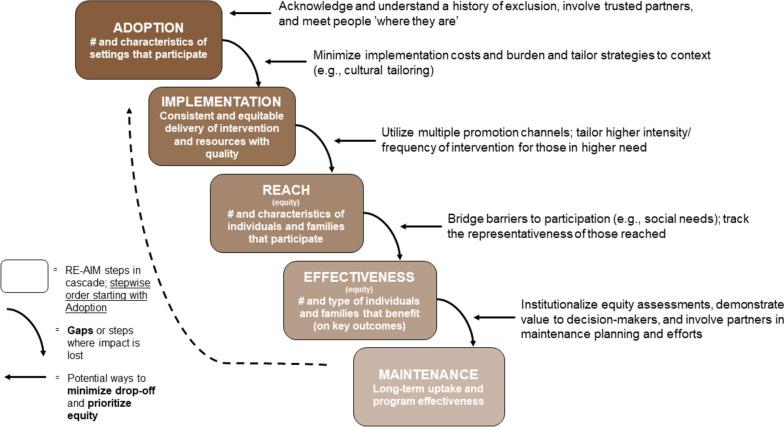
For the fields of implementation science and health equity, understanding and being responsive to local contexts is of utmost importance to better inform the development, implementation, and evaluation of healthcare and public health interventions to increase their uptake and sustainment. Contexts are multi-level and include political, historical, economic, and social factors that influence health, as well as organizational characteristics, reflecting the richness of members' views, resources, values, and needs. Poor alignment between solutions and those contextual characteristics could have an impact on inequities. The PRISM (Practical Robust Implementation and Sustainability Model) is a context-based implementation science framework that incorporates RE-AIM outcomes (Reach, Effectiveness, Adoption, Implementation, Maintenance) and offers guidance to researchers, practitioners, and their patient and community partners on how to conceptualize, assess, and address contextual domains with a focus on health equity. Drawing from systems thinking, participatory engagement, and health equity principles, this commentary expands on previous work to 1) offer a novel perspective on how to align an intervention's core functions and forms with the PRISM's contextual domains, and 2) foster an ongoing and iterative engagement process with diverse partners throughout the research and practice process using a co-creation approach. We recommend intervention-to-context alignment through iterative cycles. To that end, we present the RE-AIM Framework's 'outcomes cascade' to illustrate touch points of opportunity and gaps within and across each of the five RE-AIM outcomes to illustrate 'where things go wrong'. We present a case study to illustrate and offer recommendations for research and practice efforts to increase contextual responsiveness, and enhance alignment with context before, during, and after implementation efforts and to ensure equity is being addressed. We strive to make a conceptual contribution to advance the field of pragmatic research and implementation of evidence-based practices through the application of the contextually-based PRISM framework with a focus on health equity.
对于实施科学和健康公平领域而言,了解并顺应当地情况至关重要,这有助于更好地为医疗保健和公共卫生干预措施的制定、实施和评估提供信息,以提高其采用率和可持续性。背景是多层次的,包括影响健康的政治、历史、经济和社会因素,以及反映成员观点、资源、价值观和需求丰富性的组织特征。解决方案与这些背景特征之间的不匹配可能会对不公平产生影响。PRISM(实用稳健实施和可持续性模型)是一个基于背景的实施科学框架,包含了 RE-AIM 结果(覆盖范围、效果、采用、实施、维持),为研究人员、从业者及其患者和社区合作伙伴提供了关于如何概念化、评估和解决以健康公平为重点的背景领域的指导。该框架借鉴了系统思维、参与式参与和健康公平原则,扩展了之前的工作,1)提供了一种新颖的视角,即如何使干预措施的核心功能和形式与 PRISM 的背景领域保持一致,2)通过共同创造方法,在研究和实践过程中与不同的合作伙伴进行持续和迭代的参与过程。我们建议通过迭代循环进行干预与背景的匹配。为此,我们展示了 RE-AIM 框架的“结果级联”,以说明每个 RE-AIM 结果内和之间的机会接触点和差距,以说明“事情出错的地方”。我们提出了一个案例研究,以说明并为研究和实践工作提供建议,以提高对背景的响应能力,并在实施工作之前、期间和之后加强与背景的匹配,以确保解决公平问题。我们努力通过应用以健康公平为重点的基于背景的 PRISM 框架,为推进实用研究和循证实践的实施做出概念贡献。


 Zotero 插件