
四面体 DNA 纳米结构在骨质疏松症治疗中的作用。
Effects of tetrahedral DNA nanostructures on the treatment of osteoporosis.
机构信息
State Key Laboratory of Oral Diseases, National Center for Stomatology, National Clinical Research Center for Oral Diseases, West China Hospital of Stomatology, Sichuan University, Chengdu, China.
Psychiatric Laboratory and Mental Health Center, the State Key Laboratory of Biotherapy, West China Hospital of Sichuan University, Chengdu, China.
出版信息
Cell Prolif. 2024 Jul;57(7):e13625. doi: 10.1111/cpr.13625. Epub 2024 Feb 27.
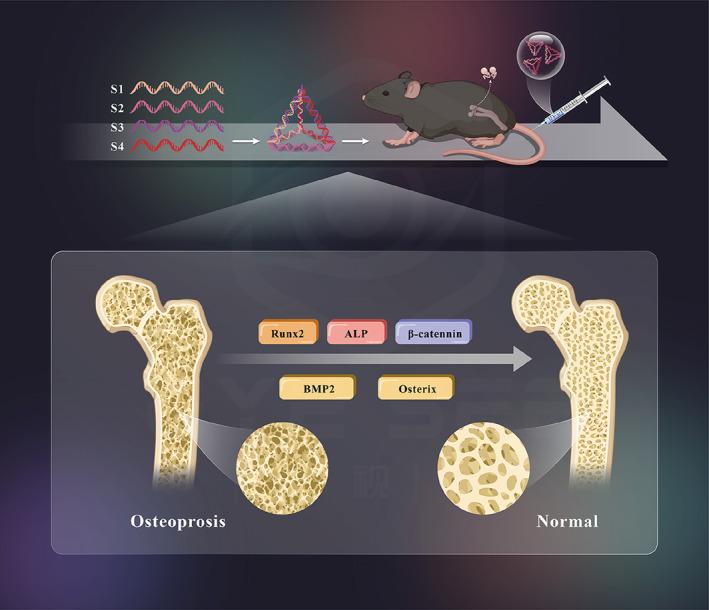
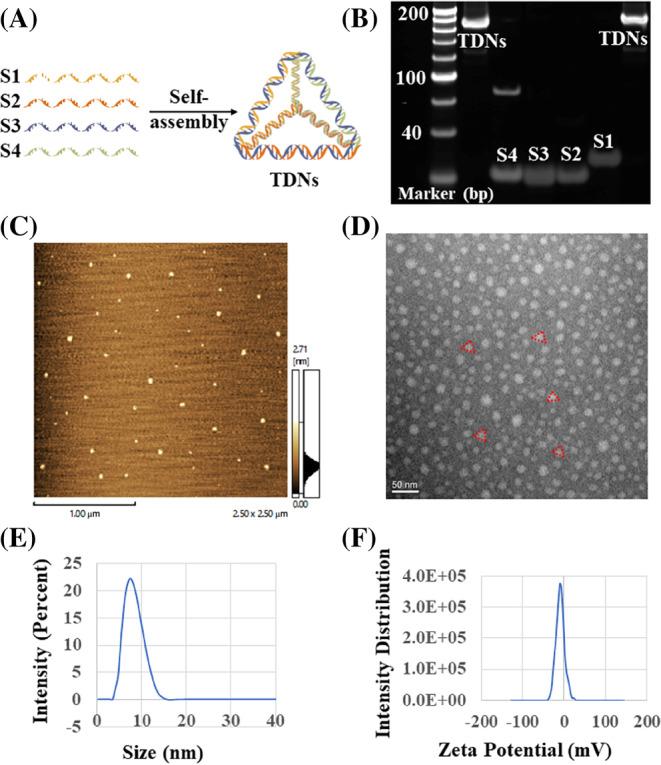
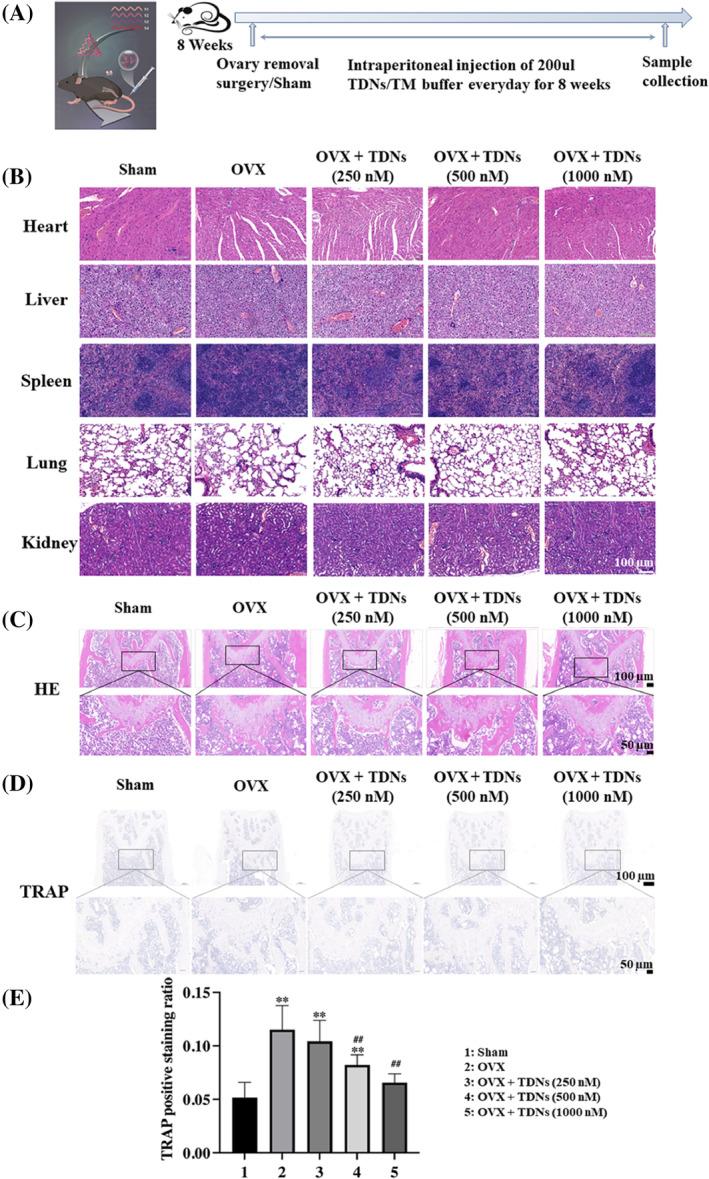
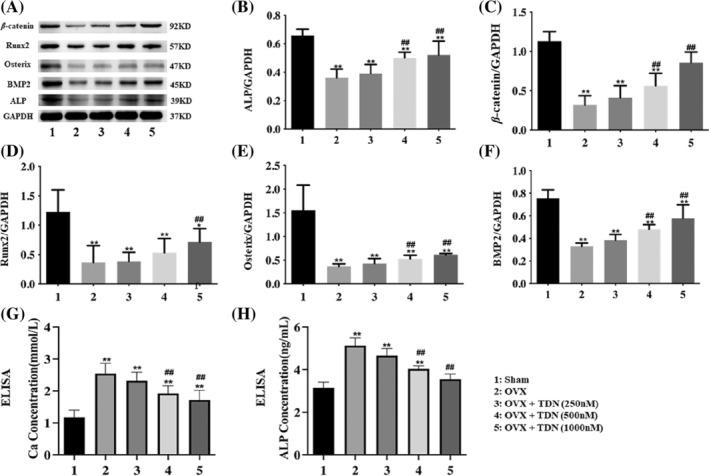
Osteoporosis (OP) is a common disease characterized by bone loss and bone tissue microstructure degradation. Drug treatment is a common clinical treatment that aims to increase bone mass and bone density. Tetrahedral DNA nanostructures (TDNs) are three-dimensional tetrahedral frames formed by folding four single-stranded DNA molecules, which have good biological safety and can promote bone regeneration. In this study, a mouse model of OP was established by ovariectomy (OVX) and TDN was injected into the tail vein for 8 weeks. We found that ovariectomized mice could simulate some physiological changes in OP. After treatment with TDNs, some of this destruction in mice was significantly improved, including an increase in the bone volume fraction (BV/TV) and bone trabecular number (Tb. N), decrease in bone separation (Tb. SP), reduction in the damage to the mouse cartilage layer, reduction in osteoclast lacunae in bone trabecula, and reduction in the damage to the bone dense part. We also found that the expression of ALP, β-Catenin, Runx2, Osterix, and bone morphogenetic protein (BMP)2 significantly decreased in OVX mice but increased after TDN treatment. Therefore, this study suggests that TDNs may regulate the Wnt/β-Catenin and BMP signalling pathways to improve the levels of some specific markers of osteogenic differentiation, such as Runx2, ALP, and Osterix, to promote osteogenesis, thus showing a therapeutic effect on OP mice.
骨质疏松症(OP)是一种常见的疾病,其特征是骨量流失和骨组织微结构退化。药物治疗是一种常见的临床治疗方法,旨在增加骨量和骨密度。四面体形 DNA 纳米结构(TDN)是由折叠四个单链 DNA 分子形成的三维四面体框架,具有良好的生物安全性,可促进骨再生。在这项研究中,通过卵巢切除术(OVX)建立了 OP 小鼠模型,并将 TDN 注入尾静脉 8 周。我们发现去卵巢的小鼠可以模拟 OP 的一些生理变化。用 TDN 治疗后,一些破坏在小鼠中得到了显著改善,包括骨体积分数(BV/TV)和骨小梁数量(Tb. N)的增加,骨分离(Tb. SP)的减少,对小鼠软骨层的损伤减少,骨小梁中破骨细胞陷窝减少,骨致密部分的损伤减少。我们还发现,在 OVX 小鼠中,碱性磷酸酶(ALP)、β-连环蛋白(β-Catenin)、核心结合因子 1(Runx2)、骨形成蛋白 2(BMP2)和 Osterix 的表达显著降低,但 TDN 治疗后表达增加。因此,本研究表明 TDN 可能通过调节 Wnt/β-Catenin 和 BMP 信号通路来提高一些成骨分化的特定标志物的水平,如 Runx2、ALP 和 Osterix,从而促进成骨,对 OP 小鼠显示出治疗效果。


 Zotero 插件