
在X连锁视网膜劈裂症小鼠模型中,采用rAAV2tYF-CB-h进行视网膜下基因治疗的剂量反应关系。
The dose-response relationship of subretinal gene therapy with rAAV2tYF-CB-h in a mouse model of X-linked retinoschisis.
作者信息
Hassan Salma, Hsu Ying, Thompson Jacob M, Kalmanek Emily, VandeLune Joel A, Stanley Sarah, Drack Arlene V
机构信息
Department of Ophthalmology and Visual Sciences, Institute for Vision Research, and Carver College of Medicine, University of Iowa, Iowa City, IA, United States.
Biomedical Science-Cell and Developmental Biology Graduate Program, Department of Anatomy and Cell Biology, University of Iowa, Iowa City, IA, United States.
出版信息
Front Med (Lausanne). 2024 Feb 13;11:1304819. doi: 10.3389/fmed.2024.1304819. eCollection 2024.
PURPOSE
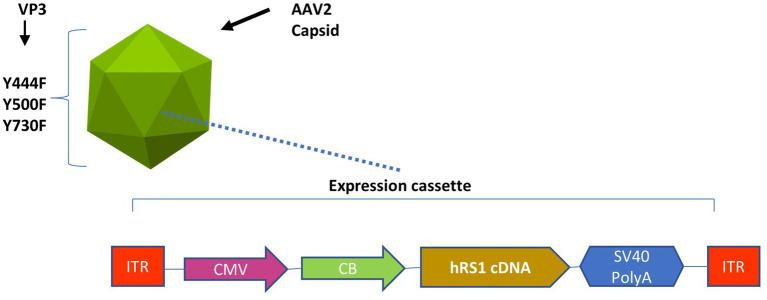
X-linked retinoschisis (XLRS), due to loss-of-function mutations in the retinoschisin () gene, is characterized by a modest to severe decrease in visual acuity. Clinical trials for XLRS utilizing intravitreal (IVT) gene therapy showed ocular inflammation. We conducted a subretinal dose-response preclinical study using rAAV2tYF-CB-h utilizing the knockout (-KO) mouse to investigate short- and long-term retinal rescue after subretinal gene delivery.
METHODS
-KO mice were subretinally injected with 2 μL of rAAV2tYF-CB-h vector with 8E9 viral genomes (vg)/eye, 8E8 vg/eye, 8E7 vg/eye, or sham injection, and compared to untreated eyes. Reconstitution of human RS1 protein was detected using western blotting. Analysis of retinal function by electroretinography (ERG) and structural analysis by optical coherence tomography (OCT) were performed at 1, 2, 3, 5, 7, and 12 months post injection (MPI). Immunohistochemistry (IHC) was performed to evaluate cone rescue on the cellular level. Functional vision was evaluated using a visually guided swim assay (VGSA).
RESULTS
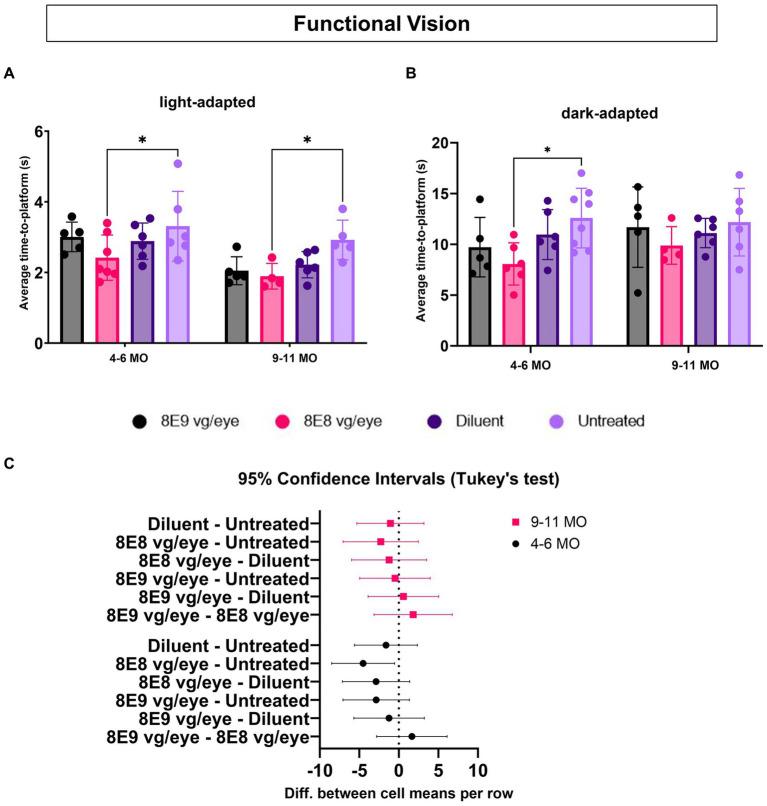
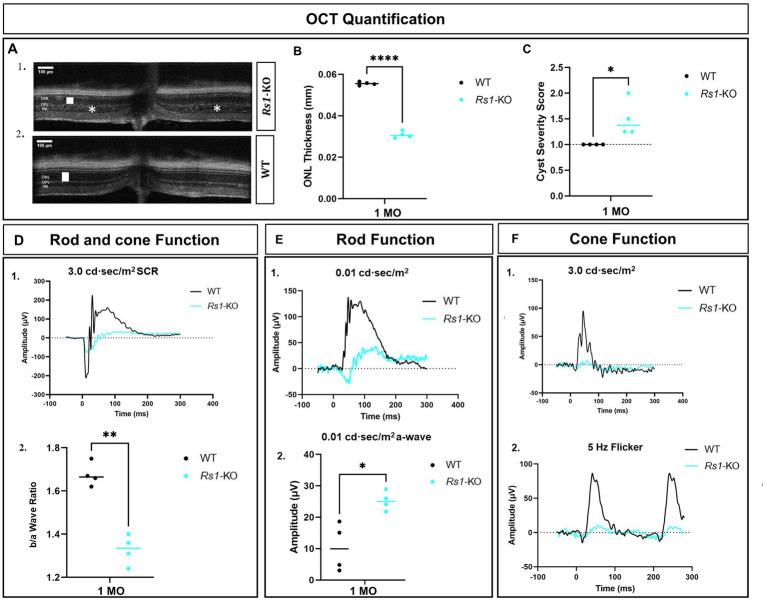
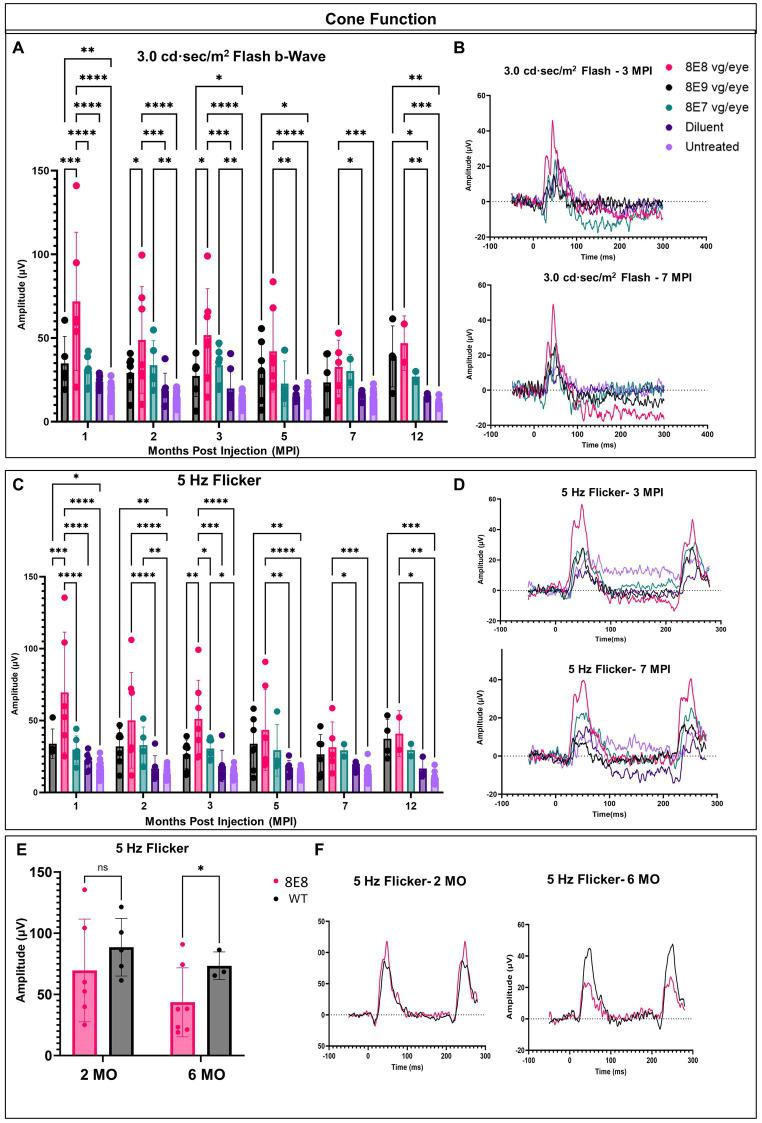
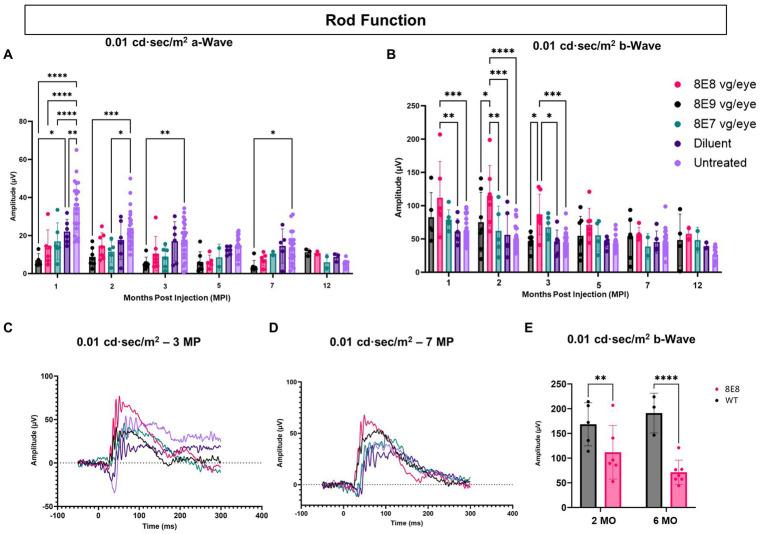
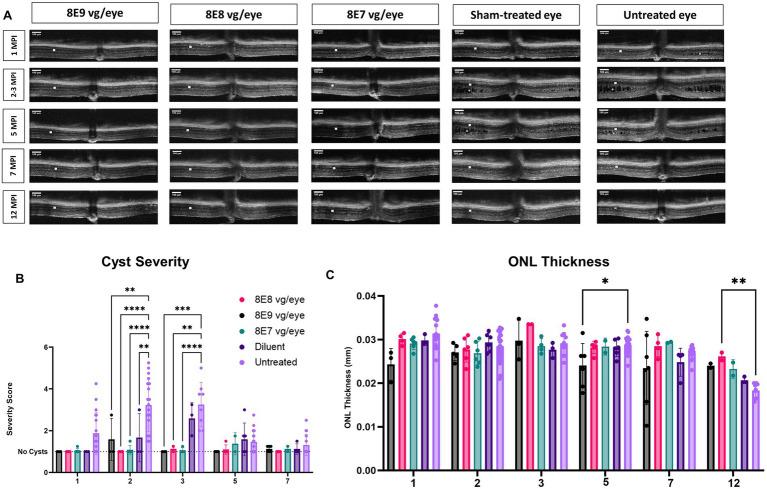
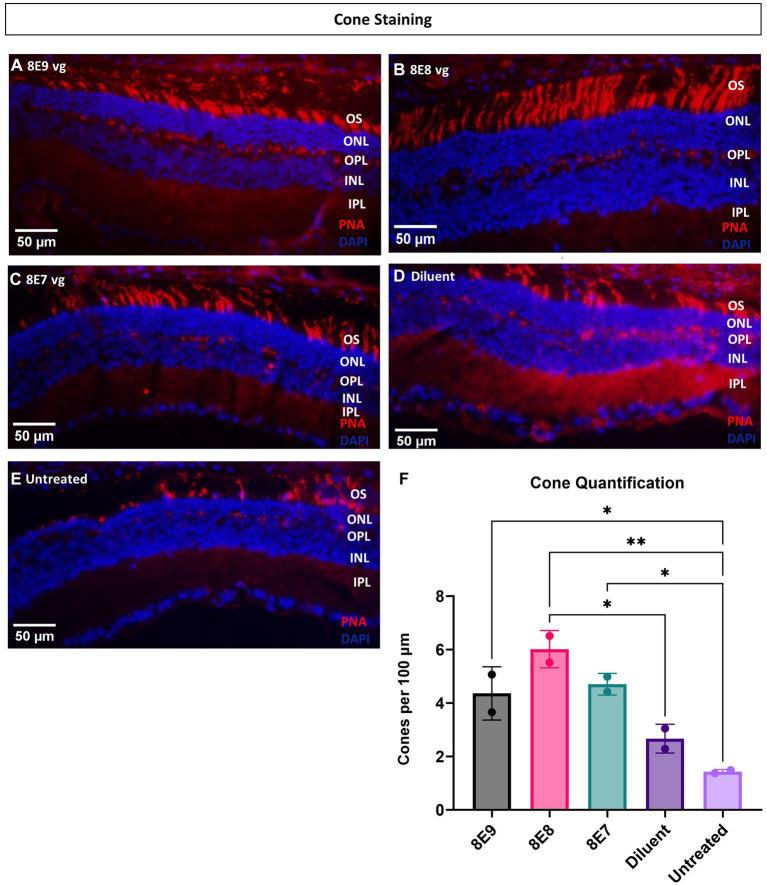
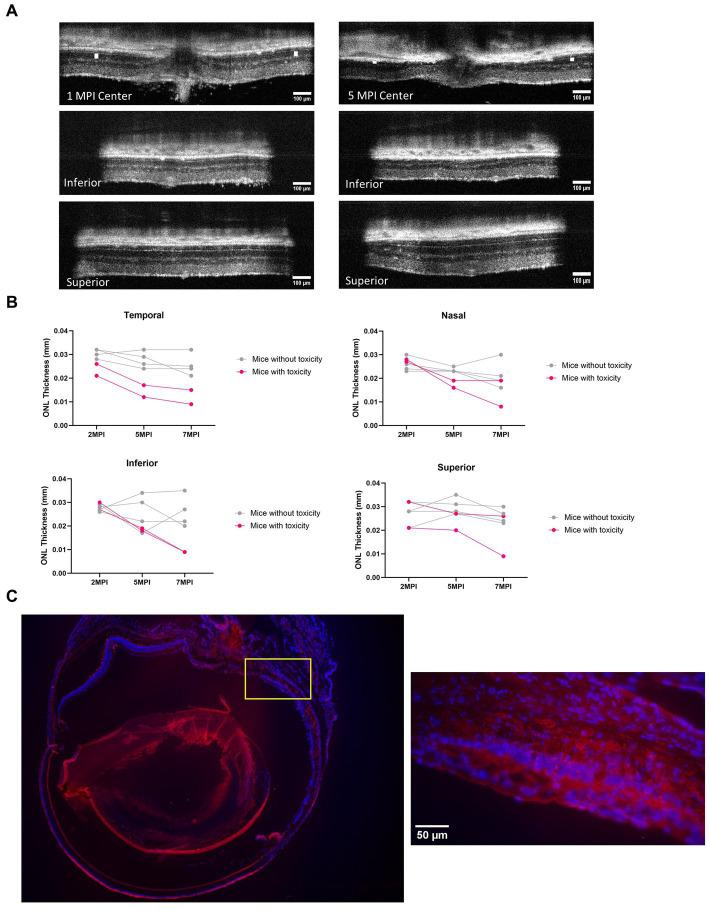
Western blotting analysis showed human RS1 protein expression in a dose-dependent manner. Quantification of western blotting showed that the RS1 protein expression in mice treated with the 8E8 vg dose was near the wild-type (WT) expression levels. ERG demonstrated dose-dependent effects: At 1 MPI the 8E8 vg dose treated eyes had higher light-adapted (LA) ERG amplitudes in 3.0 flash and 5 Hz flicker compared to untreated ( < 0.0001) and sham-treated eyes ( < 0.0001) which persisted until the 12 MPI endpoint, consistent with improved cone function. ERG b-wave amplitudes were higher in response to dark-adapted (DA) 0.01 dim flash and 3.0 standard combined response (SCR) compared to sham-treated ( < 0.01) and untreated eyes ( < 0.001) which persisted until 3 MPI, suggesting short-term improvement of the rod photoreceptors. All injections, including sham-treated, resulted in a cyst severity score of 1 (no cavities), with significant reductions compared to untreated eyes up to 3 MPI ( < 0.05). The high and low dose groups showed inconsistent ERG improvements, despite reduced cyst severity, emphasizing the dose-dependent nature of gene augmentation's efficacy and the tenuous connection between cyst reduction and ERG improvement. IHC data showed a significant cone rescue in eyes treated with the 8E8 vg dose compared to sham-treated and untreated eyes. VGSA showed better functional vision in 8E8 vg dose treated mice. Eyes treated with the highest dose showed occasional localized degeneration in the outer nuclear layer.
CONCLUSION
Our data suggest that a dose of 8E8 vg/eye subretinally improves retinal function and structure in the -KO mouse. It improves cone function, rod function, and reduces cyst severity. Sham treatment resolves schisis cysts, but 8E8 vg/eye is needed for optimal retinal electrical function rescue. These findings offer a promising path for clinical translation to human trials.
目的
X连锁视网膜劈裂症(XLRS)是由于视网膜劈裂蛋白(RS1)基因功能丧失性突变所致,其特征是视力有中度至重度下降。利用玻璃体内(IVT)基因疗法治疗XLRS的临床试验出现了眼部炎症。我们使用rAAV2tYF-CB-h,以敲除(KO)小鼠为模型进行了一项视网膜下剂量反应临床前研究,以调查视网膜下基因递送后短期和长期的视网膜挽救情况。
方法
给KO小鼠视网膜下注射2μL含8×10⁹病毒基因组(vg)/眼、8×10⁸ vg/眼、8×10⁷ vg/眼的rAAV2tYF-CB-h载体,或进行假注射,并与未治疗的眼睛进行比较。使用蛋白质印迹法检测人RS1蛋白的重建情况。在注射后(MPI)1、2、3、5、7和12个月,通过视网膜电图(ERG)分析视网膜功能,并通过光学相干断层扫描(OCT)进行结构分析。进行免疫组织化学(IHC)以在细胞水平评估视锥细胞的挽救情况。使用视觉引导游泳试验(VGSA)评估功能性视力。
结果
蛋白质印迹分析显示人RS1蛋白表达呈剂量依赖性。蛋白质印迹定量分析表明,用8×10⁸ vg剂量治疗的小鼠中RS1蛋白表达接近野生型(WT)表达水平。ERG显示出剂量依赖性效应:在1 MPI时,与未治疗(P<0.0001)和假治疗的眼睛(P<0.0001)相比,8×10⁸ vg剂量治疗的眼睛在3.0闪光和5Hz闪烁时具有更高的明适应(LA)ERG振幅,这种情况一直持续到12 MPI终点,这与视锥细胞功能改善一致。与假治疗(P<0.01)和未治疗的眼睛(P<0.001)相比,在暗适应(DA)0.01暗闪光和3.0标准联合反应(SCR)时,ERG的b波振幅更高,这种情况一直持续到3 MPI,表明视杆光感受器有短期改善。所有注射,包括假治疗,导致囊肿严重程度评分为1(无空洞),与未治疗的眼睛相比,在3 MPI之前有显著降低(P<0.05)。高剂量和低剂量组尽管囊肿严重程度降低,但ERG改善不一致,强调了基因增强疗效的剂量依赖性性质以及囊肿减少与ERG改善之间的微弱联系。IHC数据显示,与假治疗和未治疗的眼睛相比,用8×10⁸ vg剂量治疗的眼睛有明显的视锥细胞挽救。VGSA显示8×10⁸ vg剂量治疗的小鼠有更好的功能性视力。用最高剂量治疗的眼睛在外核层偶尔出现局部变性。
结论
我们的数据表明,视网膜下注射8×10⁸ vg/眼的剂量可改善KO小鼠的视网膜功能和结构。它改善了视锥细胞功能、视杆细胞功能,并降低了囊肿严重程度。假治疗可解决视网膜劈裂囊肿,但需要8×10⁸ vg/眼才能实现最佳的视网膜电功能挽救。这些发现为临床转化至人体试验提供了一条有前景的途径。


 Zotero 插件