
苯扎氯铵消毒剂残留会刺激生物膜形成并提高细菌病原体的存活率。
Benzalkonium chloride disinfectant residues stimulate biofilm formation and increase survival of bacterial pathogens.
作者信息
Mougin Julia, Midelet Graziella, Leterme Sophie, Best Giles, Ells Timothy, Joyce Alyssa, Whiley Harriet, Brauge Thomas
机构信息
Department of Marine Sciences, University of Gothenburg, Gothenburg, Sweden.
Bacteriology and Parasitology of Fishery and Aquaculture Products Unit, Laboratory for Food Safety, ANSES, Boulogne-sur-Mer, France.
出版信息
Front Microbiol. 2024 Feb 7;14:1309032. doi: 10.3389/fmicb.2023.1309032. eCollection 2023.
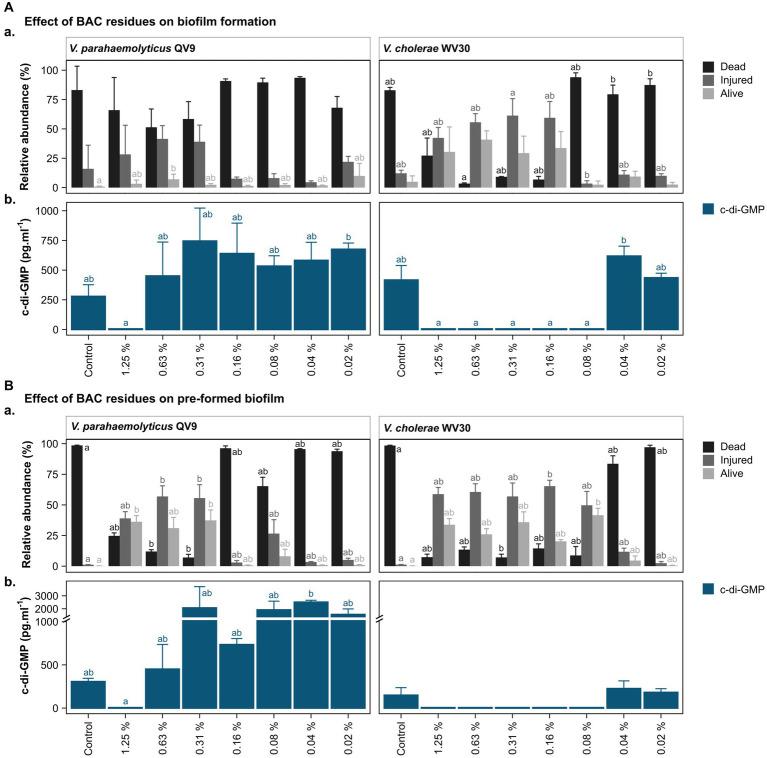
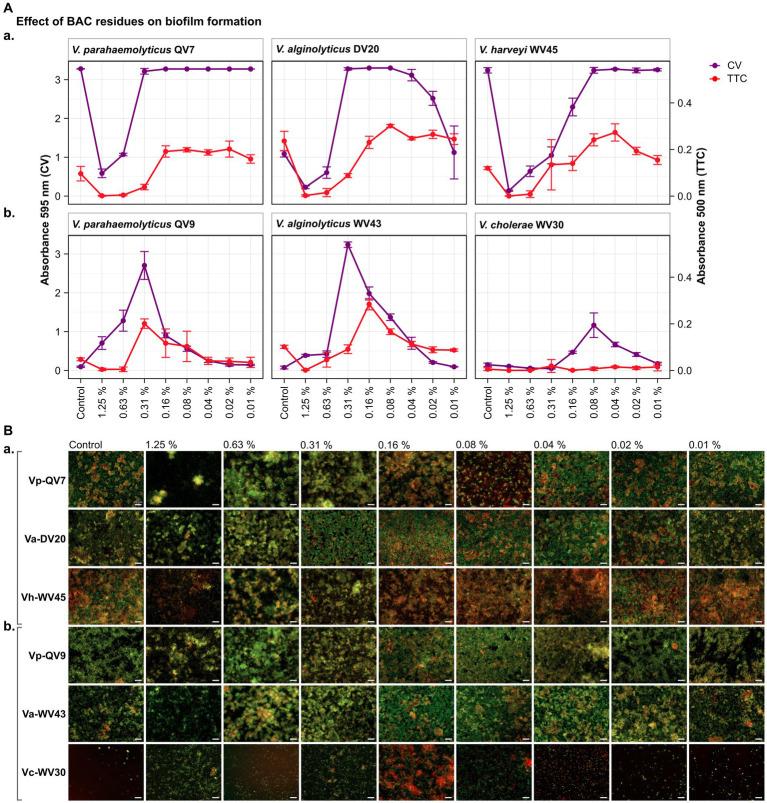
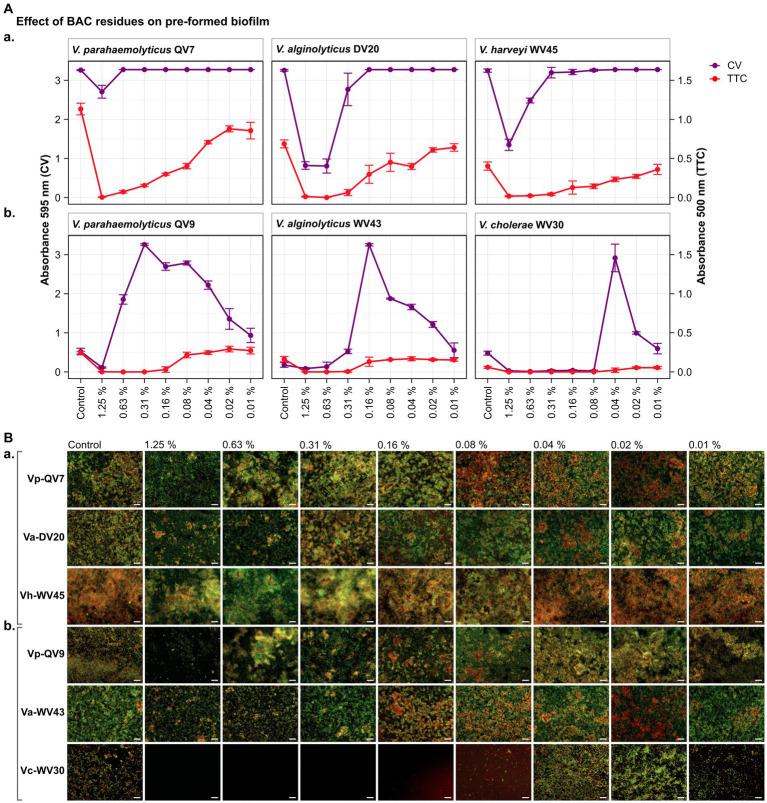
spp. are opportunistic human and animal pathogens found ubiquitously in marine environments. Globally, there is a predicted rise in the prevalence of spp. due to increasing ocean temperatures, which carries significant implications for public health and the seafood industry. Consequently, there is an urgent need for enhanced strategies to control spp. and prevent contamination, particularly in aquaculture and seafood processing facilities. Presently, these industries employ various disinfectants, including benzalkonium chloride (BAC), as part of their management strategies. While higher concentrations of BAC may be effective against these pathogens, inadequate rinsing post-disinfection could result in residual concentrations of BAC in the surrounding environment. This study aimed to investigate the adaptation and survival of spp. exposed to varying concentrations of BAC residues. Results revealed that bacteria, when exposed, exhibited a phenotypic adaptation characterized by an increase in biofilm biomass. Importantly, this effect was found to be strain-specific rather than species-specific. Exposure to BAC residues induced physiological changes in biofilms, leading to an increase in the number of injured and alive cells within the biofilm. The exact nature of the "injured" bacteria remains unclear, but it is postulated that BAC might heighten the risk of viable but non-culturable (VBNC) bacteria development. These VBNC bacteria pose a significant threat, especially since they cannot be detected using the standard culture-based methods commonly employed for microbiological risk assessment in aquaculture and seafood industries. The undetected presence of VBNC bacteria could result in recurrent contamination events and subsequent disease outbreaks. This study provides evidence regarding the role of c-di-GMP signaling pathways in adaptation mechanisms and suggests that c-di-GMP mediated repression is a potential avenue for further research. The findings underscore that the misuse and overuse of BAC may increase the risk of biofilm development and bacterial survival within the seafood processing chain.
[该菌属]是在海洋环境中普遍存在的机会性人类和动物病原体。在全球范围内,由于海洋温度升高,预计[该菌属]的流行率将会上升,这对公众健康和海鲜产业具有重大影响。因此,迫切需要加强控制[该菌属]和预防污染的策略,特别是在水产养殖和海鲜加工设施中。目前,这些行业采用各种消毒剂,包括苯扎氯铵(BAC),作为其管理策略的一部分。虽然较高浓度的BAC可能对这些病原体有效,但消毒后冲洗不充分可能导致周围环境中残留BAC浓度。本研究旨在调查暴露于不同浓度BAC残留的[该菌属]的适应性和存活情况。结果显示,[该菌属]细菌暴露后表现出以生物膜生物量增加为特征的表型适应性。重要的是,发现这种效应是菌株特异性而非物种特异性的。暴露于BAC残留会诱导[该菌属]生物膜发生生理变化,导致生物膜内受损和存活细胞数量增加。“受损”细菌的确切性质尚不清楚,但据推测BAC可能会增加活的但不可培养(VBNC)细菌形成的风险。这些VBNC细菌构成了重大威胁,特别是因为它们无法使用水产养殖和海鲜行业微生物风险评估中常用的基于标准培养的方法检测到。未检测到的VBNC细菌的存在可能导致反复污染事件和随后的疾病爆发。本研究提供了关于c-di-GMP信号通路在[该菌属]适应机制中的作用的证据,并表明c-di-GMP介导的抑制是进一步研究的潜在途径。研究结果强调,BAC的滥用和过度使用可能会增加海鲜加工链中生物膜形成和细菌存活的风险。
 Zotero 插件