
心血管疾病中的共病模式:生命阶段和社会经济地位的作用。
Comorbidity patterns in cardiovascular diseases: the role of life-stage and socioeconomic status.
作者信息
Cruz-Ávila Héctor A, Ramírez-Alatriste Fernando, Martínez-García Mireya, Hernández-Lemus Enrique
机构信息
Graduate Program in Complexity Sciences, Autonomous University of México City, México City, Mexico.
Immunology Department, National Institute of Cardiology 'Ignacio Chávez', México City, Mexico.
出版信息
Front Cardiovasc Med. 2024 Feb 13;11:1215458. doi: 10.3389/fcvm.2024.1215458. eCollection 2024.
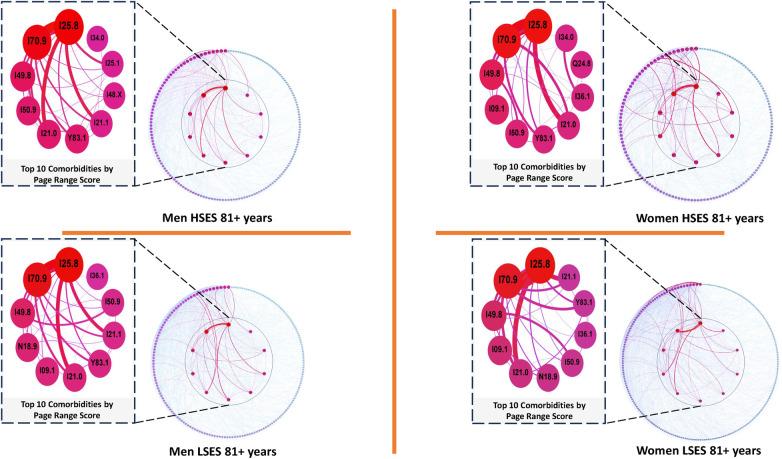
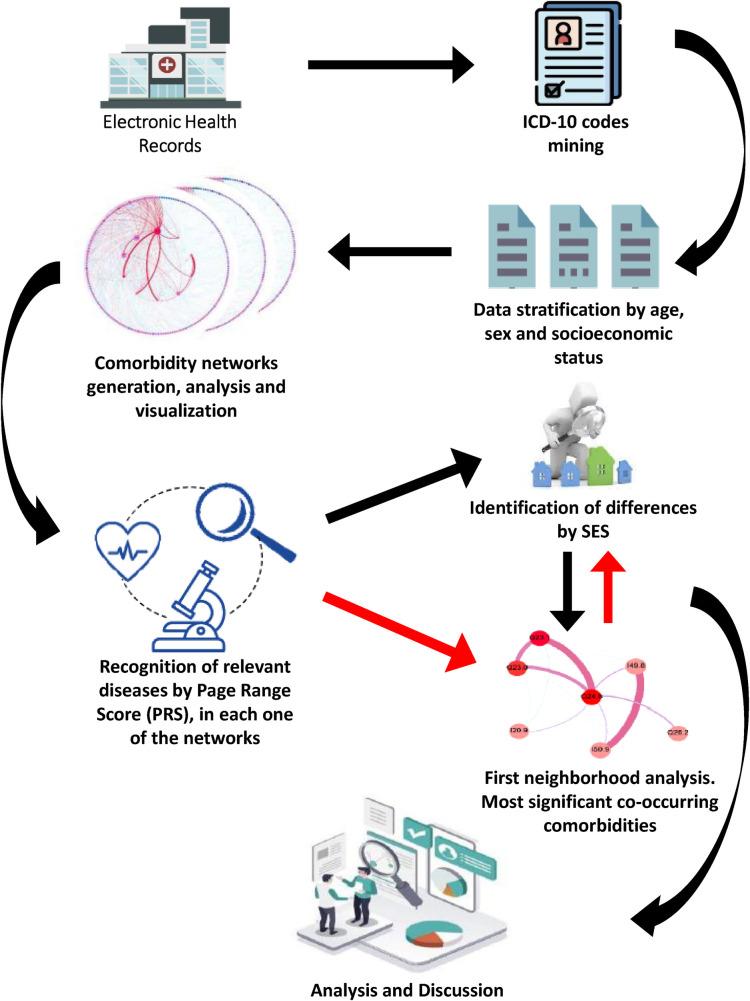
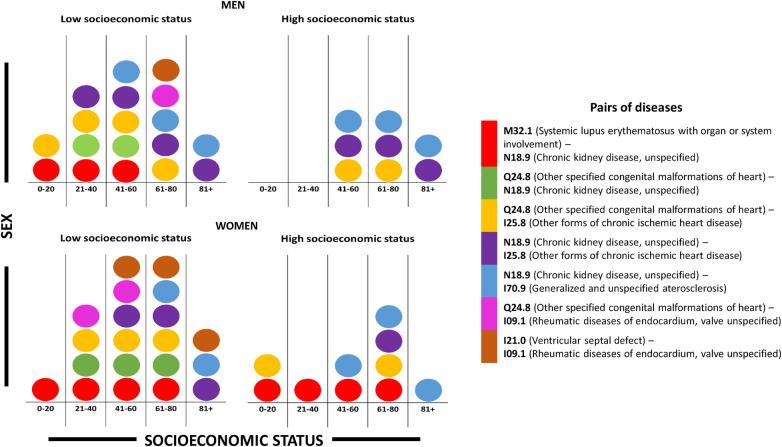
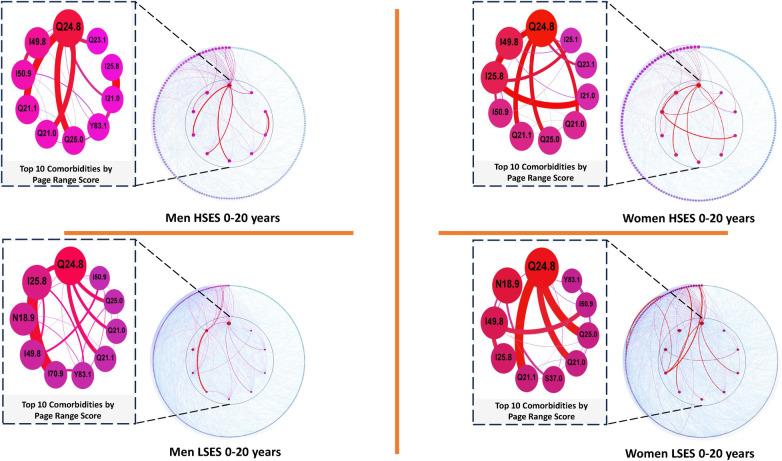
Cardiovascular diseases stand as a prominent global cause of mortality, their intricate origins often entwined with comorbidities and multimorbid conditions. Acknowledging the pivotal roles of age, sex, and social determinants of health in shaping the onset and progression of these diseases, our study delves into the nuanced interplay between life-stage, socioeconomic status, and comorbidity patterns within cardiovascular diseases. Leveraging data from a cross-sectional survey encompassing Mexican adults, we unearth a robust association between these variables and the prevalence of comorbidities linked to cardiovascular conditions. To foster a comprehensive understanding of multimorbidity patterns across diverse life-stages, we scrutinize an extensive dataset comprising 47,377 cases diagnosed with cardiovascular ailments at Mexico's national reference hospital. Extracting sociodemographic details, primary diagnoses prompting hospitalization, and additional conditions identified through ICD-10 codes, we unveil subtle yet significant associations and discuss pertinent specific cases. Our results underscore a noteworthy trend: younger patients of lower socioeconomic status exhibit a heightened likelihood of cardiovascular comorbidities compared to their older counterparts with a higher socioeconomic status. By empowering clinicians to discern non-evident comorbidities, our study aims to refine therapeutic designs. These findings offer profound insights into the intricate interplay among life-stage, socioeconomic status, and comorbidity patterns within cardiovascular diseases. Armed with data-supported approaches that account for these factors, clinical practices stand to be enhanced, and public health policies informed, ultimately advancing the prevention and management of cardiovascular disease in Mexico.
心血管疾病是全球主要的死亡原因,其复杂的病因往往与合并症和多种疾病状况交织在一起。认识到年龄、性别和健康的社会决定因素在这些疾病的发生和发展中所起的关键作用,我们的研究深入探讨了心血管疾病中生命阶段、社会经济地位和合并症模式之间的细微相互作用。利用一项涵盖墨西哥成年人的横断面调查数据,我们发现这些变量与心血管疾病相关合并症的患病率之间存在密切关联。为了全面了解不同生命阶段的多种疾病模式,我们仔细研究了一个包含47377例在墨西哥国家参考医院被诊断患有心血管疾病的病例的广泛数据集。提取社会人口学细节、导致住院的主要诊断以及通过国际疾病分类第10版代码确定的其他病症,我们揭示了细微但显著的关联并讨论了相关的具体病例。我们的结果突出了一个值得注意的趋势:社会经济地位较低的年轻患者与社会经济地位较高的老年患者相比,患心血管合并症的可能性更高。通过使临床医生能够识别不明显的合并症,我们的研究旨在优化治疗方案。这些发现为心血管疾病中生命阶段、社会经济地位和合并症模式之间的复杂相互作用提供了深刻见解。有了考虑这些因素的数据支持方法,临床实践有望得到加强,公共卫生政策也将得到完善,最终推动墨西哥心血管疾病的预防和管理。
 Zotero 插件