
约旦鸡群中混合病毒感染引起的呼吸道疾病综合征。
Respiratory disease complex due to mixed viral infections in chicken in Jordan.
机构信息
Division of Biomedical and Life Sciences, Faculty of Health and Medicine, Lancaster University, Lancaster LA1 4YG, United Kingdom; Department of Veterinary Pathology & Public Health, Faculty of Veterinary Medicine, Jordan University of Science and Technology (JUST), Irbid 22110, Jordan.
Division of Biomedical and Life Sciences, Faculty of Health and Medicine, Lancaster University, Lancaster LA1 4YG, United Kingdom; Department of Virology, Faculty of Veterinary Medicine, Cairo University, Giza 12211, Egypt.
出版信息
Poult Sci. 2024 Apr;103(4):103565. doi: 10.1016/j.psj.2024.103565. Epub 2024 Feb 16.
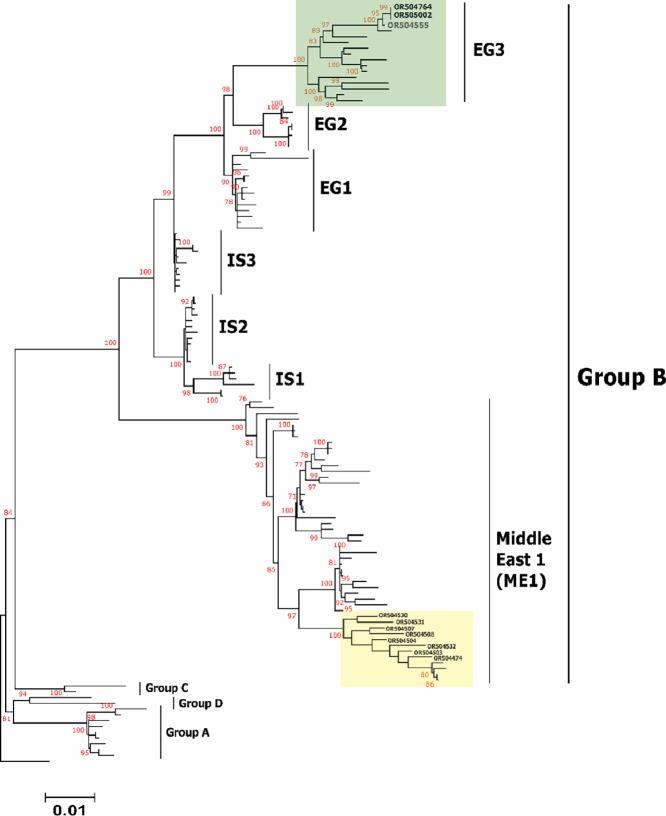
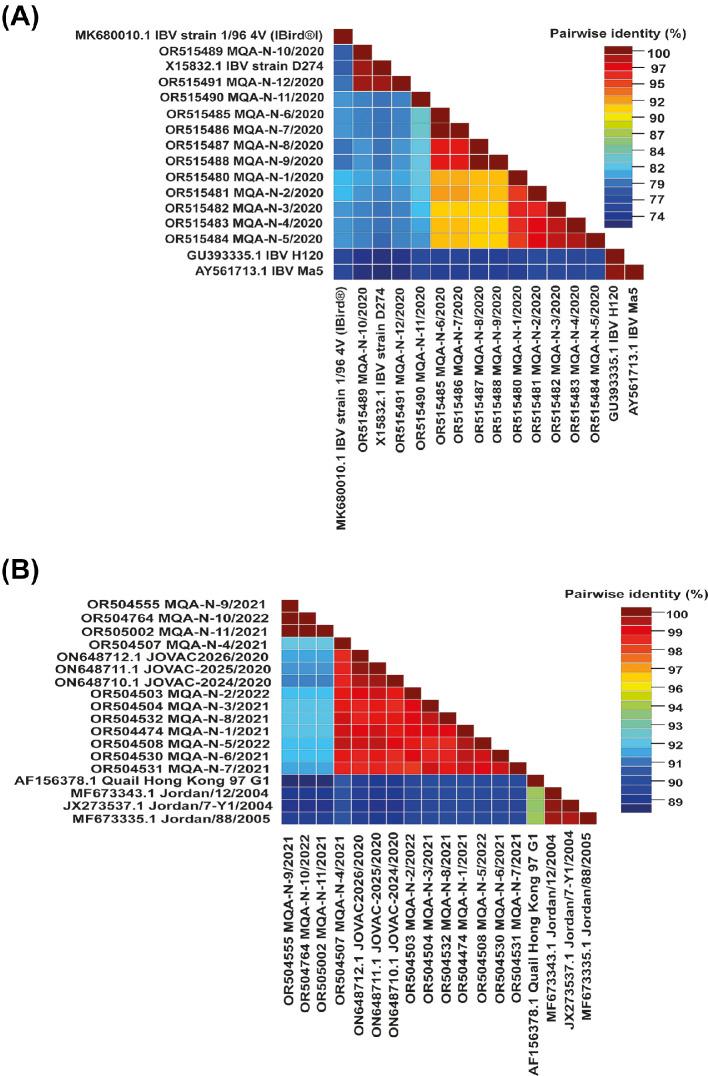
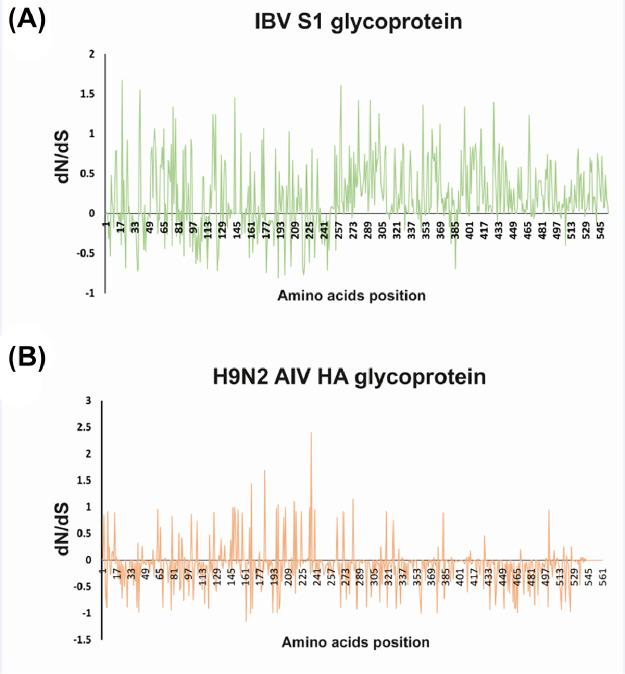
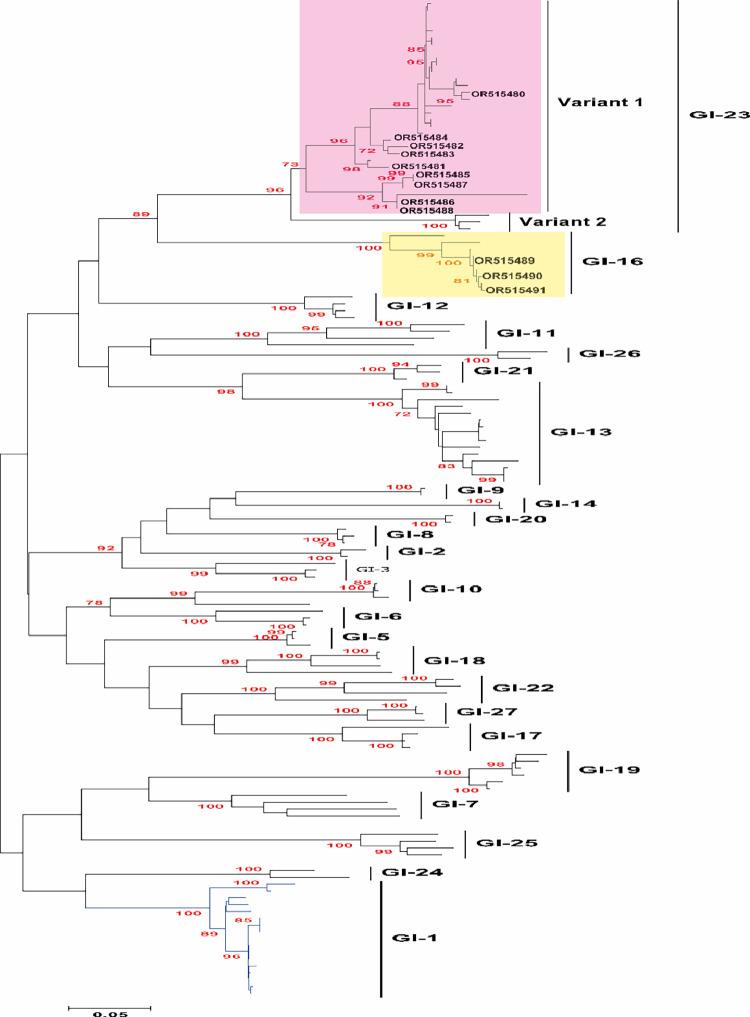
The global distribution of avian respiratory viruses highlights the need for effective surveillance programs and international collaboration to monitor viral circulation and implement timely control measures. In the current study, we aim to provide a comprehensive overview of avian respiratory viral infections in the poultry flocks in Jordan, focusing on the major viruses involved, their epidemiology, clinical manifestations, and evolution based on viroinformatics that will be helpful to improve the diagnostic methods, and control strategies including vaccines in the region. In this research, various poultry broiler groups in Jordan experiencing respiratory symptoms were tested for respiratory viral pathogens from January 2021 to February 2022. The mortality rates observed in the examined groups varied between 6% and 40%. The identified strains were authenticated using the RT-qPCR assay. Furthermore, they underwent in-depth characterisation through the sequencing of the complete spike (S1) gene for infectious bronchitis virus (IBV) and the haemagglutinin (HA) gene for avian influenza virus (AIV) subtype H9N2. Co-infection of IBV and AIV H9N2 viruses was detected through molecular analysis. The IBV strains showed affiliation with the variant groups GI-16 (3 strains) and GI-23 (9 strains) and exhibited numerous mutations. Meanwhile, H9N2 avian influenza viruses displayed various changes in amino acids within the HA gene, suggesting the influence of antibody-driven selection pressure. The phylogenetic analysis revealed that the H9N2 viruses identified in this investigation shared close genetic ties with EG3 (3 strains) and the Middle East group (ME1; 8 strains). These strains have been recently found in Jordan and nearby countries in the Middle East. Moreover, their HA genes exhibited similarities to viruses belonging to the G1-like lineage. In conclusion, avian respiratory viral infections remain a significant concern for the poultry industry, requiring constant vigilance and proactive measures to minimise their impact. Continued surveillance, robust diagnostic methods, effective vaccines, and international cooperation are essential components of a comprehensive approach to combat avian respiratory viral infections (AI, IBV, ND and ILT 'viruses) and safeguard avian health and global poultry production.
本研究旨在全面概述约旦家禽群中的鸟类呼吸病毒感染,重点关注主要涉及的病毒、流行病学、临床症状以及基于病毒信息学的进化情况,这将有助于改进该地区的诊断方法和控制策略,包括疫苗。在这项研究中,从 2021 年 1 月到 2022 年 2 月,对约旦各种出现呼吸症状的家禽肉鸡群进行了呼吸道病毒病原体检测。检查组的死亡率在 6%至 40%之间变化。使用 RT-qPCR 检测鉴定了所识别的菌株。此外,还通过对传染性支气管炎病毒 (IBV) 的完整刺突 (S1) 基因和 H9N2 亚型禽流感病毒 (AIV) 的血凝素 (HA) 基因进行测序,对它们进行了深入的特征分析。通过分子分析检测到 IBV 和 AIV H9N2 病毒的共同感染。IBV 株与变异群 GI-16(3 株)和 GI-23(9 株)有关,表现出许多突变。与此同时,H9N2 禽流感病毒的 HA 基因内出现了各种氨基酸变化,表明受到了抗体驱动的选择压力的影响。系统进化分析表明,本研究中鉴定的 H9N2 病毒与 EG3(3 株)和中东组(ME1;8 株)密切相关。这些菌株最近在约旦和中东的邻国发现。此外,它们的 HA 基因与属于 G1 样谱系的病毒相似。综上所述,鸟类呼吸病毒感染仍然是家禽业的一个重大问题,需要持续警惕和采取积极措施,以减少其影响。持续监测、强大的诊断方法、有效的疫苗和国际合作是综合方法的重要组成部分,可用于对抗鸟类呼吸病毒感染(AI、IBV、ND 和 ILT‘病毒),保护鸟类健康和全球家禽生产。


 Zotero 插件