
基于 MIMIC-IV 数据库的回顾性分析:用于评估糖尿病酮症酸中毒患者 ICU 住院时间延长风险的临床列线图预测模型。
Clinical nomogram prediction model to assess the risk of prolonged ICU length of stay in patients with diabetic ketoacidosis: a retrospective analysis based on the MIMIC-IV database.
机构信息
Department of Critical Care Medicine, Wenzhou Central Hospital, Wenzhou, Zhejiang, 325000, China.
出版信息
BMC Anesthesiol. 2024 Feb 29;24(1):86. doi: 10.1186/s12871-024-02467-z.
BACKGROUND
The duration of hospitalization, especially in the intensive care unit (ICU), for patients with diabetic ketoacidosis (DKA) is influenced by patient prognosis and treatment costs. Reducing ICU length of stay (LOS) in patients with DKA is crucial for optimising healthcare resources utilization. This study aimed to establish a nomogram prediction model to identify the risk factors influencing prolonged LOS in ICU-managed patients with DKA, which will serve as a basis for clinical treatment, healthcare safety, and quality management research.
METHODS
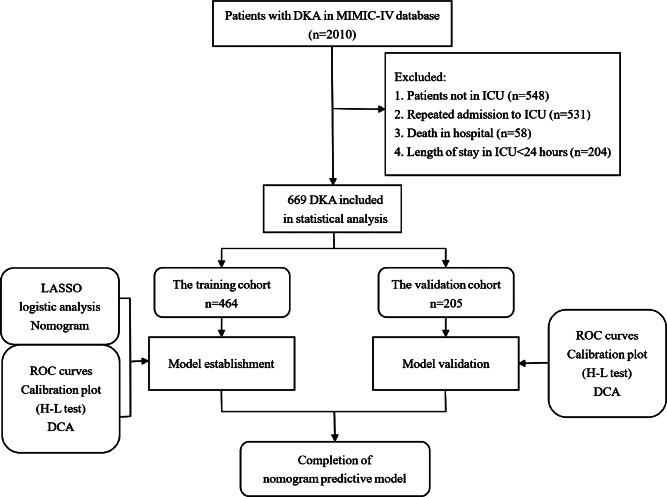
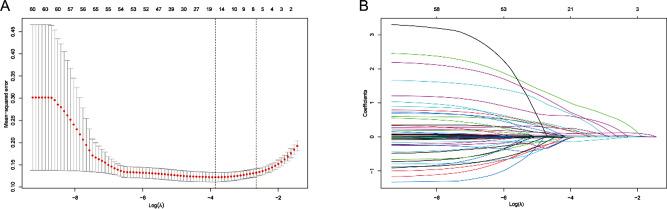
In this single-centre retrospective cohort study, we performed a retrospective analysis using relevant data extracted from the Medical Information Mart for Intensive Care IV (MIMIC-IV) database. Clinical data from 669 patients with DKA requiring ICU treatment were included. Variables were selected using the Least Absolute Shrinkage and Selection Operator (LASSO) binary logistic regression model. Subsequently, the selected variables were subjected to a multifactorial logistic regression analysis to determine independent risk factors for prolonged ICU LOS in patients with DKA. A nomogram prediction model was constructed based on the identified predictors. The multivariate variables included in this nomogram prediction model were the Oxford acute severity of illness score (OASIS), Glasgow coma scale (GCS), acute kidney injury (AKI) stage, vasoactive agents, and myocardial infarction.
RESULTS
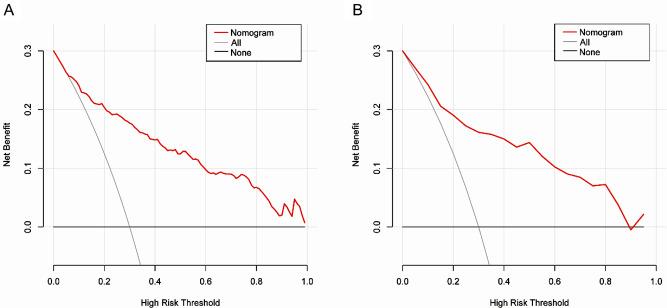
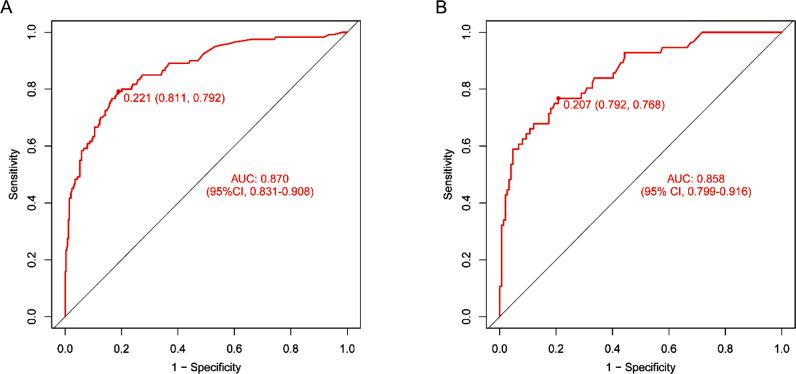
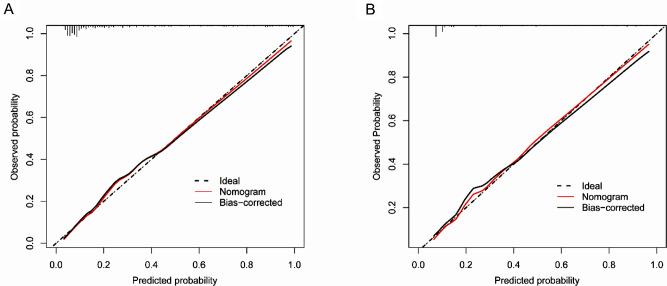
The prediction model had a high predictive efficacy, with an area under the curve value of 0.870 (95% confidence interval [CI], 0.831-0.908) in the training cohort and 0.858 (95% CI, 0.799-0.916) in the validation cohort. A highly accurate predictive model was depicted in both cohorts using the Hosmer-Lemeshow (H-L) test and calibration plots.
CONCLUSION
The nomogram prediction model proposed in this study has a high clinical application value for predicting prolonged ICU LOS in patients with DKA. This model can help clinicians identify patients with DKA at risk of prolonged ICU LOS, thereby enhancing prompt intervention and improving prognosis.
背景
糖尿病酮症酸中毒(DKA)患者的住院时间,尤其是在重症监护病房(ICU)的住院时间,受患者预后和治疗费用的影响。缩短 DKA 患者 ICU 住院时间(LOS)对于优化医疗资源利用至关重要。本研究旨在建立一个列线图预测模型,以确定影响 ICU 管理的 DKA 患者 LOS 延长的危险因素,这将为临床治疗、医疗保健安全和质量管理研究提供依据。
方法
本单中心回顾性队列研究对从医疗信息镜架 IV(MIMIC-IV)数据库中提取的相关数据进行回顾性分析。纳入了 669 例需要 ICU 治疗的 DKA 患者的临床资料。使用最小绝对值收缩和选择算子(LASSO)二项逻辑回归模型选择变量。随后,对选择的变量进行多因素逻辑回归分析,以确定 DKA 患者 ICU LOS 延长的独立危险因素。根据确定的预测因子构建列线图预测模型。该列线图预测模型的多变量包括牛津急性疾病严重程度评分(OASIS)、格拉斯哥昏迷评分(GCS)、急性肾损伤(AKI)分期、血管活性药物和心肌梗死。
结果
该预测模型具有较高的预测效能,在训练队列中的曲线下面积值为 0.870(95%置信区间[CI],0.831-0.908),在验证队列中的曲线下面积值为 0.858(95%CI,0.799-0.916)。在两个队列中,Hosmer-Lemeshow(H-L)检验和校准图均显示出高度准确的预测模型。
结论
本研究提出的列线图预测模型对预测 DKA 患者 ICU LOS 延长具有较高的临床应用价值。该模型可以帮助临床医生识别有发生 DKA 患者 ICU LOS 延长风险的患者,从而加强及时干预并改善预后。

 Zotero 插件