
基因测序研究在慢性新生儿腹泻管理中的重要性:葡萄糖 - 半乳糖转运体SLC5A1新变异的病例报告
Importance of genetic sequencing studies in managing chronic neonatal diarrhea: a case report of a novel variant in the glucose-galactose transporter SLC5A1.
作者信息
López-Mejía Lizbeth, Guillén-Lopez Sara, Vela-Amieva Marcela, Santillán-Martínez Rosalía, Abreu Melania, González-Herrra María Dolores, Díaz-Martínez Rubicel, Reyes-Magaña Juan Gaspar
机构信息
Laboratorio de Errores Innatos del Metabolismo y Tamiz, Instituto Nacional de Pediatría, Mexico City, Mexico.
Laboratorio de Biología Molecular, Genos Medica, Mexico City, Mexico.
出版信息
Front Pediatr. 2024 Feb 19;12:1284671. doi: 10.3389/fped.2024.1284671. eCollection 2024.
INTRODUCTION
Congenital glucose-galactose malabsorption (CGGM) is a rare autosomal recessive disorder that primarily causes chronic intractable diarrhea. This study aims to describe the clinical history, laboratory profile, diagnostic workflow, and management of the first patient reported with CGGM in Mexico.
METHODS
The case involves a Mexican female infant with recurrent admissions to the emergency room since birth due to chronic diarrhea.
RESULTS
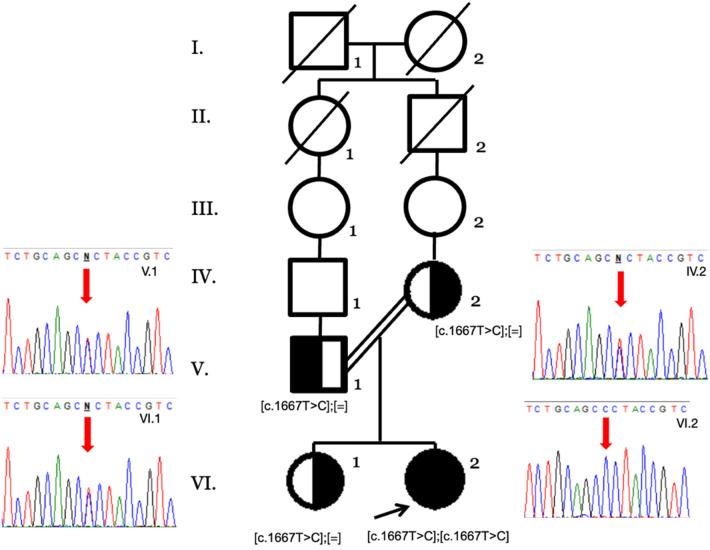
The infant was born at term by C-section with a birth weight of 3.120 kg and height of 48 cm for consanguineous parents. She had been breastfed until day 5 of her life when she presented lethargy, diarrhea, abdominal discomfort, and jaundice. During the first evaluation at the emergency room, the significant laboratory finding was blood tyrosine elevation; afterward, amino acid and succinylacetone determinations were obtained, discarding tyrosinemia. When admitted to the hospital, an abdominal ultrasound detected a duplex collecting system. At this time, rice formula was introduced to the patient. She was discharged with jaundice improvement, but diarrhea persisted. Several formula changes had been made from rice to extensively hydrolyzed casein protein to whey-based, with no clinical improvement; the patient still had 10-12 excretions daily. In the second hospitalization, the patient presented anemia, severe dehydration, hyperammonemia, and renal tubular acidosis. A next-generation sequencing panel for inborn errors of metabolism and congenital diarrhea was performed, identifying a homozygous variant in (c.1667T > C). The diagnosis of CGGM was made at 3 months of age. The infant was initially treated with a modular galactose-glucose-free formula with oil, fructose, casein, minerals, and vitamins until a commercial fructose-based formula was introduced. This led to a complete resolution of diarrhea and improved nutritional status.
DISCUSSION
Diagnosing CGGM is challenging for clinicians, and next-generation sequencing is a valuable tool for providing appropriate treatment. More detailed information on patients with this condition might lead to possible phenotype-genotype correlations. This case's primary clinical and biochemical findings were chronic diarrhea, anemia, jaundice, renal tubular acidosis, hyperammonemia, and initial hypertyrosinemia. Symptoms were resolved entirely with the fructose-based formula.
引言
先天性葡萄糖-半乳糖吸收不良(CGGM)是一种罕见的常染色体隐性疾病,主要导致慢性顽固性腹泻。本研究旨在描述墨西哥首例报告的CGGM患者的临床病史、实验室检查结果、诊断流程及治疗情况。
方法
该病例为一名墨西哥女婴,自出生起因慢性腹泻反复入住急诊室。
结果
该婴儿足月剖宫产出生,出生体重3.120 kg,身高48 cm,父母为近亲。出生后一直母乳喂养至第5天,出现嗜睡、腹泻、腹部不适和黄疸。在急诊室首次评估时,重要的实验室检查结果是血酪氨酸升高;随后进行了氨基酸和琥珀酰丙酮测定,排除了酪氨酸血症。住院时,腹部超声检查发现双肾盂收集系统。此时,给患者采用了大米配方奶粉。出院时黄疸有所改善,但腹泻仍持续。从大米配方奶粉到深度水解酪蛋白配方奶粉再到乳清蛋白配方奶粉,进行了多次配方更换,但临床症状均无改善;患者每天仍有10 - 12次排便。第二次住院时,患者出现贫血、严重脱水、高氨血症和肾小管酸中毒。进行了代谢性先天性疾病和先天性腹泻的下一代测序分析,在(c.1667T > C)基因中鉴定出纯合变异。患儿3个月大时确诊为CGGM。婴儿最初采用含油、果糖、酪蛋白、矿物质和维生素的模块化无半乳糖-葡萄糖配方奶粉进行治疗,直至引入基于果糖的商业配方奶粉。这使得腹泻完全缓解,营养状况得到改善。
讨论
对临床医生而言,诊断CGGM具有挑战性,下一代测序是提供恰当治疗的宝贵工具。关于该疾病患者的更详细信息可能会得出可能的表型-基因型相关性。该病例的主要临床和生化表现为慢性腹泻、贫血、黄疸、肾小管酸中毒、高氨血症和最初的高酪氨酸血症。基于果糖的配方奶粉使症状完全缓解。


 Zotero 插件